




Changes Proposed for Driver Hours-of-Service Rules
WASHINGTON - The U.S. Department of Transportation's Federal Motor Carrier Safety Administration (FMCSA) on Dec. 23 issued a regulatory proposal that would revise hours-of-service (HOS) requirements for commercial truck drivers.
WASHINGTON - The U.S. Department of Transportation's Federal Motor Carrier Safety Administration (FMCSA) on Dec. 23 issued a regulatory proposal that would revise hours-of-service (HOS) requirements for commercial truck drivers.
This new HOS proposal would retain the "34-hour restart" provision allowing drivers to restart the clock on their weekly 60 or 70 hours by taking at least 34 consecutive hours off duty. However, the restart period would have to include two consecutive off-duty periods from midnight to 6 a.m. Drivers would be allowed to use this restart only once during a seven-day period.
"A fatigued driver has no place behind the wheel of a large commercial truck," said Transportation Sec. Ray LaHood. "We are committed to an hours-of-service rule that will help create an environment where commercial truck drivers are rested, alert and focused on safety while on the job."
The publication of this proposed rule coincides with the timeframe established in a court settlement agreement that requires FMCSA to publish a final HOS rule by July 26, 2011.
Additionally, the proposal would require commercial truck drivers to complete all driving within a 14-hour workday, and to complete all on-duty work-related activities within 13 hours to allow for at least a one-hour break. It also leaves open for comment whether drivers should be limited to 10 or 11 hours of daily driving time, although FMCSA currently favors a 10-hour limit.
"In January, we began this rulemaking process by hosting five public listening sessions with stakeholders across the country," said FMCSA Administrator Anne S. Ferro. "This proposed rule provides another opportunity for the public to weigh in on a safety issue that impacts everyone on our roadways."
Driving hours are regulated by federal HOS rules, which are designed to prevent commercial vehicle-related crashes and fatalities by prescribing on-duty and rest periods for drivers.
Commercial truck drivers who violate this proposed rule would face civil penalties of up to $2,750 for each offense. Trucking companies that allow their drivers to violate the proposal's driving limits would face penalties of up to $11,000 for each offense.
Other key provisions include the option of extending a driver's daily shift to 16 hours twice a week to accommodate for issues such as loading and unloading at terminals or ports, and allowing drivers to count some time spent parked in their trucks toward off-duty hours.
A copy of the rulemaking proposal is available on FMCSA's Web site. Click here. The rulemaking will be published in the Federal Register on Dec. 29 and the public will then have 60 days to comment. Information on how to submit comments and evidentiary material is available here.
More Safety

Nexar-Nauto Merger Aims to Give Fleets Better Safety Intelligence Through Larger Driving Dataset
Stefan Heck tells Automotive Fleet that combining more than 10 billion miles of driving history with Nexar's AI models will give fleets deeper insights into driver risk and roadway conditions than either company could provide independently.
Read More →
Don't Wait for a Crisis: 5 Ways to Build Mental Health Into Your Fleet Safety Program
For Suicide Prevention Month, fleet and safety leaders have an opportunity to put mental health where it belongs: at the center of workplace safety.
Read More →
How Camera Data Can Strengthen a Fleet’s Insurance Renewal
Insights from a commercial insurance carrier and a broker show how fleets can turn video telematic data, driver coaching, and improved claims results into a stronger case at insurance renewal.
Read More →
The Safest Fleets Aren’t the Ones with the Most Technology
You’ve made the telematics investment. Here’s how to capture the other half of its value and build the safest fleet on the road.
Read More →
Hidden in Plain Sight: Fleet Compliance Risks
Fleet compliance isn't just about having policies — it's about consistently enforcing them. This practical guide reveals six hidden compliance risks common in public sector and shared fleet operations and outlines proven strategies to improve visibility, accountability, and audit readiness
Read More →
NETS Sets 2026 Fleet Safety Benchmark Conference for Indianapolis
The Sept. 15–17 program will feature fleet benchmarking data, case studies, emerging technologies, and implementation strategies while running alongside the NSC Safety Congress & Expo.
Read More →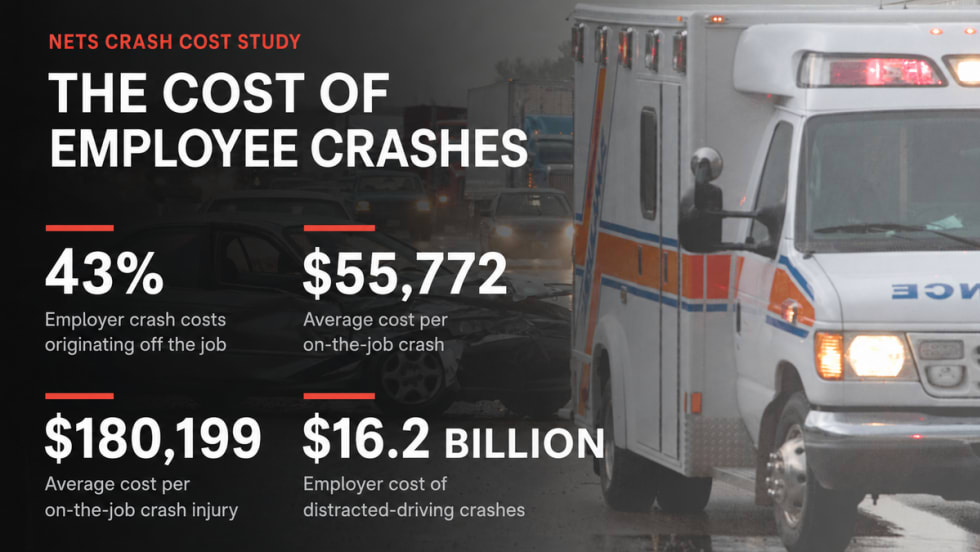
Off-the-Job Crashes Account for 43% of Employers’ $61.7 Billion Crash Burden
NETS quantifies costs dispersed across fleet, risk, HR, and other departments while providing new per-crash benchmarks for employers.
Read More →
Ram Recalls More Than 1.27 Million 1500 Pickups for Seat Belt Anchor Issue
The recall affects certain 2019-2026 Ram 1500 pickups that may have improperly attached second-row seat belt buckle anchors.
Read More →
How Better Visibility Cut Speeding Violations by 48%
Fleet leaders don't need more data, they need clearer visibility into what the data is saying. This case study explores how one utility replaced speeding-event counts with a single metric — miles driven in violation — to strengthen safety and significantly reduce speeding violations.
Read More →
Operation Safe Driver Week: Why the Industry's Oldest Safety Campaign Still Matters to Fleets
A look at how a 2007 enforcement initiative became one of the most consequential weeks on the fleet safety calendar, and what it means for your drivers in 2026.
Read More →