




Caruma's Connected Car Tech Targets Distracted Driving
Caruma Technologies has introduced a new technology offering that combines computer vision, deep learning and big data analytics into a vision-based connected car platform to curtail distracted driving.
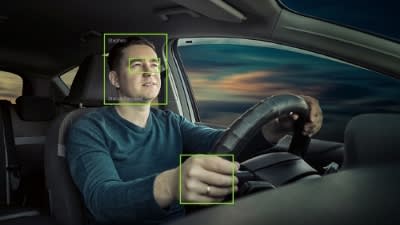
Photo courtesy of Caruma.
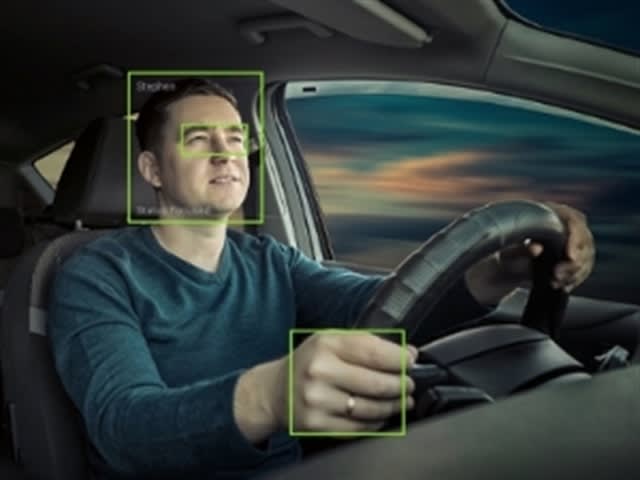
Photo courtesy of Caruma.
Caruma Technologies has introduced a new technology offering that combines computer vision, deep learning and big data analytics into a vision-based connected car platform to curtail distracted driving.
The company plans to bring advanced technology used in autonomous cars to any vehicle to make driving safer, more efficient and more secure.
"Tragically, nearly 1.3 million people around the world are killed in traffic collisions every year, with another 50 million injured or disabled," said Chris Carson, founder and CEO. "Our goal is to make today's roads safer by empowering drivers with advanced safety systems like Advanced Driver Assistance System (ADAS) and Driver Monitoring System (DMS) and the insights they gain from the data these systems produce."
Caruma's vision-based connected car platform consists of three key components:
Caruma Cloud: a smart cloud system where video and data are stored and converted into actionable information.
Caruma App: a mobile and web app for iOS and Android.
Caruma Cam: an intelligent connected device with dual High Definition (HD) cameras that easily mounts inside any vehicle.
When these high-risk driving events or collisions are detected, the Caruma Cam automatically records a short video of the event. The video and data are then sent to Caruma's private cloud where it is analyzed and processed.
Caruma's system uses a combination of artificial intelligence and vision technology — advanced machine learning algorithms — to continuously improve over time. With a complete, context-rich picture, the system can help to improve driver performance and reduce liability risk through driver scoring, a critical tool for coaching purposes and improving driving practices.
The technology's key features include:
Collision Avoidance: Forward- and inward-facing HD video cameras sense and alert drivers in real-time to external dangers to help avoid costly and sometimes fatal collisions; allows corrective action to be taken.
Distracted Driver/Fatigue Detection: Senses and alerts drivers in real-time to internal risks by monitoring subtle details about the driver to detect fatigue, attentiveness and driver distraction.
Live Map: Real-time community-based warnings of road hazards automatically detected by other Caruma-equipped vehicles on our network.
Theft Detection & Prevention: Caruma uses proximity sensors, geo-fencing and real-time tracking to monitor a vehicle's security. Live View and two-way talking allows instant viewing inside and outside the vehicle and two-way audio.
Since the physics associated with a collision are recorded in minute detail to establish fault unequivocally and resolve disputes more efficiently and correctly, the data derived from Caruma's system will have a direct impact on determining risk, error and fault to make insurance reporting faster and more efficient. This will streamline claims processes and improve efficiencies resulting in lower costs, a key benefit for insurance companies, fleet operators and professional drivers.
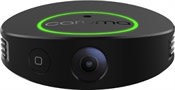
Photo courtesy of Caruma.
For fleet applications Caruma technology can reduce operating costs, improve driver safety and increase safety policy compliance. Video and data sent to Caruma Cloud provides fleet managers with a complete, context-rich picture that can help to improve driver behavior and increase safety.
Caruma's system uses advanced machine learning algorithms to continuously improve its ability to detect dangers ahead or distraction within a vehicle and gets smarter over time. The company is working with partners to accelerate deployment into vehicle fleets and expand its business as a retrofit device for the millions of vehicles currently on the road and into new production vehicles.
The company recently launched a pilot collecting data sets in three countries around the world to include U.S., China, and Russia. This aggregated data will ultimately be used to advance the fully autonomous driving vehicle industry.
Caruma Cam will be available for pre-order in late December at www.Caruma.Tech at the retail price of $399.
More Safety

Nexar-Nauto Merger Aims to Give Fleets Better Safety Intelligence Through Larger Driving Dataset
Stefan Heck tells Automotive Fleet that combining more than 10 billion miles of driving history with Nexar's AI models will give fleets deeper insights into driver risk and roadway conditions than either company could provide independently.
Read More →
Don't Wait for a Crisis: 5 Ways to Build Mental Health Into Your Fleet Safety Program
For Suicide Prevention Month, fleet and safety leaders have an opportunity to put mental health where it belongs: at the center of workplace safety.
Read More →
How Camera Data Can Strengthen a Fleet’s Insurance Renewal
Insights from a commercial insurance carrier and a broker show how fleets can turn video telematic data, driver coaching, and improved claims results into a stronger case at insurance renewal.
Read More →
The Safest Fleets Aren’t the Ones with the Most Technology
You’ve made the telematics investment. Here’s how to capture the other half of its value and build the safest fleet on the road.
Read More →
Hidden in Plain Sight: Fleet Compliance Risks
Fleet compliance isn't just about having policies — it's about consistently enforcing them. This practical guide reveals six hidden compliance risks common in public sector and shared fleet operations and outlines proven strategies to improve visibility, accountability, and audit readiness
Read More →
NETS Sets 2026 Fleet Safety Benchmark Conference for Indianapolis
The Sept. 15–17 program will feature fleet benchmarking data, case studies, emerging technologies, and implementation strategies while running alongside the NSC Safety Congress & Expo.
Read More →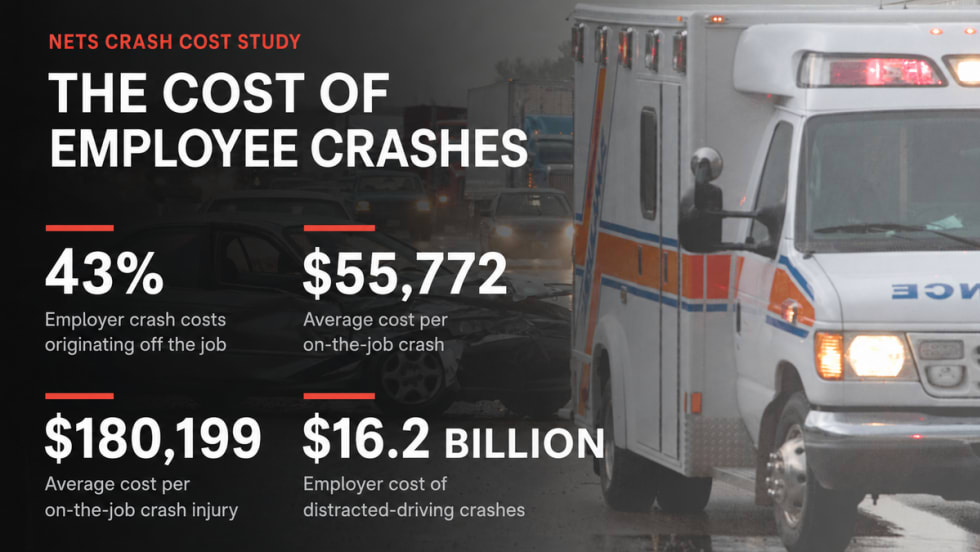
Off-the-Job Crashes Account for 43% of Employers’ $61.7 Billion Crash Burden
NETS quantifies costs dispersed across fleet, risk, HR, and other departments while providing new per-crash benchmarks for employers.
Read More →
Ram Recalls More Than 1.27 Million 1500 Pickups for Seat Belt Anchor Issue
The recall affects certain 2019-2026 Ram 1500 pickups that may have improperly attached second-row seat belt buckle anchors.
Read More →
How Better Visibility Cut Speeding Violations by 48%
Fleet leaders don't need more data, they need clearer visibility into what the data is saying. This case study explores how one utility replaced speeding-event counts with a single metric — miles driven in violation — to strengthen safety and significantly reduce speeding violations.
Read More →
Operation Safe Driver Week: Why the Industry's Oldest Safety Campaign Still Matters to Fleets
A look at how a 2007 enforcement initiative became one of the most consequential weeks on the fleet safety calendar, and what it means for your drivers in 2026.
Read More →