




Canadian Automotive Aftermarket Has ‘Untapped Potential’
Research and Markets has announced the addition of the "2013 Canadian Automotive Aftermarket Demand Study: Unlocking the Industry's Untapped Potential" report to its offerings.
Research and Markets has announced the addition of the "2013 Canadian Automotive Aftermarket Demand Study: Unlocking the Industry's Untapped Potential" report to its offerings.
Each year in Canada, a considerable amount of recommended light-vehicle maintenance and repairs go unperformed. These recommended maintenance services are either postponed to a later date or abandoned altogether, according to Research and Markets.
The Benchmark Spenders Model, developed by DesRosiers Automotive Consultants Inc. (DAC), estimates the potential size of the total Canadian aftermarket by evaluating the annual maintenance expenditures reported by the top spenders - i.e., the 75th to 95th percentile of spenders - from the DesRosiers Light Vehicle Study (LVS) survey and extrapolating this figure across the entire Canadian light vehicle fleet.
While the Benchmark Spenders Model details the untapped potential of the entire aftermarket, the Product-Specific Model delves into the potential revenue of each product category, according to Research and Markets. The Product-Specific Model measures the potential volume of a product category in the Canadian aftermarket by units and retail dollars and calculates the difference between service intervals for vehicle maintenance/repairs as recommended by vehicle manufacturers and the actual service intervals of Canadian consumers, as recorded by the LVS.
According to DAC data, the actual size of the aftermarket was $19.27 billion in 2012. However, if every Canadian were to follow Benchmark Spenders' vehicle maintenance habits, the Canadian aftermarket would have had a total market potential of $33.30 billion in 2012. Thus, the unrealized potential of the aftermarket was equal to $14.03 billion or $207 per service visit in 2012 (assuming three service visits per vehicle per year), according to the company.
There are a number of regional factors that influence the disparity between actual maintenance completed and potential maintenance jobs. These include weather conditions, the age and structure of the fleet, and the regulatory framework. The regions with the highest levels of actual maintenance relative to potential are British Columbia, the Atlantic and the Prairies. While further research is required to determine causality, in the first and last of these markets it is likely the age structure of the fleet driving this dynamic because both have older fleets that require more maintenance and repairs. In contrast, in the Atlantic region, vehicle inspection programs in three provinces are the likely cause of an increase in undertaken maintenance and repairs, consequently resulting in better maintained and safer vehicles on Atlantic roads.
In the 2011 Canadian Automotive Aftermarket Demand Study, potential revenue according to the Benchmark Spenders Model stood at $11.91 billion. Since then, the unrealized potential of the aftermarket has grown by 17.8 percent or $2.12 billion, according to Research and Markets. A primary reason for growth in aftermarket potential is the increasing size of the Canadian light vehicle fleet light vehicle registrations increased from 22.0 million in 2010 to 22.5 million in 2012. The Benchmark Spenders Model also shows that average spending per vehicle per year has increased by 7.5 percent, with the 1-3 year old age group leading the increase at 7.7 percent. Overall, the size of the potential market for 8-12 year old vehicles, the largest cohort by market size, grew from $10.4 billion in 2010 to $11.61 billion in 2012.
The Benchmark Spenders Model predicts a maximum aftermarket parts and service value of $4.46 billion available in British Columbia, compared to the Province's actual aftermarket value of $2.93 billion in 2012, which suggests that there is additional spending potential of $1.5 billion, or $167 per service visit, according to the company.
More Maintenance

Fleet Manager’s Ultimate Playbook: Navigating the New Standard in OEM Connectivity
Rising operating costs, driver safety concerns, and unplanned downtime are putting unprecedented pressure on modern fleets. Discover how fleet managers use embedded OEM connectivity and real-time vehicle data to cut TCO, prevent downtime, and protect drivers without aftermarket telematics hardware.
Read More →
How Can Fleet Managers Tell Which Repairs Require Closer Review?
Fleetio’s Brianna Perry demonstrates how Service Advisor evaluates maintenance requests, identifies pricing anomalies, and provides the context fleet managers need to focus their attention on potential problems.
Read More →
Why Roadside Assistance Belongs in a Fleet Risk Strategy
Roadside assistance is more than a tow. See how the right partner can protect drivers, uncover fleet trends, and strengthen your risk strategy.
Read More →
Hidden in Plain Sight: Fleet Compliance Risks
Fleet compliance isn't just about having policies — it's about consistently enforcing them. This practical guide reveals six hidden compliance risks common in public sector and shared fleet operations and outlines proven strategies to improve visibility, accountability, and audit readiness
Read More →
How Maintenance Costs Compare Across 27 Fleet Vehicles
Vincentric’s three-year, 60,000-mile projections reveal wide differences for both scheduled and unscheduled maintenance among selected vehicle categories. Projected maintenance visits also play a factor.
Read More →
The EV Breakdown Nobody's Talking About: Why Most Electric Vehicle Roadside Calls Aren't Mechanical Failures
Here's why EV breakdowns are widely misunderstood.
Read More →
How Stellantis Plans to Get Ahead of Fleet Downtime
Keeping fleet vehicles on the road has become as important as buying them. Darren Bradshaw of Mopar North America explains how connected vehicle data, AI, and proactive service strategies are helping Stellantis reduce downtime and move closer to predictive maintenance.
Read More →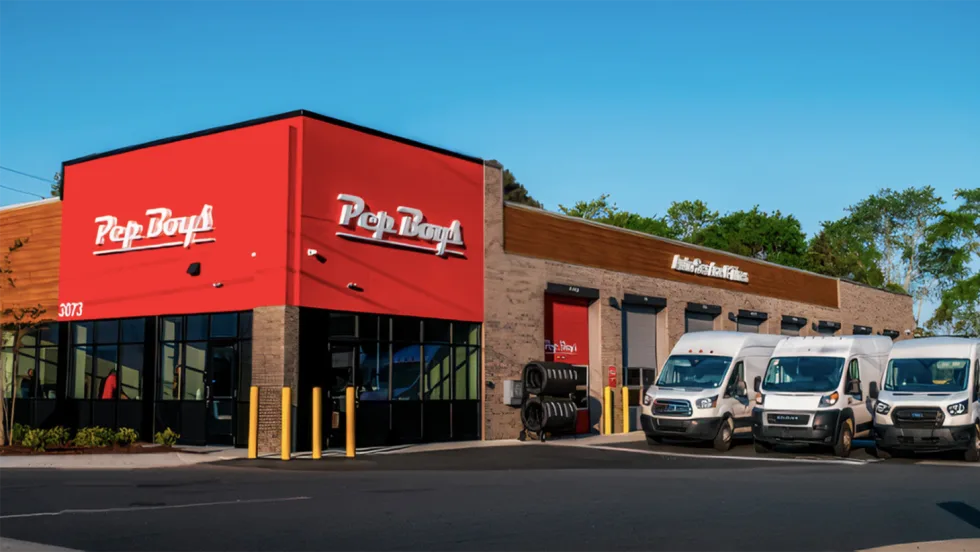
Merchants Fleet Expands Maintenance Network with Pep Boys
Merchants Fleet has expanded its relationship with Pep Boys, increasing the service provider's role within its national maintenance network. The move is intended to enhance maintenance coordination and support commercial fleets through Pep Boys' nationwide footprint.
Read More →
The Two Biggest Summer Downtime Threats for Fleets
A conversation with a maintenance expert reveals the two most common summer maintenance pains and how to prevent them.
Read More →
From Marine Corps Motor Pool to Managing 460 Fleet Vehicles
Cesar Ayala of O’Connell Landscape Maintenance shares how he transitioned from the Marine Corps to managing a 460-vehicle fleet—and the real-world challenges of maintenance, compliance, and driver management in California.
Read More →