




Canada Develops Standards for New Class of Student Transportation Vehicles
TORONTO, ONTARIO, CANADA --- Canadian Standards Association (CSA), a leading developer of standards and codes, has published a standard for multi-functional activity buses (MFABs).
TORONTO, ONTARIO, CANADA --- Canadian Standards Association (CSA), a leading developer of standards and codes, has published a standard for multi-functional activity buses (MFABs).
This is the first Canadian standard developed to provide voluntary requirements for the new proposed class of vehicle. MFABs are intended to be used as safer alternatives to vehicles that are not classified as school buses but are still used to transport groups of school-aged passengers to sporting events, community activities or other such educational or childcare facilities and outings.
"CSA has extensive expertise in developing national standards for school buses," said John Walter, vice president of standards development for CSA. "We have applied that same expertise to the new multi-functional activity bus standard. The intent was to develop a standard for a type of vehicle that is not classified as a school bus but that is still used to occasionally transport students to events and activities and therefore should be built to very similar standards for safety and construction."
The MFAB standard addresses construction requirements such as joint strength, crashworthiness, rollover protection, emergency exits, compartmentalization, and numerous safety features. The new standard does not include requirements for traffic and pedestrian control devices such as warning lamps or stop arms since these buses are not used for roadside pick-up and drop-off of passengers.
The CSA D270 Multi-functional activity buses standard was initially proposed in 2006 as members of the CSA Technical Committee (TC) responsible for school bus standards began seeing non-conforming vehicles, or those not classified or tested to school bus standards, being increasingly used for the transportation of students for school-related activities in Canada.
Currently, there are no Canadian federal regulations pertaining specifically to new non-conforming vehicles that can carry 11 or more persons and are sold for the purpose of transporting students to or from school or school-related events.
Following more than a thousand accidents in 10 years, American federal requirements now regulate that such vehicles are required to meet the same federal standards as school buses.
It will be at the discretion of Canadian provincial governments to determine whether they will adopt the new standard in whole or in part and how they will enforce the requirements. It will be up to interested manufacturers to generate sufficient test data to support a self-declaration that their vehicles meet the CSA D270-08 multi-functional activity buses standard. The vehicles could then be subject to inspection by regulators that recognize the MFAB class of vehicle to ensure they comply with any relevant legislation.
Of course, CSA school bus and MFAB standards alone cannot prevent accidents and they are not substitutes for thorough, ongoing and comprehensive safety training of drivers and monitoring of passengers. Road conditions, weather, vehicle maintenance, traffic laws, speed, driver fatigue and health, and other risk factors must also be taken into account when operating any vehicle, CSA pointed out.
More Safety
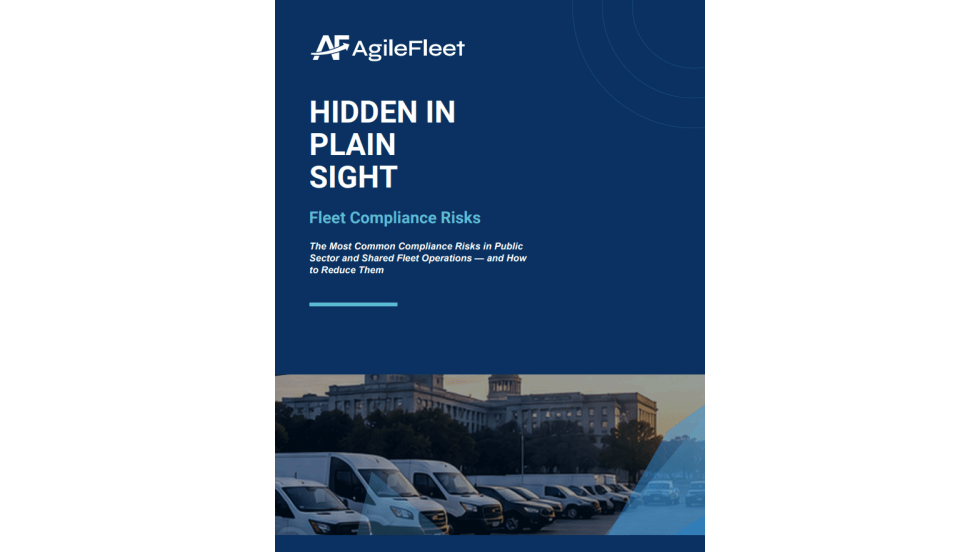
Hidden in Plain Sight: Fleet Compliance Risks
Fleet compliance isn't just about having policies — it's about consistently enforcing them. This practical guide reveals six hidden compliance risks common in public sector and shared fleet operations and outlines proven strategies to improve visibility, accountability, and audit readiness
Read More →
NETS Sets 2026 Fleet Safety Benchmark Conference for Indianapolis
The Sept. 15–17 program will feature fleet benchmarking data, case studies, emerging technologies, and implementation strategies while running alongside the NSC Safety Congress & Expo.
Read More →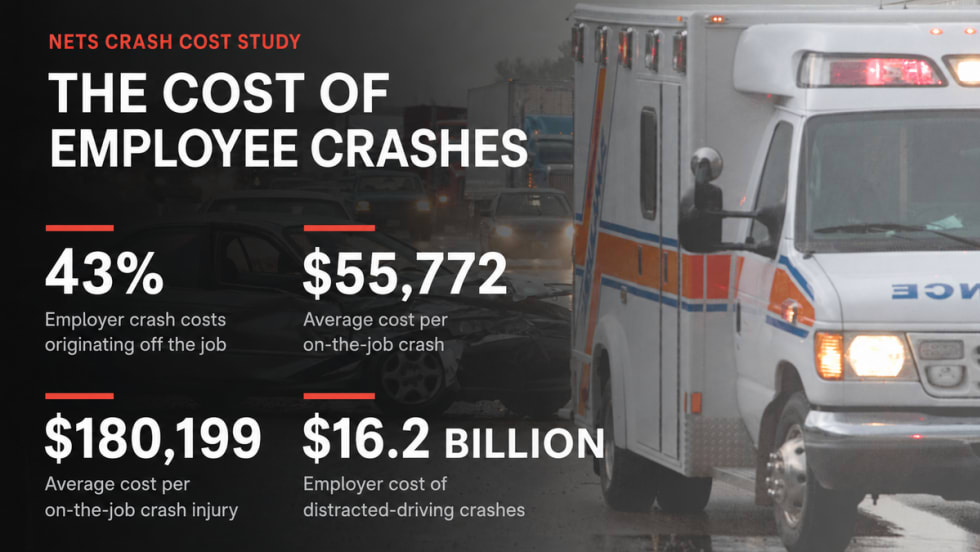
Off-the-Job Crashes Account for 43% of Employers’ $61.7 Billion Crash Burden
NETS quantifies costs dispersed across fleet, risk, HR, and other departments while providing new per-crash benchmarks for employers.
Read More →
Ram Recalls More Than 1.27 Million 1500 Pickups for Seat Belt Anchor Issue
The recall affects certain 2019-2026 Ram 1500 pickups that may have improperly attached second-row seat belt buckle anchors.
Read More →
How Better Visibility Cut Speeding Violations by 48%
Fleet leaders don't need more data, they need clearer visibility into what the data is saying. This case study explores how one utility replaced speeding-event counts with a single metric — miles driven in violation — to strengthen safety and significantly reduce speeding violations.
Read More →
Operation Safe Driver Week: Why the Industry's Oldest Safety Campaign Still Matters to Fleets
A look at how a 2007 enforcement initiative became one of the most consequential weeks on the fleet safety calendar, and what it means for your drivers in 2026.
Read More →
Nexar-Nauto Merger Aims to Give Fleets Better Safety Intelligence Through Larger Driving Dataset
Stefan Heck tells Automotive Fleet that combining more than 10 billion miles of driving history with Nexar's AI models will give fleets deeper insights into driver risk and roadway conditions than either company could provide independently.
Read More →
From Silos to Solutions: Relationship Management for Safer Fleets
From telematics adoption and driver accountability to policy consistency and risk mitigation, this episode breaks down what it really takes to build a safer fleet culture without slowing business down.
Read More →
IIHS Launches First Commercial Vehicle Safety Evaluations
The Insurance Institute for Highway Safety has begun evaluating heavy-duty pickups and cargo vans for driver protection. Which models earned top marks?
Read More →
Reducing Risk by Eliminating Phone Use Behind the Wheel
Hosted with the cofounder of Lifesaver Mobile, this episode addresses phone use behind the wheel and how to design a driving environment that actually helps prevents accidents.
Read More →