




Calif. Legislators Pass Ignition Interlock Bill
If signed into law, the requirement for DUI offenders would go into effect in 2019.
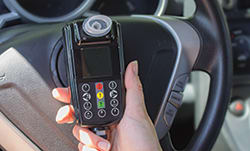
An alcohol ignition interlock is a breath-test device connected to a vehicle's ignition. Photo courtesy of CDC.
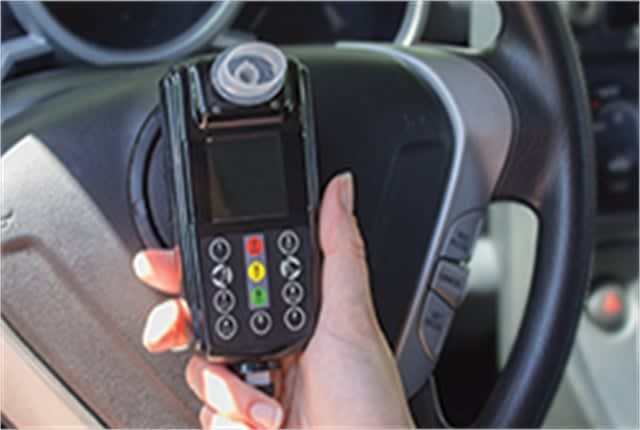
An alcohol ignition interlock is a breath-test device connected to a vehicle's ignition. Photo courtesy of CDC.
California legislators have passed a bill requiring DUI offenders to equip their vehicles with an alcohol ignition interlock device if they want their license reinstated, reissued, or if they want to qualify for a restricted license.
If Governor Jerry Brown signs the legislation, the new law will take effect in January 2019.
Four counties in California — Los Angeles, Sacramento, Alameda, and Tulare — already require DUI offenders to install such devices as part of a pilot program. First-time offenders in those counties are ordered to use an ignition interlock device for five months. That period can be extended if there are subsequent violations.
The legislation, which passed the state Senate on a 39-0 vote on Aug. 25, would expand the pilot program with these modifications:
For a first DUI offense that also involves an injury, an ignition interlock device would be required for six months.
For a first DUI offense that involves no injuries, an offender may choose a six-month ignition interlock device requirement with full driving privileges, or a one-year restricted license that would allow only driving to and from work if the offender also participates in a treatment program.
A second DUI offense would result in an ignition interlock device requirement for one year
A third DUI offense would require an ignition interlock device for two years
A fourth or subsequent DUI offense would require an ignition interlock device for three years.
The legislation, originally introduced by Senator Jerry Hill (D-San Mateo), offers an incentive to DUI offenders who choose to install an ignition interlock device soon after their arrest. They would be allowed full driving privileges with installation and use of an ignition interlock device, and their ultimate time requirement would be reduced based on their early installation of the device.
An ignition interlock device costs less than $3 a day — approximately $60 to $80 per month — for monitoring and calibration. It costs $70 to $150 for installation. A sliding scale would enable low-income offenders to pay 10%, 25%, or 50% of the ignition interlock device costs, depending on income. The device provider would pay the rest.
According to the Centers for Disease Control and Prevention (CDC), ignition interlocks reduce repeat drunk-driving offenses by about 70% while they’re installed. But nationwide, only about one-fifth of those arrested for drunk driving have interlocks installed as a result.
All 50 states and the District of Columbia have ignition interlock laws on the books, but only 23 require the devices for all offenders, according to the National Conference of State Legislatures. Many states impose the devices on repeat offenders or on offenders with exceptionally high levels of alcohol in their blood.
A 2014 study conducted by the CDC, National Highway Traffic Safety Administration (NHTSA), Governors Highway Safety Association (GHSA) and produced by the Preusser Research Group helped identify eight actions needed for a successful alcohol ignition interlock program. They are:
Require or incentivize use
Levy strong penalties
Monitor interlocks to ensure proper use
Implement uniformly across the state
Coordinate across agencies
Educate stakeholders about the program
Provide adequate resources (including staff and funding)
Use data for action (including data records such as level of offense, BAC level at time of arrest, number of prior arrests, installation/removal dates, and violations).
To download a CDC report on increasing ignition interlock use, click here.
More Safety

Nexar-Nauto Merger Aims to Give Fleets Better Safety Intelligence Through Larger Driving Dataset
Stefan Heck tells Automotive Fleet that combining more than 10 billion miles of driving history with Nexar's AI models will give fleets deeper insights into driver risk and roadway conditions than either company could provide independently.
Read More →
Don't Wait for a Crisis: 5 Ways to Build Mental Health Into Your Fleet Safety Program
For Suicide Prevention Month, fleet and safety leaders have an opportunity to put mental health where it belongs: at the center of workplace safety.
Read More →
How Camera Data Can Strengthen a Fleet’s Insurance Renewal
Insights from a commercial insurance carrier and a broker show how fleets can turn video telematic data, driver coaching, and improved claims results into a stronger case at insurance renewal.
Read More →
The Safest Fleets Aren’t the Ones with the Most Technology
You’ve made the telematics investment. Here’s how to capture the other half of its value and build the safest fleet on the road.
Read More →
Hidden in Plain Sight: Fleet Compliance Risks
Fleet compliance isn't just about having policies — it's about consistently enforcing them. This practical guide reveals six hidden compliance risks common in public sector and shared fleet operations and outlines proven strategies to improve visibility, accountability, and audit readiness
Read More →
NETS Sets 2026 Fleet Safety Benchmark Conference for Indianapolis
The Sept. 15–17 program will feature fleet benchmarking data, case studies, emerging technologies, and implementation strategies while running alongside the NSC Safety Congress & Expo.
Read More →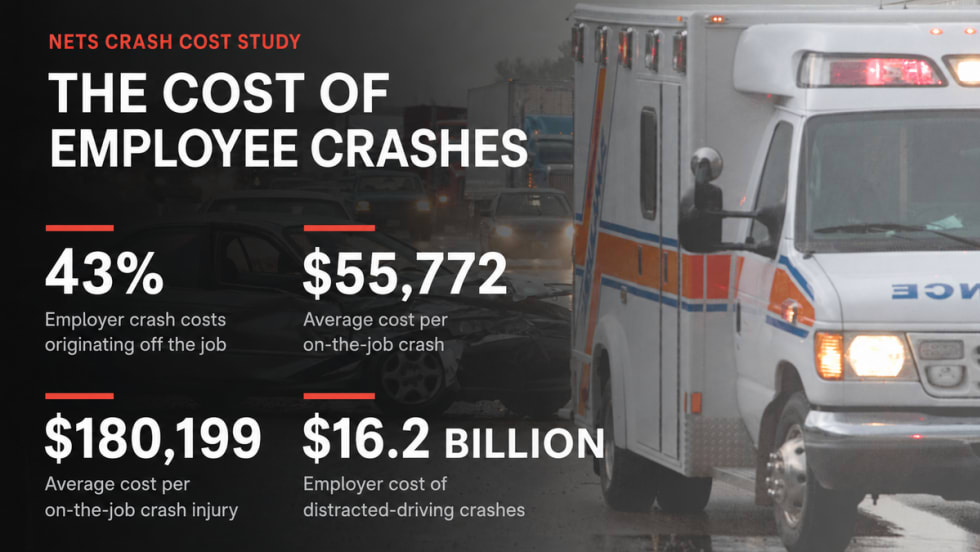
Off-the-Job Crashes Account for 43% of Employers’ $61.7 Billion Crash Burden
NETS quantifies costs dispersed across fleet, risk, HR, and other departments while providing new per-crash benchmarks for employers.
Read More →
Ram Recalls More Than 1.27 Million 1500 Pickups for Seat Belt Anchor Issue
The recall affects certain 2019-2026 Ram 1500 pickups that may have improperly attached second-row seat belt buckle anchors.
Read More →
How Better Visibility Cut Speeding Violations by 48%
Fleet leaders don't need more data, they need clearer visibility into what the data is saying. This case study explores how one utility replaced speeding-event counts with a single metric — miles driven in violation — to strengthen safety and significantly reduce speeding violations.
Read More →
Operation Safe Driver Week: Why the Industry's Oldest Safety Campaign Still Matters to Fleets
A look at how a 2007 enforcement initiative became one of the most consequential weeks on the fleet safety calendar, and what it means for your drivers in 2026.
Read More →