




Calif. Agency Helps Explain New Cell Phone Laws
SACRAMENTO, Calif. --- Two new California laws restricting drivers' use of wireless phones go into effect July 1.
SACRAMENTO, Calif. --- Two new California laws restricting drivers' use of wireless phones go into effect July 1. The California Office of Traffic Safety offers these questions and answers to help drivers better understand the laws.
Q: What is the difference between the two laws?
A: The first prohibits all drivers from using a handheld wireless telephone while operating a motor vehicle. (Vehicle Code (VC) §23123). Motorists 18 and over may use a hands-free device. Drivers under the age of 18 may not use a wireless telephone or hands-free device while operating a motor vehicle(VC §23124).
Q: What if I need to use my telephone during an emergency, and I do not have a hands-free device?
A: The law allows a driver to use a wireless telephone to make emergency calls to a law enforcement agency, a medical provider, the fire department, or other emergency services agency.
Q: What are the fines if I'm convicted?
A: The base fine for the first offense is $20 and $50 for subsequent convictions. According to the Uniform Bail and Penalty Schedule, with the addition of penalty assessments, a first offense is $76 and a second offense is $190.
Q: Will I receive a point on my drivers license if I'm convicted for a violation of the wireless telephone law?
A: No. The violation is a reportable offense; however, DMV will not assign a violation point.
Q: Will the conviction appear on my driving record?
A: Yes, but the violation point will not be added.
Q: Will there be a grace period when motorists will only get a warning?
A: No. The law becomes in effect on July 1, 2008. Whether a citation is issued is always at the discretion of the officer, based upon his or her determination of the most appropriate remedy for the situation.
Q: Are passengers affected by this law?
A: No. This law only applies to the person driving a motor vehicle.
Q: Do these laws apply to out-of-state drivers whose home states do not have such laws?
A: Yes
Q: Can I be pulled over by a law enforcement officer for using my handheld wireless telephone?
A: Yes. A law enforcement officer can pull you over just for this infraction.
Q: What if my phone has a push-to-talk feature, can I use that?
A: No. The law does provide an exception for those operating a commercial motor truck or truck tractor (excluding pickups), implements of husbandry, farm vehicle or tow truck, to use a two-way radio operated by a "push-to-talk" feature.
Q: What other exceptions are there?
A: Operators of an authorized emergency vehicle during the course of employment are exempt as are those motorists operating a vehicle on private property
Drivers 18 and over will be allowed to use a hands-free device to talk on their wireless telephone while driving. The following FAQs apply to those motorists 18 and over.
Q: Does the new "hands-free" law prohibit you from dialing a wireless telephone while driving or just talking on it?
A: The new law does not prohibit dialing, but drivers are strongly urged not to dial while driving.
Q: Will it be legal to use a Blue Tooth or other earpiece?
A: Yes, however you cannot have both ears covered.
Q: Does the new hands-free law allow you to use the speaker phone function of your wireless telephone while driving?
A: Yes.
Q: Does the new "hands-free" law allow drivers 18 and over to text page while driving?
A: The law does not specifically prohibit that, but an officer can pull over and issue a citation to a driver of any age if, in the officer’s opinion, the driver was distracted and not operating the vehicle safely. Text paging while driving is unsafe at any speed and is strongly discouraged.
For Drivers Under 18:
Q: Am I allowed to use my wireless telephone hands free?
A: No. Drivers under the age of 18 may not use a wireless telephone, pager, laptop or any other electronic communication or mobile services device to speak or text while driving in any manner, even hands free. EXCEPTION: Permitted in emergency situations to call police, fire or medical authorities. (VC §23124).
Q: Why is the law stricter for provisional drivers?
A: Statistics show that teen drivers are more likely than older drivers to be involved in crashes because they lack driving experience and tend to take greater risks. Teen drivers are vulnerable to driving distractions such as talking with passengers, eating or drinking, and talking or texting on wireless phones, which increase the chance of getting involved in serious vehicle crashes.
Q: Can my parents give me permission to allow me to use my wireless telephone while driving?
A: No. The only exception is an emergency situation that requires you to call a law enforcement agency, a health care provider, the fire department or other emergency agency entity.
Q: Does the law apply to me if I'm an emancipated minor?
A: Yes. The restriction applies to all licensed drivers who are under the age of 18.
Q: If I have my parent(s) or someone age 25 years or older in the car with me, may I use my wireless telephone while driving?
A: No. You may only use your wireless telephone in an emergency situation.
Q: Will the restriction appear on my provisional license?
A: No.
Q: May I use the hands-free feature while driving if my car has the feature built in?
A: No. The law prohibits anyone under the age of 18 from using any type of wireless device while driving, except in an emergency situation.
Q: Can a law enforcement officer stop me for using my hands-free device while driving?
A: No. For drivers under the age of 18, this is considered a secondary violation, meaning that a law enforcement officer may cite you for using a hands-freewireless phone if you were pulled over for another violation. However, the prohibition against using a handheld wireless telephone while driving is a primary violation, for which a law enforcement officer can pull you over.
More Safety

Nexar-Nauto Merger Aims to Give Fleets Better Safety Intelligence Through Larger Driving Dataset
Stefan Heck tells Automotive Fleet that combining more than 10 billion miles of driving history with Nexar's AI models will give fleets deeper insights into driver risk and roadway conditions than either company could provide independently.
Read More →
Don't Wait for a Crisis: 5 Ways to Build Mental Health Into Your Fleet Safety Program
For Suicide Prevention Month, fleet and safety leaders have an opportunity to put mental health where it belongs: at the center of workplace safety.
Read More →
How Camera Data Can Strengthen a Fleet’s Insurance Renewal
Insights from a commercial insurance carrier and a broker show how fleets can turn video telematic data, driver coaching, and improved claims results into a stronger case at insurance renewal.
Read More →
The Safest Fleets Aren’t the Ones with the Most Technology
You’ve made the telematics investment. Here’s how to capture the other half of its value and build the safest fleet on the road.
Read More →
Hidden in Plain Sight: Fleet Compliance Risks
Fleet compliance isn't just about having policies — it's about consistently enforcing them. This practical guide reveals six hidden compliance risks common in public sector and shared fleet operations and outlines proven strategies to improve visibility, accountability, and audit readiness
Read More →
NETS Sets 2026 Fleet Safety Benchmark Conference for Indianapolis
The Sept. 15–17 program will feature fleet benchmarking data, case studies, emerging technologies, and implementation strategies while running alongside the NSC Safety Congress & Expo.
Read More →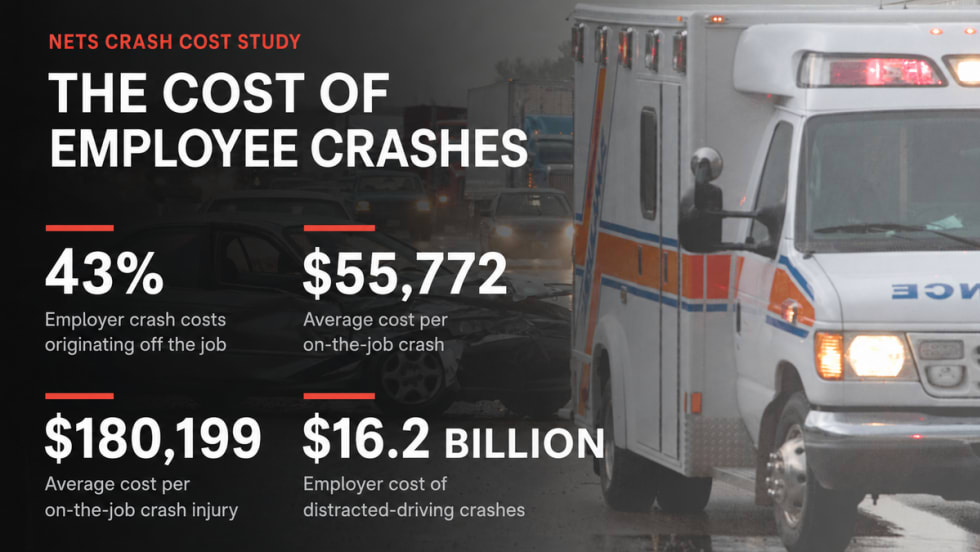
Off-the-Job Crashes Account for 43% of Employers’ $61.7 Billion Crash Burden
NETS quantifies costs dispersed across fleet, risk, HR, and other departments while providing new per-crash benchmarks for employers.
Read More →
Ram Recalls More Than 1.27 Million 1500 Pickups for Seat Belt Anchor Issue
The recall affects certain 2019-2026 Ram 1500 pickups that may have improperly attached second-row seat belt buckle anchors.
Read More →
How Better Visibility Cut Speeding Violations by 48%
Fleet leaders don't need more data, they need clearer visibility into what the data is saying. This case study explores how one utility replaced speeding-event counts with a single metric — miles driven in violation — to strengthen safety and significantly reduce speeding violations.
Read More →
Operation Safe Driver Week: Why the Industry's Oldest Safety Campaign Still Matters to Fleets
A look at how a 2007 enforcement initiative became one of the most consequential weeks on the fleet safety calendar, and what it means for your drivers in 2026.
Read More →