





Related: How GM’s New BrightDrop EV Business Will Work with Fleets
BrightDrop Joins Partnership to Pilot Last-Mile Delivery Hub in Seattle
With a goal to transition 30% of deliveries to zero emissions by 2030, the City of Seattle's partnership with BrightDrop and others will pilot a sustainable neighborhood delivery hub to test new vehicles, delivery models, and technologies for last-mile operations.
June 18, 2021
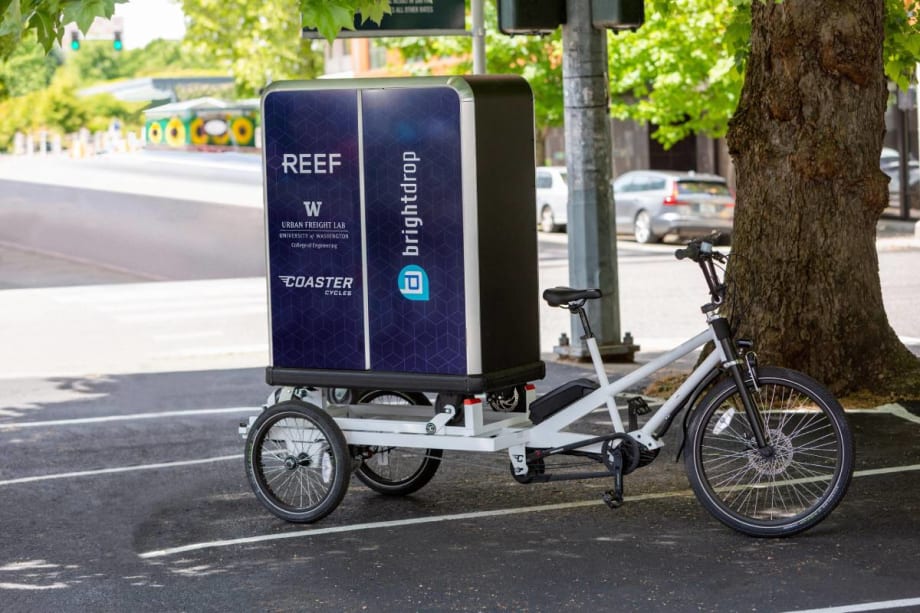
BrightDrop’s propulsion-assisted electric pallets are designed to move goods over short distances, powering zero- emissions last-mile goods delivery while reducing package touch points, costs and strain on the labor force.
Photo: Urban Freight Lab
2 min to read
BrightDrop has collaborated with the University of Washington’s Urban Freight Lab, the City of Seattle, and tech and delivery companies AxleHire, Coaster Cycles, and REEF, a delivery kitchen, to launch one of the nation’s first zero operating-emissions, last-mile neighborhood delivery hubs, they announced in a news release.
The delivery hub in Seattle’s Uptown neighborhood is a pilot program using zero operating-emissions technology to test new vehicles, delivery models, and other technologies to help accelerate the development and deployment of sustainable last-mile solutions. These technologies align with the City of Seattle's goals outlined in its Transportation Electrification Blueprint, including transitioning 30% of goods delivery to zero emissions by 2030.
The neighborhood delivery hub includes:
A neighborhood kitchen, bringing the local area quick and low-emissions access to some of their favorite delivery restaurants.
A common-carrier parcel locker, providing neighbors secure and contactless package delivery from all major carriers in an energy-efficient model.
A cargo-bike delivery service, leveraging BrightDrop’s propulsion-assisted electric pallets, or EP1s, enabling zero operating-emissions last-mile goods delivery.
The neighborhood delivery hub and associated transport modes are equipped with an array of sensors that provide detailed data regarding activity. Hub sensors are provided by the University of Washington’s STAR Lab. This data will be analyzed by the Urban Freight Lab to evaluate energy reductions and provide feedback for all participants as they work to improve their products and operating models.
As to how the pilot will work, the release stated: In an effort to reduce roadway congestion and sidewalk obstructions, REEF provides a fully off-street staging location where goods can be transferred from delivery vans to cargo bikes. Goods are loaded into BrightDrop’s EP1 units and the electric pallets are secured onto Coaster Cycles’ Electric Cargo Trike. Using AxleHire’s last-mile delivery technology, the driver makes customer deliveries using the fastest, most efficient routes possible. REEF’s ghost kitchen takes orders for food delivery that might otherwise have been fulfilled by restaurants farther away from the delivery area and fulfills them in the neighborhood.
The common carrier parcel locker, developed by ParcelPending and hosted by the UFL, provides delivery density for carriers (they visit one location instead of multiple addresses), and neighbors can walk to the site at their convenience to pick up packages, completing their own last mile. The combination of activities allows each operator to provide clean, neighborhood scale services cost effectively.
More Fleet Forward

Chad Edmondson Named 2026 Fleet Safety Award Winner
The VSC Fire & Security fleet director oversees more than 1,100 assets nationwide. His approach to improving driver safety emphasizes collaboration, employee engagement, and building trust with the people behind the wheel.
Read More →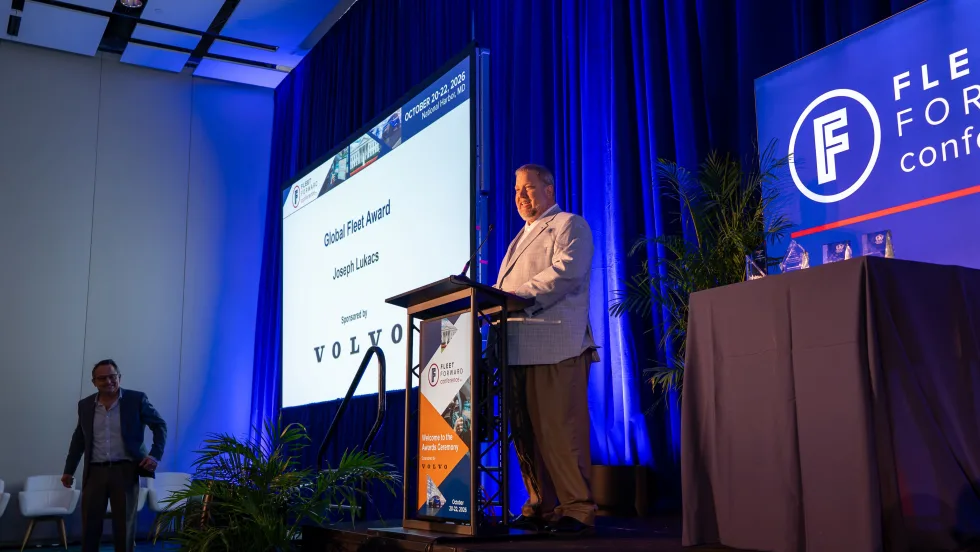
Joseph Lukacs Wins 2026 Global Fleet Manager of the Year
The Sherwin-Williams fleet leader adds another industry honor to his career after being named the 2025 Edward J. Bobit Professional Fleet Manager of the Year.
Read More →
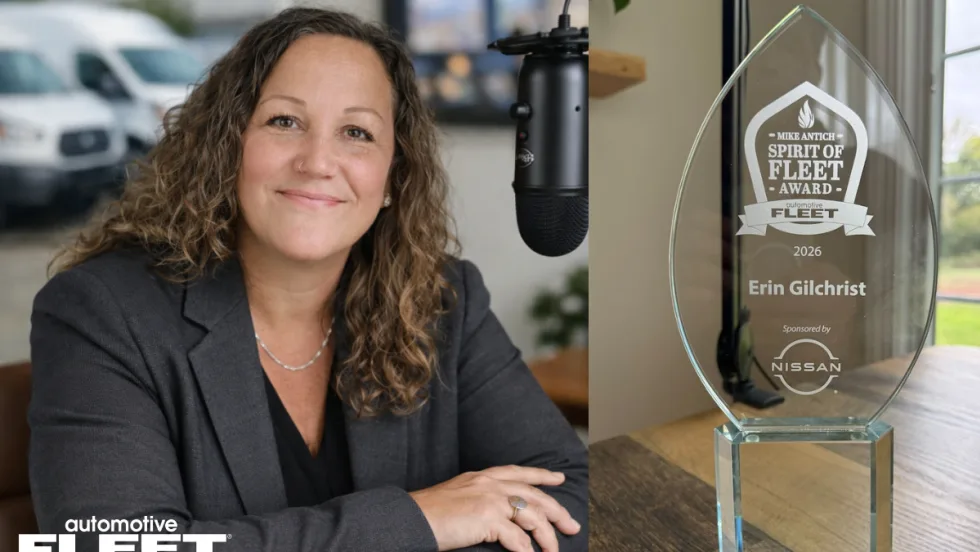
Erin Gilchrist Receives Mike Antich Spirit of Fleet Award
Last week at AFLA in Vegas, Erin Gilchrist received the inaugural, brand-new Spirit of Fleet Award.
Read More →
Dominika Leja Named the 2026 Fleet Manager of the Year
The AstraZeneca associate director of fleet was recognized for her leadership in fleet electrification, cost savings, and operational transformation.
Read More →
Jamie McKay Named the 2026 Fleet Visionary Award Winner
The Aptive Pest Control fleet manager was recognized for her approach to operations, data, lifecycle management, and driver needs.
Read More →
Fleet Forward Conference Introduces One-Day Passes for 2026
New one-day registration gives fleet professionals the flexibility to attend Tuesday, Wednesday, or Thursday, with passes available for $199 through Sept. 18.
Read More →
Vibe Coding: When Fleet Managers Become Software Builders
Five fleet professionals — none with programming skills — discuss how they’re using AI to build fleet solutions in-house and in a fraction of the time.
Read More →
Fleet Forward Conference Tackles Fleet Industry’s Growing Leadership Gap
This session will examine succession planning, knowledge transfer, and the skills the next generation of fleet leaders will need as veteran professionals leave the industry.
Read More →
2026 Fleet Manager of the Year Finalists Announced
Who are the 2026 Fleet Manager of the Year finalists?
Read More →