




Boston Fire Truck in Fatal Crash Had Wrong Brake Parts
BOSTON --- A police investigation of a fatal Boston fire truck crash has found that a Fire Department contractor installed the wrong parts on the ladder truck's brakes several months before the crash.
BOSTON --- A police investigation of a fatal Boston fire truck crash has found that a Fire Department contractor installed the wrong parts on the ladder truck's brakes several months before the crash. Moreover, the investigation found that firefighters who were not licensed mechanics repeatedly adjusted the brakes in violation of national safety guidelines, the Boston Globe reported.
The contractor replaced a brake chamber and brake pads on Ladder 26 with "unsuitable'' parts in spring 2008, which significantly compromised stopping power, according to a copy of the investigation report obtained by the Globe. When firefighters working on the truck later noticed the brakes not working properly, they made manual adjustments that may have masked underlying problems.
The 20-page report, prepared by Boston police homicide investigators, references guidelines issued in 2006 by the National Transportation Safety Board that said such adjustments are "a dangerous practice that can have serious consequences."
The diminished braking power contributed to the massive brake failure Jan. 9, when Ladder 26 barreled down a steep hill and slammed into an apartment building, killing Lieutenant Kevin M. Kelley, the report said.
[PAGEBREAK]
The report did not single out the faulty parts or the firefighter adjustments as primary causes of the crash. But they join an already long list of major errors that contributed to the fatal accident, the Globe reported. Last week, Suffolk District Attorney Daniel F. Conley said his investigation found that poor driver training and a lack of preventive maintenance were contributing factors.
The police report adds to the ongoing controversy about how vehicle maintenance is handled in the Boston Fire Department. The department drew criticism after the crash for using firefighters instead of licensed mechanics to work on trucks and check repairs performed by contractors. The department has since hired four licensed mechanics to oversee fleet maintenance and to help with repairs, but firefighters continue to do the bulk of the work, the Globe reported.
The report also contradicts the Fire Department's claims immediately after the crash that firefighters had not performed work on the brakes. This week, department spokesman Steve MacDonald said "further investigation revealed that was not the case.'' MacDonald also said the department plans to hire more mechanics to handle fleet maintenance work.
"In the meantime, any work that's done by firefighters is checked by the fleet safety manager, who is a licensed mechanic,'' MacDonald told the Globe.
The police report says that the Fire Department hired Damian Diesel Inc. to service Ladder 26 in early 2008, and Damian Diesel subcontracted the job to Woodward's Auto Spring Shop in Brockton. The shop told the police investigator that it had replaced brake shoes and pads on the ladder truck with "comparable'' parts in March 2008, the report says.
But an examination of the truck after the crash found the pads were "insufficient,'' providing less friction than required for the 22-ton truck. Moreover, according to the police report, a brake chamber was smaller than required. Smaller brake chambers provide less braking force.
When reached by the Globe on the phone, the manager of Woodward's Auto Spring Shop declined to comment on the police report's findings.
According to the report, Boston firefighters working in the department's vehicle maintenance division were changing a tire on the truck on May 16, 2008, when they decided to adjust the brakes. They noticed that the brakes were not working as forcefully as they should, so the firefighters manually tweaked automatic slack adjusters on both rear wheels until the brakes stopped the wheels from turning.
But, according to the report, the slack adjusters are designed to automatically adjust brake pressure as brake pads wear down. They should only be manually adjusted by qualified technicians when the part is first installed or when that is the only way to get the vehicle to a repair shop, according to NTSB guidelines. Those guidelines were also distributed in 2006 by the International Association of Fire Chiefs, which warned that manual adjustment outside those circumstances could have "deadly consequences."
Citing Fire Department fleet maintenance logs, the police report revealed that Boston firefighters and outside contractors performed the improper adjustments on the truck 10 times "despite clear and concise warnings to the contrary."
The Police Department's conclusions prompted federal officials to issue a rare safety bulletin in October warning fire departments nationwide once again about such practices, the Globe reported.
More Safety

Nexar-Nauto Merger Aims to Give Fleets Better Safety Intelligence Through Larger Driving Dataset
Stefan Heck tells Automotive Fleet that combining more than 10 billion miles of driving history with Nexar's AI models will give fleets deeper insights into driver risk and roadway conditions than either company could provide independently.
Read More →
Don't Wait for a Crisis: 5 Ways to Build Mental Health Into Your Fleet Safety Program
For Suicide Prevention Month, fleet and safety leaders have an opportunity to put mental health where it belongs: at the center of workplace safety.
Read More →
How Camera Data Can Strengthen a Fleet’s Insurance Renewal
Insights from a commercial insurance carrier and a broker show how fleets can turn video telematic data, driver coaching, and improved claims results into a stronger case at insurance renewal.
Read More →
The Safest Fleets Aren’t the Ones with the Most Technology
You’ve made the telematics investment. Here’s how to capture the other half of its value and build the safest fleet on the road.
Read More →
Hidden in Plain Sight: Fleet Compliance Risks
Fleet compliance isn't just about having policies — it's about consistently enforcing them. This practical guide reveals six hidden compliance risks common in public sector and shared fleet operations and outlines proven strategies to improve visibility, accountability, and audit readiness
Read More →
NETS Sets 2026 Fleet Safety Benchmark Conference for Indianapolis
The Sept. 15–17 program will feature fleet benchmarking data, case studies, emerging technologies, and implementation strategies while running alongside the NSC Safety Congress & Expo.
Read More →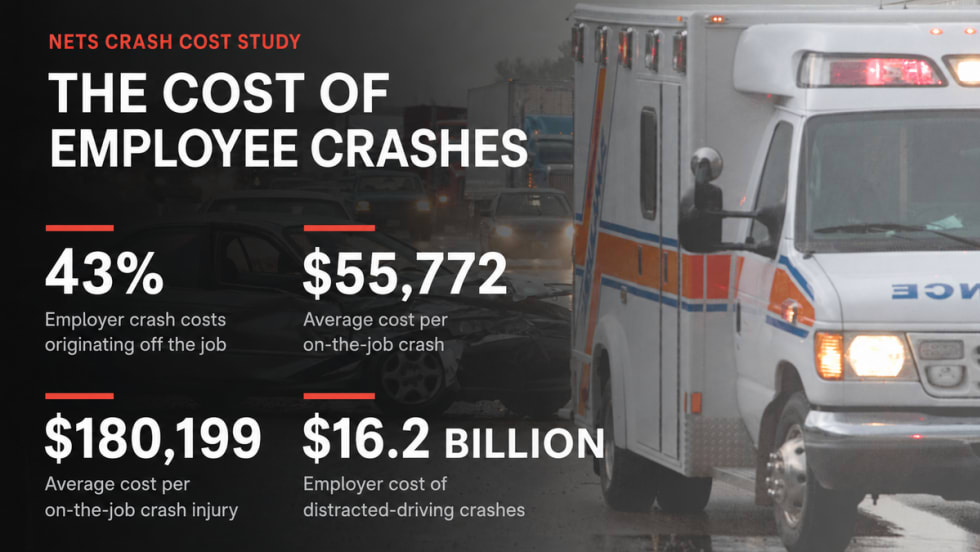
Off-the-Job Crashes Account for 43% of Employers’ $61.7 Billion Crash Burden
NETS quantifies costs dispersed across fleet, risk, HR, and other departments while providing new per-crash benchmarks for employers.
Read More →
Ram Recalls More Than 1.27 Million 1500 Pickups for Seat Belt Anchor Issue
The recall affects certain 2019-2026 Ram 1500 pickups that may have improperly attached second-row seat belt buckle anchors.
Read More →
How Better Visibility Cut Speeding Violations by 48%
Fleet leaders don't need more data, they need clearer visibility into what the data is saying. This case study explores how one utility replaced speeding-event counts with a single metric — miles driven in violation — to strengthen safety and significantly reduce speeding violations.
Read More →
Operation Safe Driver Week: Why the Industry's Oldest Safety Campaign Still Matters to Fleets
A look at how a 2007 enforcement initiative became one of the most consequential weeks on the fleet safety calendar, and what it means for your drivers in 2026.
Read More →