




Bosch Safety Systems Behind New Audi A8
FARMINGTON HILLS, MI - The Bosch automatic emergency braking system is going into series production for the first time in the new Audi A8, as part of the "pre-sense" package.

2011 Audi A8
FARMINGTON HILLS, MI - The Bosch automatic emergency braking system is going into series production for the first time in the new Audi A8, as part of the "pre-sense" package. It provides effective support for drivers in critical situations in which there is the threat of a rear-end collision.
"Roughly 80 percent of drivers do not hit the brakes at all before a rear-end collision, or do not use the car's full braking capacity," said Dr. Werner Struth, president of the Bosch Chassis Systems Control division, summarizing an analysis of GIDAS, the German accident database.
The Bosch system helps drivers to react properly. The technical basis of this system is the ESP electronic stability program and the LRR3 long-range radar sensors of the ACC adaptive cruise control system, which are complemented by a video sensor.
Sensor data fusion for the best possible recognition of the traffic situation
Of all the accidents involving injury and fatalities in Germany, 15 percent are rear-end collisions. Predictive systems that interpret the state of the traffic ahead of the vehicle, warn drivers, support them, and finally react automatically can help to significantly reduce the number of such accidents.

The earlier and the more precisely the situation in front of the vehicle can be interpreted, the better the driver assistance functions can help the driver. Bosch engineers have thus made an interplay of radar and video data possible, for optimum recognition of traffic situations.
Apart from the high-performance Bosch ESP premium brake control system, the Audi A8 features two long-range radar sensors, which are housed at the left and right of the front bumper. These new Bosch generation 3 sensors can detect objects within a beam width of approximately 40 degrees at a distance of up to 250 meters, and can determine their position and speed. The video camera is positioned behind the front windscreen, at the same height as the rear-view mirror. The advantage of video technology is the high level of information content, which makes persons, vehicles, or traffic signs easy to identify.
Another benefit is the technology's ability to set off one image against another, as well as the angle detection of objects. The radar signals, for their part, deliver precise data as to the position and speed of the persons, vehicles, or traffic signs featured in the video images.
In a first step, if the predictive emergency braking system detects a potential obstacle, such as a vehicle that is slowing down very fast or coming to a standstill, the brake is primed for the emergency braking that may follow. This involves the brake control system imperceptibly building up slight pressure, which brings the brake pads up close to the discs, so that they can provide immediate deceleration in the event of a subsequent braking operation. If the driver does not react, and the vehicle comes closer, an acoustic warning is given, followed by automatic partial braking, initiated via a brief jerk on the brakes. If the driver still does not react, and if a collision can no longer be prevented, the system brakes automatically at maximum pressure roughly half a second before impact, in order to reduce speed of impact and mitigate the consequences of the accident.
The ACC function has also been extended. With the help of the video data for example, the system reacts more quickly when overtaking other vehicles and when other cars veer into the lane ahead. Moreover, in the new Audi, the signals from the Bosch video camera are used for the automatic headlight control and for the lane departure warning system. Additional functions in the ESP provide further comfort and safety features. The hill-hold control, for example, can prevent the vehicle from rolling backwards on an incline. When towing, ESP detects whether a trailer is weaving dangerously, and helps the driver to counteract.
Many other systems and components in the new Audi A8 are also made by Bosch: there is the instrument cluster with its large color display, the control unit and sensors for the passenger restraint system, a domain control unit, the starter, and the wiper drive. For the gasoline engines of the new Audi A8, Bosch supplies various engine control units, and the two initially available diesel engines use Bosch injection systems with piezo valves and injection pressure of up to 2,000 bar.
More Safety

Nexar-Nauto Merger Aims to Give Fleets Better Safety Intelligence Through Larger Driving Dataset
Stefan Heck tells Automotive Fleet that combining more than 10 billion miles of driving history with Nexar's AI models will give fleets deeper insights into driver risk and roadway conditions than either company could provide independently.
Read More →
Don't Wait for a Crisis: 5 Ways to Build Mental Health Into Your Fleet Safety Program
For Suicide Prevention Month, fleet and safety leaders have an opportunity to put mental health where it belongs: at the center of workplace safety.
Read More →
How Camera Data Can Strengthen a Fleet’s Insurance Renewal
Insights from a commercial insurance carrier and a broker show how fleets can turn video telematic data, driver coaching, and improved claims results into a stronger case at insurance renewal.
Read More →
The Safest Fleets Aren’t the Ones with the Most Technology
You’ve made the telematics investment. Here’s how to capture the other half of its value and build the safest fleet on the road.
Read More →
Hidden in Plain Sight: Fleet Compliance Risks
Fleet compliance isn't just about having policies — it's about consistently enforcing them. This practical guide reveals six hidden compliance risks common in public sector and shared fleet operations and outlines proven strategies to improve visibility, accountability, and audit readiness
Read More →
NETS Sets 2026 Fleet Safety Benchmark Conference for Indianapolis
The Sept. 15–17 program will feature fleet benchmarking data, case studies, emerging technologies, and implementation strategies while running alongside the NSC Safety Congress & Expo.
Read More →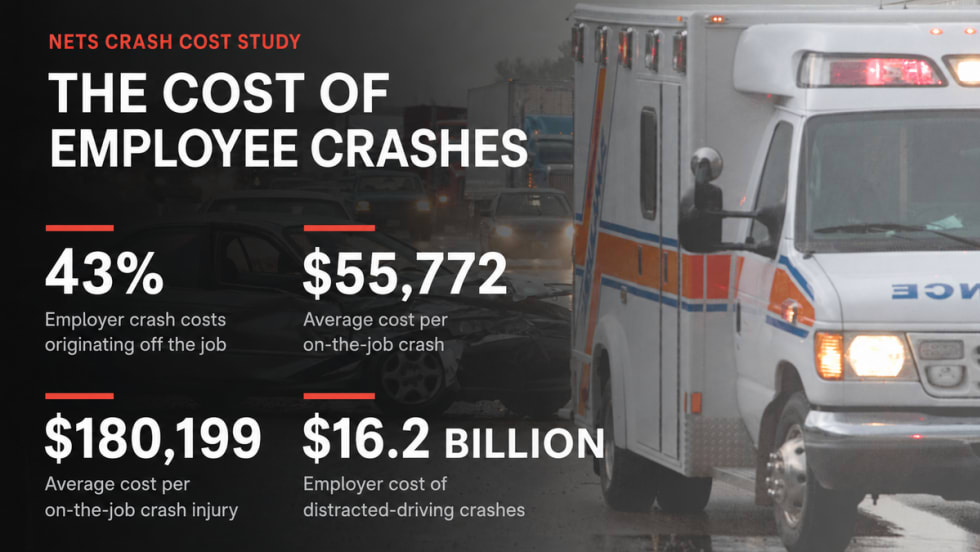
Off-the-Job Crashes Account for 43% of Employers’ $61.7 Billion Crash Burden
NETS quantifies costs dispersed across fleet, risk, HR, and other departments while providing new per-crash benchmarks for employers.
Read More →
Ram Recalls More Than 1.27 Million 1500 Pickups for Seat Belt Anchor Issue
The recall affects certain 2019-2026 Ram 1500 pickups that may have improperly attached second-row seat belt buckle anchors.
Read More →
How Better Visibility Cut Speeding Violations by 48%
Fleet leaders don't need more data, they need clearer visibility into what the data is saying. This case study explores how one utility replaced speeding-event counts with a single metric — miles driven in violation — to strengthen safety and significantly reduce speeding violations.
Read More →
Operation Safe Driver Week: Why the Industry's Oldest Safety Campaign Still Matters to Fleets
A look at how a 2007 enforcement initiative became one of the most consequential weeks on the fleet safety calendar, and what it means for your drivers in 2026.
Read More →