




BMW Manufacturing Expands Use of Hydrogen Fuel Cells
BMW Manufacturing announced March 13 the successful expansion of its hydrogen fuel-cell material handling equipment across its 4 million sq.-ft. production facility.
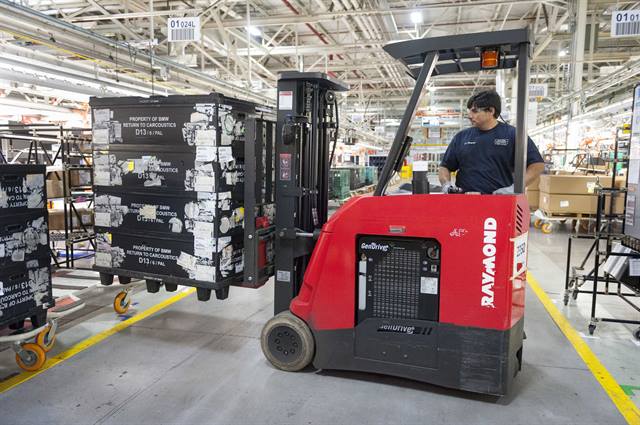
Hydrogen-powered forklift at the BMW Plant in Spartanburg, S.C. (Photo: BMW Manufacturing)
BMW Manufacturing announced March 13 the successful expansion of its hydrogen fuel-cell material handling equipment across its 4 million sq.-ft. production facility.
In 2010, BMW completed the installation of a hydrogen storage and distribution area near the plant’s Energy Center to power about 100 pieces of fuel cell material handling equipment. Since that time, the company has more than doubled its hydrogen-fuel cell fleet to approximately 230 units to service the entire plant’s production and logistics functions.
“BMW continues to complement its sustainable production model by adding alternative, efficient technology, said Josef Kerscher, president of BMW Manufacturing. “Successful implementation, and ultimately expansion, of our hydrogen fuel cell material handling fleet has provided a sustainable energy source that exceeds our expectations.”
The additional usage of the hydrogen fuel cell system was executed by adding two new higher-capacity compressors, new storage tubes and distribution piping, and eight new hydrogen dispensers. The expanded system will deliver at least 400kg of hydrogen per day. BMW estimates that the expanded system will avoid 4.1 million kw/hours per year, up from 1.8 million kw hours/year for the initial hydrogen fuel cell system.
BMW also released a project update to the Landfill Gas-to-Hydrogen Pilot Project. The first phase of the study, that validated the economic and technical feasibility, began in July 2011. The project has now successfully moved to the second phase of methane-to-hydrogen conversion. The project team, led by South Carolina Research Authority (SCRA), is implementing and testing equipment that will monitor the hydrogen purity. To do this, BMW has installed a clean-up system that takes a stream of landfill gas (post-siloxane removal), removes the sulfur and trace contaminants and, ultimately, produces hydrogen via a Steam Methane Reformer (SMR).
“BMW is very pleased with the progress we have been able to achieve in the last 18 months, said Cleve Beaufort, BMW Group’s energy manager for the U.S. and Canada. “The objective of generating renewable hydrogen from methane is proving to be a possible option for BMW and will be transformational for the fuel cell industry.”
Throughout this project, SCRA has been a leading funding and implementation partner. The U.S. Department of Energy has also provided both technical and funding support for the project.
The final phase of this project is scheduled to begin in late 2013. At that time, BMW will conduct side-by-side trials of material handling equipment fueled by landfill gas derived hydrogen versus commercially sourced hydrogen.
For their efforts in on-site energy production, the U.S. Environmental Protection Agency recently named BMW Manufacturing the second largest Green Power Partner. Green Power rankings recognize U.S. businesses and communities that are making investments in on-site power generation. BMW’s U.S. plant currently produces 38 percent of its electrical requirements on-site, mostly from its landfill gas-to-energy program.
More Green Fleet

Merchants Fleet Reports 290M EV Miles as Fleets Navigate Changing Electrification Market
From millions in operating savings to hundreds of millions of EV miles, Merchants Fleet’s latest report reveals what’s working and what’s changing in fleet electrification.
Read More →
The EV Breakdown Nobody's Talking About: Why Most Electric Vehicle Roadside Calls Aren't Mechanical Failures
Here's why EV breakdowns are widely misunderstood.
Read More →
ChargePoint Now Available in Energy Pass
ChargePoint and additional planned charging network integrations were added to GM's Energy Pass.
Read More →
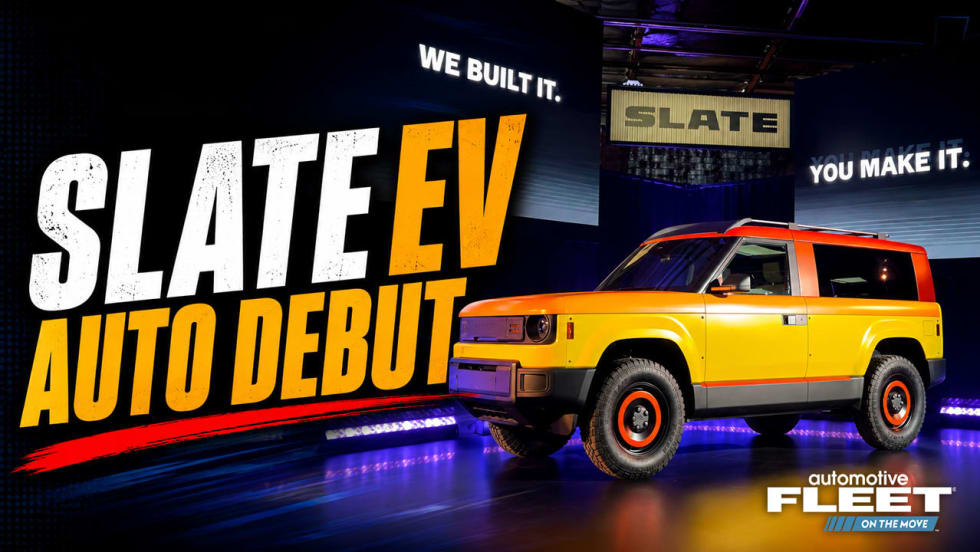
First Look: Slate Auto's Electric Fleet Pickup
Could an affordable, modular EV pickup make electrification more practical for fleets?
Read More →
Slate Debuts Colorful, Unique EV Models
A recent media and client event, studded with electric vehicles dressed up on platforms, planted a new position for the manufacturer in the wider EV market. Fleets will find cost-saving advantages.
Read More →
Slate Electric SUV, Pickup Switchable Model Aims For Light-Duty Fleets
Everything about this EV is counterintuitive and understated, making it stand out from the crowd.
Read More →
Inspiration Mobility Acquires Key Electrada Assets
Inspiration Mobility Group has acquired select assets of Electrada, adding the fleet electrification provider's team, technology, and charging infrastructure development capabilities to its energy management business.
Read More →
Turning Connected Vehicle Data Into Decisions That Matter
Fleet leaders have more data than ever, but turning that data into clear, actionable decisions remains a challenge. This white paper shows how leading organizations are using connected vehicle data to improve safety, reduce costs, and optimize fleet performance. Learn how to turn insight into action across your fleet.
Read More →
Are You Tracking Your Fleet's True Total Cost of Ownership?
Bobit Business Media surveyed 190 fleet professionals and found that while most fleets are tracking costs, fragmented systems and data gaps are keeping true TCO visibility out of reach. With rising pressure to control spend in an increasingly volatile environment, the gap between what fleets think they know and what the data actually shows is wider than you might expect. See how your peers are managing costs today and where the industry still has room to improve.
Read More →