




BMW Faces $20M Penalty for Safety Violations
This NHTSA-imposed penalty could potentially double if the automaker fails to comply with a new consent order and commits other safety violations.

Foxx
The National Highway Traffic Safety Administration has imposed a $20 million civil penalty against automaker BMW North America for federal safety violations tied to the recall of Mini Coopers.
Additionally, the federal agency, which is a part of the U.S. Department of Transportation, has placed a series of performance requirements on the automaker as part of the terms of a consent order. This agreement requires that BMW admit it failed to comply with all federal reporting requirements in a timely manner. Those requirements are spelled out in the National Traffic and Motor Vehicle Safety Act.
The order’s civil penalty includes $10 million due in cash and a requirement that the company spend at least $10 million to meet the order’s performance obligations. An additional $20 million in deferred penalties will come due if BMW fails to comply with the order or commits other safety violations. As a result, the total penalty has the potential to reach $40 million.
The automaker violated requirements to issue a timely recall of certain Mini Cooper vehicles that didn’t comply with minimum crash protection standards. BMW also didn’t provide accurate information to the agency about its recalls, NHTSA said.
The agency imposed a $3 million civil penalty on BMW in 2012 for similar violations.
“NHTSA has discovered multiple instances in which BMW failed its obligations to its customers, to the public and to safety,” U.S. Transportation Secretary Anthony Foxx said in a released statement. “The Consent Order NHTSA has issued not only penalizes this misconduct, it requires BMW to take a series of steps to remedy the practices and procedures that led to these violations.”
The consent order resolves a NHTSA investigation into whether BMW failed to issue a recall within five days of learning that 2014 and 2015 Mini Cooper models didn’t meet regulatory minimums for side-impact crash protection.
In October 2014, a Mini 2 Door Hardtop Cooper failed a crash test designed to determine whether the vehicle met crash-protection minimums. BMW responded that the vehicle was listed with an incorrect weight and would pass the test if conducted at the proper weight rating. But the automaker agreed to issue a recall to correct the wrong weight rating on the vehicle’s tire information placard and to conduct a voluntary service campaign, short of a recall, to add more side-impact protection.
In July of this year, NHTSA conducted a second crash test at the corrected weight rating on a vehicle with the additional side-impact protection, and the vehicle again failed. At that time, NHTSA learned that BMW had not launched the service campaign it had agreed to conduct.
Under the new consent order, BMW acknowledges that it failed to recall the noncompliant vehicles in a timely fashion. It also admits additional violations discovered in NHTSA’s investigation, including failing multiple times since its 2012 to notify owners and dealers of recalls in a timely fashion and to provide required quarterly recall completion reports on time.
“The requirement to launch recalls and inform consumers in a timely fashion when a safety defect or noncompliance is discovered is fundamental to our system for protecting the traveling public. This is a must-do,” said NHTSA Administrator Mark Rosekind. “For the second time in three years, BMW has been penalized for failing to meet that obligation. The company must take this opportunity to reform its procedures and its culture to put safety where it belongs: at the top of its priority list.”
In addition to paying the civil penalties, BMW must:
Retain a NHTSA-approved independent safety consultant to help the company develop best practices for complying with the Motor Vehicle Safety Act and NHTSA regulations, and to submit those best practices to NHTSA.
Evaluate, under the independent consultant’s guidance, all safety or compliance-related issues under the company’s review and provide a monthly written report to NHTSA on those issues.
Launch a pilot program to determine whether the company can use data analytics to detect emerging safety-related defect trends.
Establish a plan to deter BMW dealers from selling new vehicles with un-remedied safety defects.
“The company is committed to further improving its recall processes to better serve its customers,” BMW NA said in a released statement. “BMW NA respects the role of NHTSA and looks forward to working with them to develop solutions for the future.”
More Safety

Nexar-Nauto Merger Aims to Give Fleets Better Safety Intelligence Through Larger Driving Dataset
Stefan Heck tells Automotive Fleet that combining more than 10 billion miles of driving history with Nexar's AI models will give fleets deeper insights into driver risk and roadway conditions than either company could provide independently.
Read More →
Don't Wait for a Crisis: 5 Ways to Build Mental Health Into Your Fleet Safety Program
For Suicide Prevention Month, fleet and safety leaders have an opportunity to put mental health where it belongs: at the center of workplace safety.
Read More →
How Camera Data Can Strengthen a Fleet’s Insurance Renewal
Insights from a commercial insurance carrier and a broker show how fleets can turn video telematic data, driver coaching, and improved claims results into a stronger case at insurance renewal.
Read More →
The Safest Fleets Aren’t the Ones with the Most Technology
You’ve made the telematics investment. Here’s how to capture the other half of its value and build the safest fleet on the road.
Read More →
Hidden in Plain Sight: Fleet Compliance Risks
Fleet compliance isn't just about having policies — it's about consistently enforcing them. This practical guide reveals six hidden compliance risks common in public sector and shared fleet operations and outlines proven strategies to improve visibility, accountability, and audit readiness
Read More →
NETS Sets 2026 Fleet Safety Benchmark Conference for Indianapolis
The Sept. 15–17 program will feature fleet benchmarking data, case studies, emerging technologies, and implementation strategies while running alongside the NSC Safety Congress & Expo.
Read More →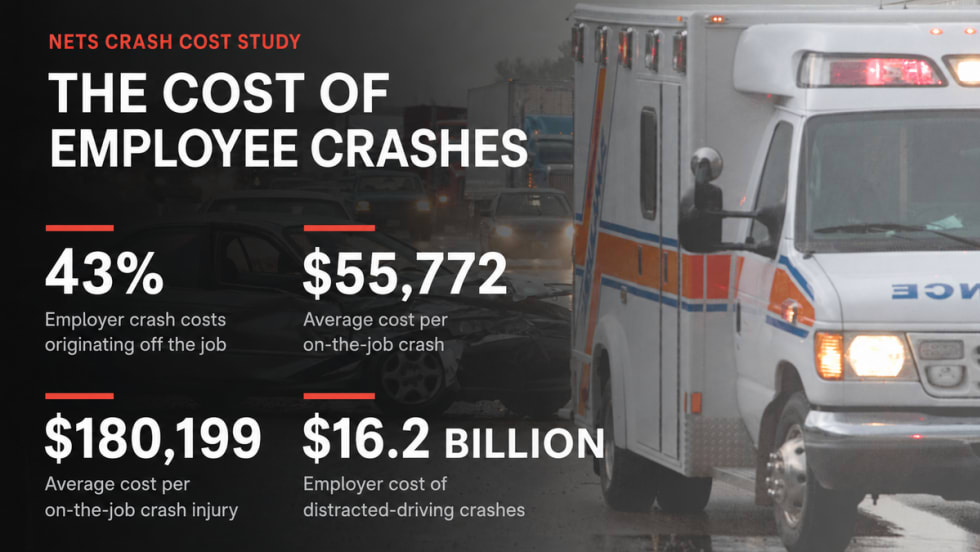
Off-the-Job Crashes Account for 43% of Employers’ $61.7 Billion Crash Burden
NETS quantifies costs dispersed across fleet, risk, HR, and other departments while providing new per-crash benchmarks for employers.
Read More →
Ram Recalls More Than 1.27 Million 1500 Pickups for Seat Belt Anchor Issue
The recall affects certain 2019-2026 Ram 1500 pickups that may have improperly attached second-row seat belt buckle anchors.
Read More →
How Better Visibility Cut Speeding Violations by 48%
Fleet leaders don't need more data, they need clearer visibility into what the data is saying. This case study explores how one utility replaced speeding-event counts with a single metric — miles driven in violation — to strengthen safety and significantly reduce speeding violations.
Read More →
Operation Safe Driver Week: Why the Industry's Oldest Safety Campaign Still Matters to Fleets
A look at how a 2007 enforcement initiative became one of the most consequential weeks on the fleet safety calendar, and what it means for your drivers in 2026.
Read More →