




Azuga Unveils Wi-Fi Dash Camera
Azuga has launched SafetyCam, a Wi-Fi enabled, dash-mounted monitoring solution designed to monitor and improve driver behavior and ultimately lower costs related to driving incidents.

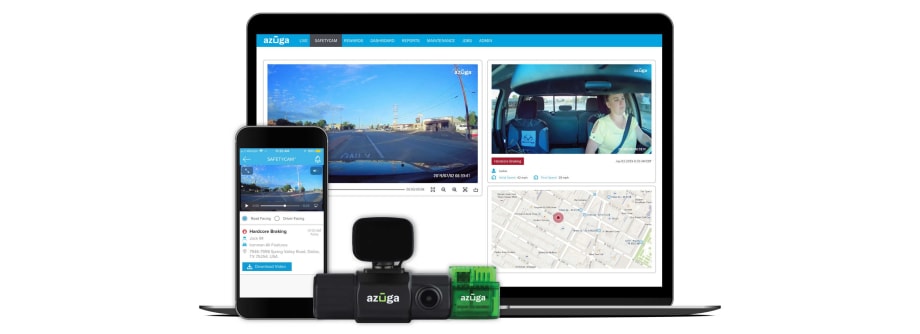
Azuga’s camera records 1080p footage of the road in front of the vehicle and the cabin of the vehicle.
Image courtesy of Azuga.
Azuga has launched SafetyCam, a Wi-Fi enabled, dash-mounted monitoring solution designed to monitor and improve driver behavior and ultimately lower costs related to driving incidents.
Azuga’s camera, which records 1080p footage of both the road in front of the vehicle and the cabin of the vehicle, is the newest entrant into the growing field of video telematics.
Although CEO and Co-Founder of Azuga Ananth Rani acknowledges that this isn’t the first product in the field, he feels the company’s timing has helped it understand the technology to a point that it has allowed it to package it in the most cost-efficient way it can.
“Our camera is super lightweight, highly functional and transmits video on a local Wi-Fi network from the camera to our telematics system,” said Rani. “Our telematics system then sends video through the 4G wireless network it operates on to the cloud. Since Azuga customers are already using devices in their vehicles that operate on 4G, we decided to leverage that connection to send videos and economize the cost of hardware.”
The Azuga SafetyCam can be bundled into existing contracts free of charge or purchased without a contract for $99, plus monthly service fees.
As with other video telematics platforms, the goal of the footage recorded by Azuga’s camera is to provide immediate proof of an accident’s cause and the party at fault during the insurance claims process.
“According to the American Trucking Association, 70% of all accidents are not the fault of the commercial driver, yet in most cases, the company is deemed at fault,” said Rani. "With Azuga SafetyCam, businesses and their insurance providers benefit from having a first-hand perspective into incident specifics, which helps in identifying who is at fault, during an accident or traffic violation.”
Even companies that self-insure can benefit from SafetyCam, noted Rani.
“Not all self-insured fleets were able to reap the cost-savings benefits from telematics tech when it first entered the market. We're now able to help them by reducing the frequency and severity of accidents, which protects their drivers, vehicles and their bottom line,” said Rani.
Fewer accidents, and less severe accidents mean that self-insured fleets won’t be paying out of pocket for these accidents as much as they might have in the past, Rani noted.
Azuga SafetyCam continuously records vehicle trips and it can automatically detect at-risk driving behaviors. In the event of erratic driving behavior such as hard braking, sudden acceleration, and hard cornering, the camera system will record footage after the event and upload it to the cloud.
Fleet managers can then access this footage, along with telematics data from Azuga’s telematics platform, and coach drivers that habitually exhibit these types of driving behaviors.
As these drivers are coached, the goal is that they’ll exhibit these behaviors, that the camera and telematics system have helped identify, less and less, resulting in fewer or less severe accidents.
Azuga’s SafetyCam is coming at a time when U.S. roadways have been getting increasingly dangerous. Before 2015, vehicle crash fatalities had been on the decline since 2005 — except for 2012, where fatality rates rose slightly.
Distracted driving and increased used of devices such as smartphones have been constantly cited for this increase since 2015. 2018 also marked the third year in a row where U.S. roadway deaths totaled at least 40,000.
With the number of miles that fleets typically run their vehicles through, 20,000 to 25,000 miles a year or more, there’s a lot of exposure to accident risks.
In fact, the annual accident rate for commercial fleets in 2018 was around 20%, and in some industries such as pharmaceuticals that figure was larger. That same year, the average cost of a loss related to a fleet vehicle accident was approximately $70,000, which is almost twice the cost of the average workplace injury.
Products like a video telematics system, alongside a comprehensive fleet safety program can play a large part in not only minimizing costs but also ensuring the safety of a fleet’s drivers.
More Telematics
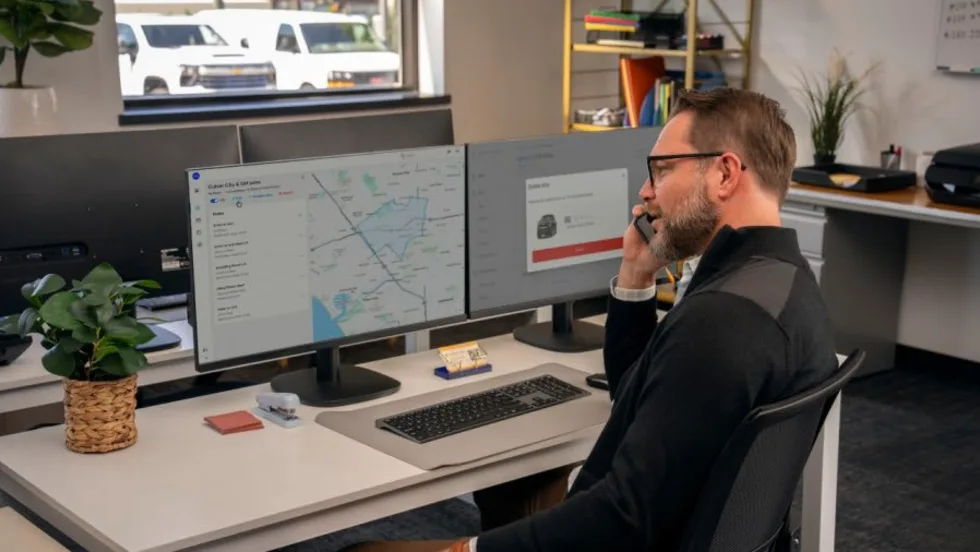
GM Launches OnStar Fleet Intelligence Platform With AI Assistant
The new platform brings vehicle data, order tracking, connected services and fleet analytics into one system, with an AI assistant that can answer fleet questions using natural-language prompts.
Read More →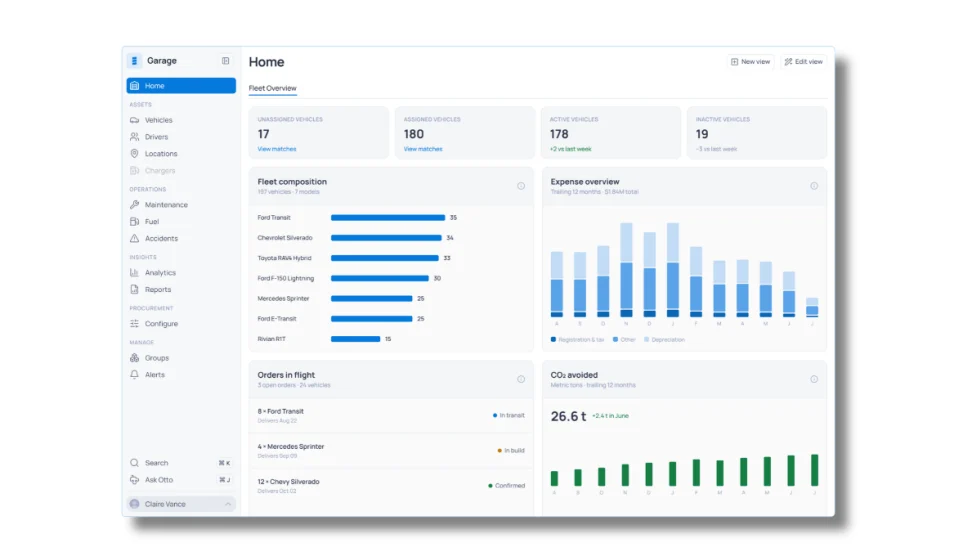
Inspiration Fleet Introduces Garage 2.0 Fleet Intelligence Platform
Fleet managers increasingly have access to data from vehicles, telematics, fuel, charging, and other systems, but those sources don't always communicate with one another. Inspiration Fleet's Garage 2.0 platform brings that information together while letting fleets keep working with different technology and service providers.
Read More →
Inside Inspiration Fleet’s New Platform for Connecting Fleet Data
Inspiration Fleet CTO Chris Getner explains how the new Garage 2.0 platform is designed to connect disparate fleet data and what that could mean for fleet managers in practice.
Read More →
Fleet Manager’s Ultimate Playbook: Navigating the New Standard in OEM Connectivity
Rising operating costs, driver safety concerns, and unplanned downtime are putting unprecedented pressure on modern fleets. Discover how fleet managers use embedded OEM connectivity and real-time vehicle data to cut TCO, prevent downtime, and protect drivers without aftermarket telematics hardware.
Read More →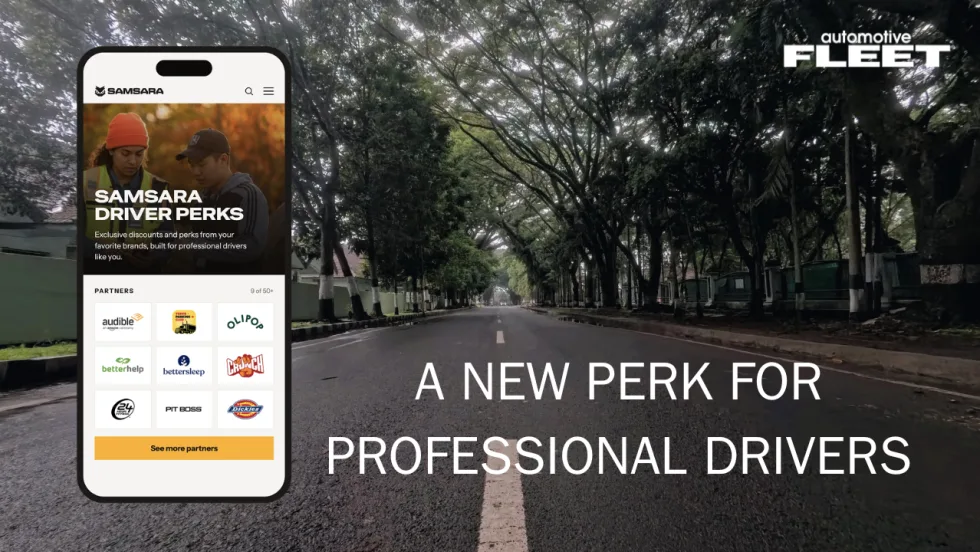
Samsara Driver Perks Adds New Benefit for Corporate Fleet Drivers
The rewards program gives eligible professional drivers access to discounts from more than 50 brands while giving fleets another way to support recruitment, retention, and the driver experience.
Read More →
Inside the Church of Jesus Christ of Latter-day Saints’ Two-Track Telematics Strategy
With 20,000 vehicles and two fundamentally different driver populations, the Church faced a fleet management problem that a single telematics program couldn't solve. How it responded offers a replicable framework for any fleet where one size doesn't fit every driver.
Read More →
How Conversational AI Can Make Fleet Tasks Easier for Drivers
While most generative AI tools help fleet managers interpret data at their desks, Connex2X is applying voice interaction to tasks behind the wheel.
Read More →
Why Fleets Are Creating Dedicated Fleet Analyst Positions
Are fleet analyst positions the new norm? Listen here to find out.
Read More →
Teletrac Navman Begins Next Chapter as Standalone Private Company
What's new with Teletrac Navman and its new owner?
Read More →
Why Fleets Are Creating Dedicated Fleet Analyst Positions
Telematics, AI, EVs, and connected technologies are generating more fleet data than traditional teams can effectively manage. Reed Jackson explains why dedicated fleet analytics roles are emerging to turn that information into better operational decisions.
Read More →