




Australian Vehicle Safety Standards Rise
The Australasian New Car Assessment Program (ANCAP) is increasing the criteria it uses to assess the safety of new vehicles starting Jan. 1.
The Australasian New Car Assessment Program (ANCAP) is increasing the criteria it uses to assess the safety of new vehicles starting Jan. 1.
Increasing ANCAP standards and a comprehensive development and expansion path in partnership with Euro NCAP will see even higher levels of safety in cars from 2015, according to the organization.
ANCAP’s Rating Road Map has introduced annual increases to each star rating since its implementation in 2011. The Road Map will see further increases to each star rating up to and including 2017. In parallel, ANCAP will enter a transition phase from 2015 as its moves to more closely align its tests, protocols and calculation method with those of its sister organization, Euro NCAP.
For 15 years ANCAP has been able to produce half its ratings from test data sourced from Euro NCAP. This has been invaluable to consumers and over time this value will grow, according to ANCAP.
“Improvements in vehicle safety design and development in the past few years have been swift and substantial – particularly in the realm of advanced safety assist collision avoidance technologies – and test programs the world over are adjusting their plans to match pace,” said ANCAP Chief Executive Officer Nicholas Clarke. “The ANCAP Rating Road Map already takes some of these changes and advancements into account however given the rapid pace at which vehicle safety is moving, and the need for new car assessment programs (NCAPs) to acknowledge these advancements, ANCAP has revised and expanded its forward plan.”
Throughout the transition period (2015-2017), ANCAP will use both its own and Euro NCAP policies and protocols with two assessment pathways in use to determine ANCAP safety ratings. This will ensure that consumers get access to the latest safety assist technology (SAT) without delay. Performance testing of SATs covering autonomous emergency braking (AEB), lane support systems (LSS), speed assistance systems (SAS) and electronic stability control (ESC) will be introduced and the range of physical crash tests will broaden. By 2018 ANCAP and Euro NCAP policies and protocols will be largely aligned.
“This is an important step in the evolution of ANCAP and NCAPs worldwide as we work together to share knowledge, data and expertise; and encourage manufacturers to develop cars for a global market,” Clarke observed.
ANCAP is supported by all Australian and New Zealand motoring clubs, the Australian Government, the New Zealand Government, Australian state and territory governments, the Victorian Transport Accident Commission, NRMA Insurance and the FIA Foundation.
More Global Fleet
Holman Takes Full Ownership of ARIZA in Mexico
Holman is bringing its Mexican fleet management operation fully under its own brand after more than 30 years as a joint venture. The change gives multinational fleet customers a single Holman operation across the U.S., Canada, and Mexico.
Read More →
Proven Ways to Reduce Work Truck Downtime
The age-old problem of downtime will always be a reality, but with new strategies at hand, fleets have more ways to keep trucks on the road longer.
Read More →
The Top 300 Commercial Fleets
The Top 300 Commercial Fleets: See the List
Read More →


Cameras, Safety and Insurance: From Reactive Claims to Real-Time Prevention (Part 2 of 2)
Part Two: Commercial auto remains one of the most challenging and costly lines of coverage for fleet operators and insurers alike. Continue learning more about how to effectively address these issues from Onur Aksan, Enterprise Business Development Executive, Geotab
Read More →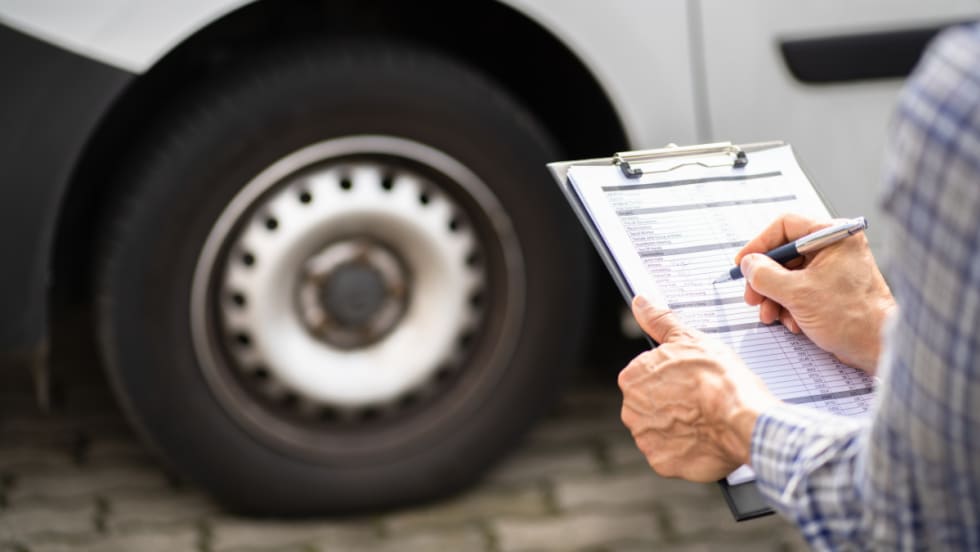
Cameras, Safety and Insurance: From Reactive Claims to Real-time Prevention
Commercial auto remains one of the most challenging and costly lines of coverage for fleet operators and insurers alike. Learn more about how to effectively address these issues from Onur Aksan, Enterprise Business Development Executive, Geotab.
Read More →
Fleet Costs Are Rising: Here’s How Leaders Are Responding
Fleet leaders are under pressure to reduce costs, adapt to economic uncertainty, and make smarter decisions. See how peers across North America are responding with real data, proven strategies, and forward-looking insights. Download the 2026 Market Pulse Report to benchmark your strategy and uncover where you can gain an edge.
Read More →
Enterprise Fleet Management Surpasses 900,000 Vehicles in U.S. & Canada
Enterprise Mobility connects with mobility solutions around the globe
Read More →
Automotive Fleet's Guide to Fleet Electrification
Unlock the secrets to a successful transition to electric fleets with Automotive Fleet's comprehensive Fleet Electrification Guide!
Read More →
Sumitomo Rubber Industries to Acquire Viaduct
Viaduct will join Sumitomo as an independent subsidiary. Partnership strengthens global reach and accelerates AI-driven innovation for fleets and manufacturing.
Read More →