




Audi Pushes for Updated Headlight Safety Standards
All headlights in the U.S. auto market must still comply with an old rule requiring lights to have both low and high beams – a regulatory roadblock for some adaptive headlight systems.
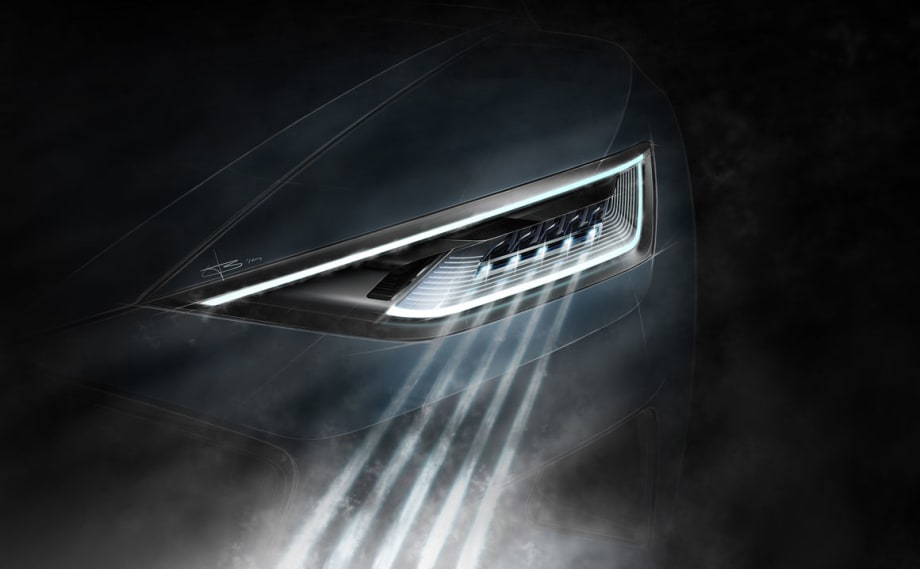
Image of Matrix Laser headlight courtesy of Audi.
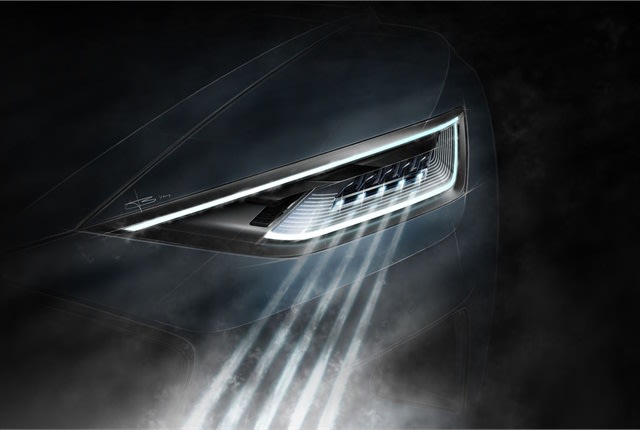
Image of Matrix Laser headlight courtesy of Audi.
Audi of America has begun working with Rensselaer Polytechnic Institute and the University of Michigan to develop a test procedure that will help foster changes to federal safety standards so that more kinds of adaptive headlight systems will be permitted.
Audi's goal is to get the company's advanced headlights into vehicles that can be sold in the U.S., just as they are in other countries, Audi said.
Because some of today’s adaptive headlight systems can automatically adjust brightness to avoid blinding oncoming drivers, a driver in a car equipped with such a system has no real need to operate high beams. But U.S. regulations haven’t kept pace with advanced headlight technology. All headlights in the U.S. market still must comply with an old rule requiring lights to have both low and high beams, and to emit light based on conventional patterns.
Rensselaer Polytechnic Institute, based in Troy, N.Y., is now testing an Audi vehicle equipped with the Adaptive Driving Beam (ADB) that has been available in the European auto market for several years. Additionally, the Transportation Research Institute at the University of Michigan, located in Ann Arbor, Mich., recently completed its own testing of ADB, which is based on technology known as MatrixBeam in Europe.
“The point of the new testing by the two schools is to build on the work Audi has performed with U.S. Transportation Department regulators in creating an up-to-date, objective rule that would take into account the highly advanced digital lighting capabilities presented by ADB,” Audi said. “Current federal regulations essentially ban any headlights using such systems, because ADB wasn’t envisioned many years ago when the headlight standard was written.”
In the Audi technology, the system recognizes a preceding or oncoming vehicle at night, and a dynamically changing high beam actually avoids glaring out the other drivers by notching out those vehicles. It does this by carefully arraying its light emissions around those vehicles while still maintaining the maximum visibility of the high beam for the driver of the Audi.
Audi acknowledged that auto regulatory changes usually take a long time, and the automaker isn’t taking anything for granted.
“There are no guarantees that regulators will allow Audi to offer ADB in the U.S. market, and any rule changes are likely years away,” Audi said. “But with the help of the University of Michigan and RPI, Audi is moving closer to the goal of giving American drivers the advantage of having cars equipped with the most advanced headlight technology in the world.”
More Safety

Nexar-Nauto Merger Aims to Give Fleets Better Safety Intelligence Through Larger Driving Dataset
Stefan Heck tells Automotive Fleet that combining more than 10 billion miles of driving history with Nexar's AI models will give fleets deeper insights into driver risk and roadway conditions than either company could provide independently.
Read More →
Don't Wait for a Crisis: 5 Ways to Build Mental Health Into Your Fleet Safety Program
For Suicide Prevention Month, fleet and safety leaders have an opportunity to put mental health where it belongs: at the center of workplace safety.
Read More →
How Camera Data Can Strengthen a Fleet’s Insurance Renewal
Insights from a commercial insurance carrier and a broker show how fleets can turn video telematic data, driver coaching, and improved claims results into a stronger case at insurance renewal.
Read More →
The Safest Fleets Aren’t the Ones with the Most Technology
You’ve made the telematics investment. Here’s how to capture the other half of its value and build the safest fleet on the road.
Read More →
Hidden in Plain Sight: Fleet Compliance Risks
Fleet compliance isn't just about having policies — it's about consistently enforcing them. This practical guide reveals six hidden compliance risks common in public sector and shared fleet operations and outlines proven strategies to improve visibility, accountability, and audit readiness
Read More →
NETS Sets 2026 Fleet Safety Benchmark Conference for Indianapolis
The Sept. 15–17 program will feature fleet benchmarking data, case studies, emerging technologies, and implementation strategies while running alongside the NSC Safety Congress & Expo.
Read More →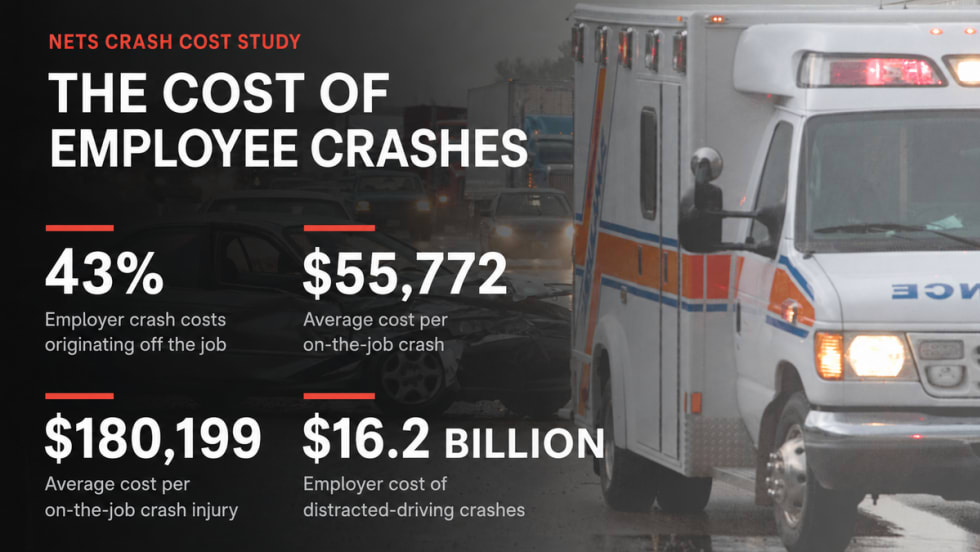
Off-the-Job Crashes Account for 43% of Employers’ $61.7 Billion Crash Burden
NETS quantifies costs dispersed across fleet, risk, HR, and other departments while providing new per-crash benchmarks for employers.
Read More →
Ram Recalls More Than 1.27 Million 1500 Pickups for Seat Belt Anchor Issue
The recall affects certain 2019-2026 Ram 1500 pickups that may have improperly attached second-row seat belt buckle anchors.
Read More →
How Better Visibility Cut Speeding Violations by 48%
Fleet leaders don't need more data, they need clearer visibility into what the data is saying. This case study explores how one utility replaced speeding-event counts with a single metric — miles driven in violation — to strengthen safety and significantly reduce speeding violations.
Read More →
Operation Safe Driver Week: Why the Industry's Oldest Safety Campaign Still Matters to Fleets
A look at how a 2007 enforcement initiative became one of the most consequential weeks on the fleet safety calendar, and what it means for your drivers in 2026.
Read More →