




Audi CEO Targets E-Mobility Technologies
Markus Duesmann, Audi CEO, discussed his vision of sustainable mobility and the challenges the automotive industry currently faces, citing the need for swifter transitioning to alternative energy sources.


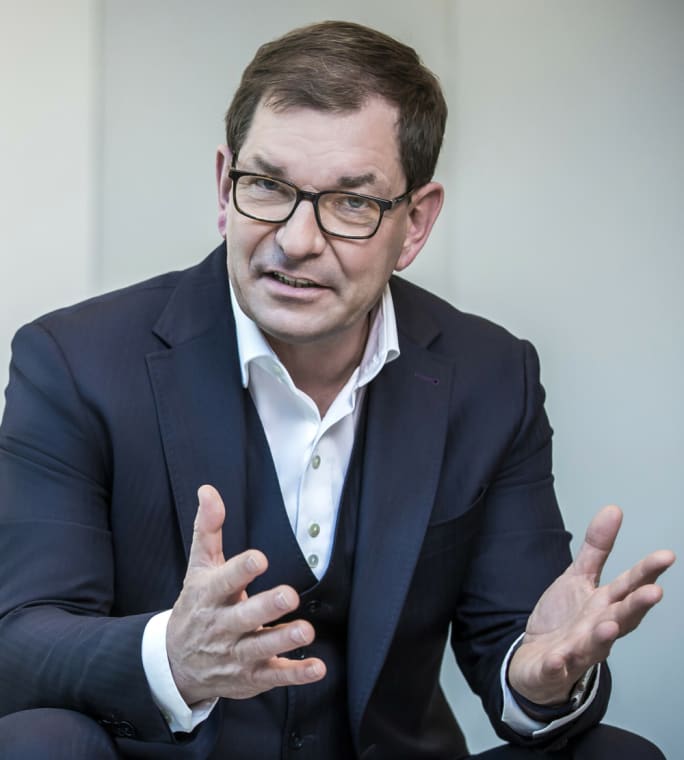
“Our generation’s task is to make sure future generations will be able to do without fossil fuels. To meet this goal, we need technological innovations now,” said AUDI CEO Markus Duesmann at a recent industry leader panel hosted by the Bavarian Media Group of journalists.
[EMPTY CREDIT]
Industry and society need to move to away from fossil fuels even faster than planned, warned Markus Duesmann, CEO of AUDI AG, at a recent industry leader panel hosted by the Bavarian Media Group of journalists.
“Our generation’s task is to make sure future generations will be able to do without fossil fuels. To meet this goal, we need technological innovations now,” Duesmann added.
Moderated by German journalist and author Gabor Steingart, the panel also included Carsten Spohr, CEO of Lufthansa, and Joe Kaeser, board chairman at Siemens Energy.
[EMPTY CREDIT]
Duesmann discussed his vision of sustainable mobility and the challenges the automotive industry currently faces. Citing the need for swifter transitioning to alternative energy sources, he said, “The expansion of renewable energies and the transition to e-mobility are major steps on our path toward an electricity-based society.”
No matter the area of sustainability – e-mobility in transport, e-fuels in aviation or hydrogen in trucks – “We need to set clear technology priorities. In other words, we need cross-industry understanding of how each sector will leverage technology to achieve carbon neutrality overall,” Duesmann said.
Electric cars retain a larger carbon footprint from their more energy-intensive production, Duesmann pointed out. “That's where we focus on reducing carbon emissions over the entire product life cycle. For example, through net-zero production or the use of green energy in battery production. The availability of renewable energy is therefore another crucial factor in determining how ‘green’ e-mobility is.”
Signaling the carmaker’s commitment to production in Germany, the Audi CEO also noted Germany’s role in sustainability technology “We are not strong because we build the technologies in Germany, but because we develop them here. Sustainable technologies ‘made in Germany’ in particular allow us to become pioneers and assert our economic strength at an international level.”
More Global Fleet

GeoFencing Adds to Your Truck Security Arsenal
Geofencing is a familiar fleet tool today, but its early adoption marked a major shift in vehicle tracking, route monitoring, and the debate over employee privacy.
Read More →
Holman Takes Full Ownership of ARIZA in Mexico
Holman is bringing its Mexican fleet management operation fully under its own brand after more than 30 years as a joint venture. The change gives multinational fleet customers a single Holman operation across the U.S., Canada, and Mexico.
Read More →
5 Tire Maintenance Tips to Help Prevent Work Truck Downtime
Regular tire checks can do more than extend tread life. These five maintenance practices can help work truck fleets catch problems early, reduce costs, and prevent downtime.
Read More →

Proven Ways to Reduce Work Truck Downtime
The age-old problem of downtime will always be a reality, but with new strategies at hand, fleets have more ways to keep trucks on the road longer.
Read More →


Cameras, Safety and Insurance: From Reactive Claims to Real-Time Prevention (Part 2 of 2)
Part Two: Commercial auto remains one of the most challenging and costly lines of coverage for fleet operators and insurers alike. Continue learning more about how to effectively address these issues from Onur Aksan, Enterprise Business Development Executive, Geotab
Read More →
Cameras, Safety and Insurance: From Reactive Claims to Real-time Prevention
Commercial auto remains one of the most challenging and costly lines of coverage for fleet operators and insurers alike. Learn more about how to effectively address these issues from Onur Aksan, Enterprise Business Development Executive, Geotab.
Read More →
Fleet Costs Are Rising: Here’s How Leaders Are Responding
Fleet leaders are under pressure to reduce costs, adapt to economic uncertainty, and make smarter decisions. See how peers across North America are responding with real data, proven strategies, and forward-looking insights. Download the 2026 Market Pulse Report to benchmark your strategy and uncover where you can gain an edge.
Read More →
Enterprise Fleet Management Surpasses 900,000 Vehicles in U.S. & Canada
Enterprise Mobility connects with mobility solutions around the globe
Read More →