




Audi Among Safety Leaders in the U.S.
AUBURN HILLS, MI – The current line-up of Audi vehicles sold in the United States are some of the safest according to results from tests conducted by the Insurance Institute for Highway Safety (IIHS) and the National Highway Traffic Safety Administration (NHTSA).
AUBURN HILLS, MI – The current line-up of Audi vehicles sold in the United States are some of the safest according to results from tests conducted by the Insurance Institute for Highway Safety (IIHS) and the National Highway Traffic Safety Administration (NHTSA). Recent crash tests by both organizations have demonstrated that Audi is among the best in the industry in terms of passenger safety and vehicle crash worthiness.
For 2008, the IIHS added the Audi A3 to the list of Audi models designated as “Top Safety Pick” in the Midsize category. 2007 “Top Safety Pick” winners A4 and A6 continued into 2008 in the Midsize and Large car category, respectively.
Audi is the only German luxury auto manufacturer with the distinction of having three models listed as a “Top Safety Pick.” To achieve this distinction, vehicles must receive a top rating of “Good” for passenger protection in off-set frontal, side, and rear crash tests. In addition, IIHS vehicle tests now include occupant safety measures and crash prevention criterion. Vehicles must have an available electronic stability program, which Audi has standard on every model it produces.
The Audi Q7 SUV was also tested in 2007 for crash worthiness. The NHTSA awarded the Audi Q7 the highest possible rating of “Five-stars” for driver and passenger in a frontal collision, and front and rear passengers in a side collision. A “Five-star” indicates that there is less than a 5% chance of serious injury to passengers in a collision. Frontal tests measure the forces on the head, neck, chest, and pelvis on front passengers, while side tests indicate the chance of a serious chest injury for both front and rear seat passengers.
Audi’s commitment to safety also includes a comprehensive list of active safety features. Every Audi sold in the U.S. has standard four-wheel disc brakes with anti-lock braking system (ABS), an electronic stability program and daytime running lights (DRL). New for 2008 on all models is a standard tire pressure monitoring system. All of these features are designed to help reduce the chances of a collision.
There are many standard passive safety features in Audi vehicles that are designed to protect occupants in the event of a collision. Several key optional convenience features also enhance the driving experience. New for 2008 on the A6/S6, A8/S8, and Audi Q7 models is an optional Audi lane assist feature. When equipped, a camera monitors the vehicle’s path of travel, and will slightly vibrate the steering wheel should the driver veer from their current lane without signaling. This alerts the driver that they are changing lanes should their attention be diverted from the road. The sensitivity of the lane sensor can be adjusted using the Audi MMI controller.
In 2006, Audi Q7 broke ground in the automotive industry to be equipped with blind spot protection which is called Audi side assist. Now available on the 2008 A6/S6 and A8/S8 models, this system monitors up to 165 feet behind the vehicle and alerts the driver when someone is in their blind spot. A directional amber LED appears in the inner housing of the exterior mirror to inform the Audi driver that someone is in their blind spot. Should the Audi driver attempt to merge into the lane occupied by a vehicle in their blind spot, the LED will flash brightly when the turn signal is pushed. This is to insure the driver is aware that changing lanes could be dangerous, and to use extra caution.
More Safety
The Safest Fleets Aren’t the Ones with the Most Technology
You’ve made the telematics investment. Here’s how to capture the other half of its value and build the safest fleet on the road.
Read More →
Hidden in Plain Sight: Fleet Compliance Risks
Fleet compliance isn't just about having policies — it's about consistently enforcing them. This practical guide reveals six hidden compliance risks common in public sector and shared fleet operations and outlines proven strategies to improve visibility, accountability, and audit readiness
Read More →
NETS Sets 2026 Fleet Safety Benchmark Conference for Indianapolis
The Sept. 15–17 program will feature fleet benchmarking data, case studies, emerging technologies, and implementation strategies while running alongside the NSC Safety Congress & Expo.
Read More →
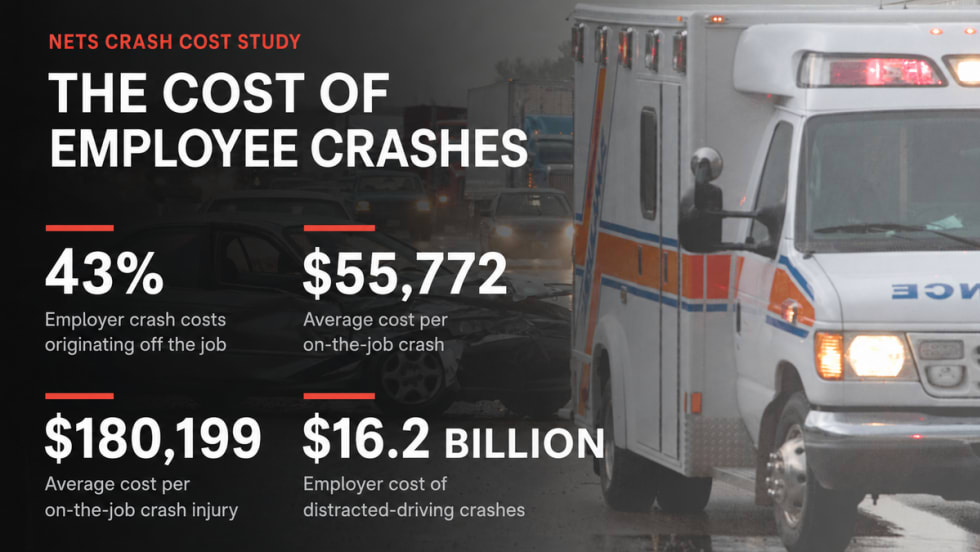
Off-the-Job Crashes Account for 43% of Employers’ $61.7 Billion Crash Burden
NETS quantifies costs dispersed across fleet, risk, HR, and other departments while providing new per-crash benchmarks for employers.
Read More →
Ram Recalls More Than 1.27 Million 1500 Pickups for Seat Belt Anchor Issue
The recall affects certain 2019-2026 Ram 1500 pickups that may have improperly attached second-row seat belt buckle anchors.
Read More →
How Better Visibility Cut Speeding Violations by 48%
Fleet leaders don't need more data, they need clearer visibility into what the data is saying. This case study explores how one utility replaced speeding-event counts with a single metric — miles driven in violation — to strengthen safety and significantly reduce speeding violations.
Read More →
Operation Safe Driver Week: Why the Industry's Oldest Safety Campaign Still Matters to Fleets
A look at how a 2007 enforcement initiative became one of the most consequential weeks on the fleet safety calendar, and what it means for your drivers in 2026.
Read More →
Nexar-Nauto Merger Aims to Give Fleets Better Safety Intelligence Through Larger Driving Dataset
Stefan Heck tells Automotive Fleet that combining more than 10 billion miles of driving history with Nexar's AI models will give fleets deeper insights into driver risk and roadway conditions than either company could provide independently.
Read More →
From Silos to Solutions: Relationship Management for Safer Fleets
From telematics adoption and driver accountability to policy consistency and risk mitigation, this episode breaks down what it really takes to build a safer fleet culture without slowing business down.
Read More →
IIHS Launches First Commercial Vehicle Safety Evaluations
The Insurance Institute for Highway Safety has begun evaluating heavy-duty pickups and cargo vans for driver protection. Which models earned top marks?
Read More →