




April Vehicle Depreciation Goes Negative
Rising used vehicle depreciation pulled average April values into the red in a month that's typically the last strong month of the spring season, according to Black Book.

Photo of 2014 Taurus courtesy of Ford.

Photo of 2014 Taurus courtesy of Ford.
Rising used vehicle depreciation pulled average April values into the red in a month that's typically the last strong month of the spring season, according to Black Book.
Used vehicles from the 2010-2014 model years depreciated 0.1% in April from March and 17.1% from a year ago. Truck-based vehicles were flat at $18,046, while cars fell 0.3% to $11,495. The past 12 months have seen depreciation accellerate to 14.3% for trucks and 20.6% for cars.
"Almost a third of all vehicle segments saw an increase in value this month but we expect this volume of segment retention to subside moving through the remainder of the year," said Anil Goyal, vice president of automotive valuation and analytics. "As the supply levels for all used vehicles grow, we can expect to see a continued increased in overall depreciation moving forward."
Eight vehicle segments, including Full-Size Cars, saw value increases during the month. Other positive segments included Small Pickup Trucks, Mid-Size Cars, Full-Size Crossovers, Mid-Sized Crossovers, Sporty Cars, Sub-Compact Crossovers, and Compact Crossovers.
In a sign of the spring season, Full-Size Cars best retained their value in April at 1.3%. Vehicles in this segment include the Chevrolet Impala, Ford Taurus, Kia Cadenza, Nissan Maxima, Chrysler 300 and Toyota Avalon. Vehicles in this segment finished the month with an average price of $12,930, a 16.9% decline in value from year-ago levels.
In the van category, full-size vans declined 0.7% to $18,912 in April, while compact vans declined 1.8% to $9,670.
More Remarketing

When Should a Fleet Repair Vehicle Damage Before Remarketing?
Not every dent, scratch, or mechanical issue is worth fixing before selling a fleet vehicle. Learn how to weigh repair costs, resale value, market demand, and downtime to determine when reconditioning pays off and when selling as-is makes more sense.
Read More →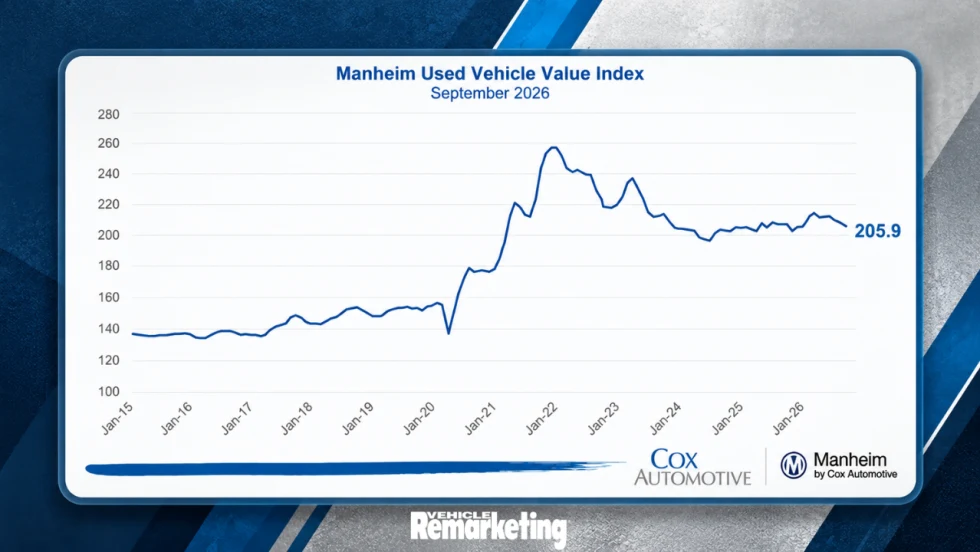
Wholesale Used-Vehicle Values Fall as Cox Automotive Cuts 2026 Forecast
Wholesale used-vehicle prices declined in September as depreciation accelerated, prompting Cox Automotive to lower its year-end forecast.
Read More →
FLD Promotes Three Executives in Leadership Changes
FLD has promoted three longtime executives, naming Gary Mott CEO, Richard Mallek president, and Ron Sanders managing partner.
Read More →
Ford Pro Launches Certified Pre-Owned Program for Commercial Vehicles
Ford Pro Advantage will offer certified pre-owned Class 1-7 commercial vehicles through more than 700 Ford Pro Commercial Vehicle Centers.
Read More →
Copart to Acquire ACV in $1.9 Billion Deal
The acquisition would expand Copart beyond its traditional salvage business into dealer-to-dealer wholesale remarketing while adding ACV’s vehicle data, inspection, and valuation technology.
Read More →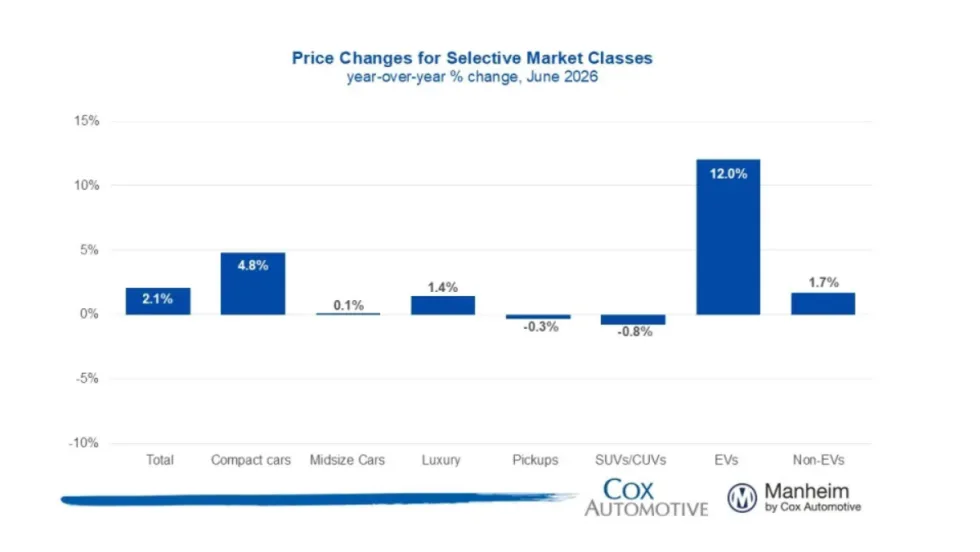
Manheim Index Shows Used-Vehicle Wholesale Prices Up 2.1% in June
The market is seeing stronger appreciation in older used vehicles this year, and the most affordable segments have been among the year’s best performers.
Read More →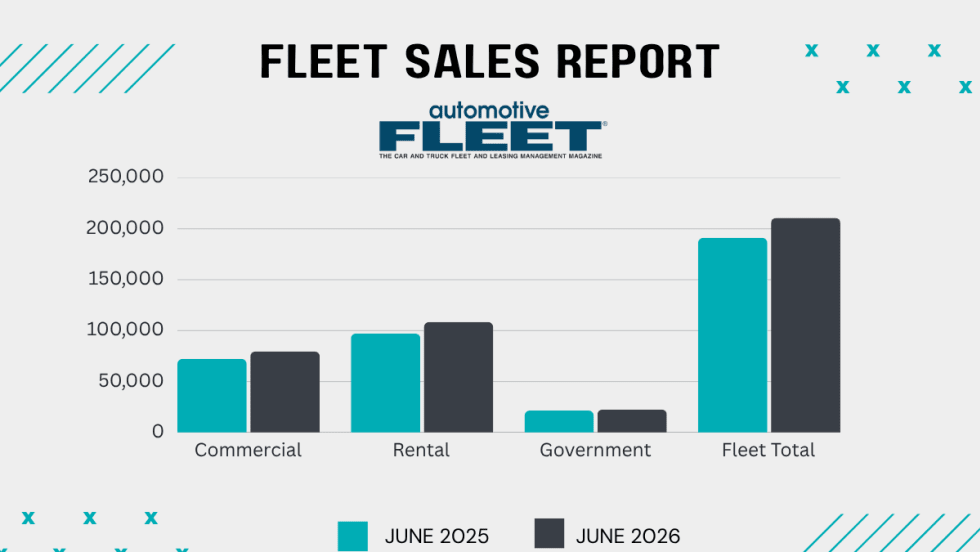
Commercial Fleet Sales Contribute To June, YTD Gains
The fleet sector has boosted its vehicle purchases at a reliable pace in the first half of this year compared with 1H 2025.
Read More →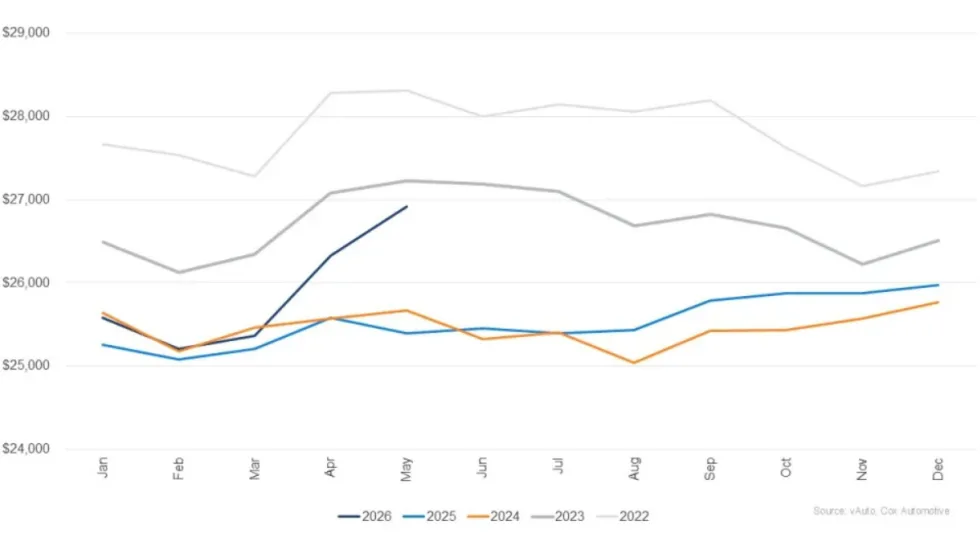
Used Vehicle Prices Climb Higher As Sales Pace Slows
The higher prices at used retail reflect strong wholesale values earlier in the spring, particularly for older, more affordable vehicles.
Read More →
Wholesale Used Vehicle Market Sustains Moderate Rise In Values, Prices
Trends continue to normalize after a strong start to the year, as consumers contend with higher gas prices in the coming summer months.
Read More →
Commercial Fleet Sales Still Lead Sectors Despite May Mini Dip
The U.S. economy's continued growth and positive business investment are creating a favorable environment for fleet vehicle demand.
Read More →