




AmeriGas Propane Promotes its Fuel
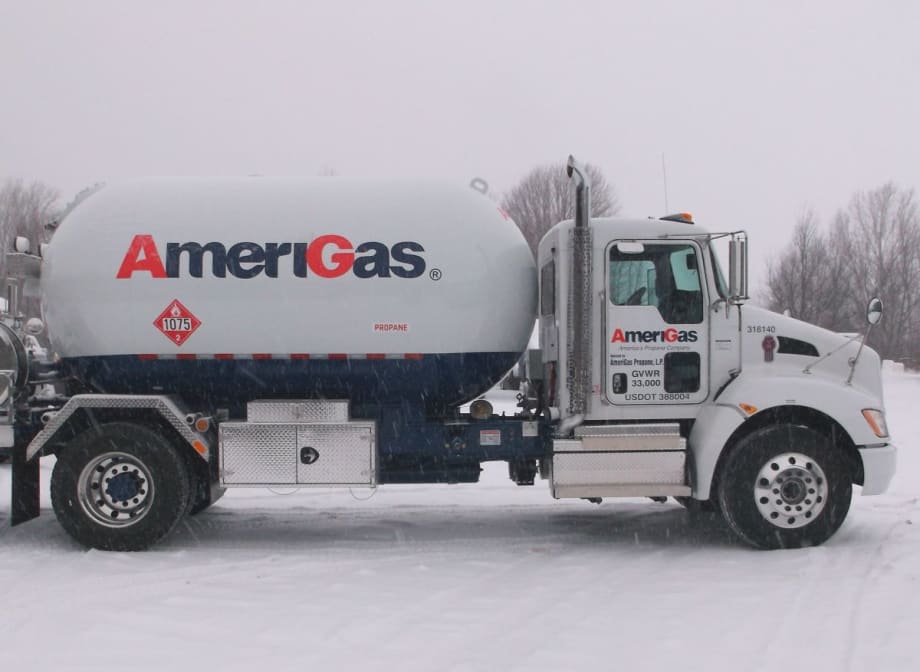
A good portion of the home-delivery fleet features Kenworth T370 medium-duty conventionals, as well as T370s equipped with 26-foot long bodies with knuckle booms. Kenworth T680 tractors often haul propane vessels capable of carrying 10,800 gallons of propane.

Even more extreme are deliveries in Alaska. AmeriGas recently ordered a Kenworth W990 to haul propane to remote locations, using ice roads.
Photo: Amerigas
As the largest propane supplier in the United States, AmeriGas Propane provides propane to run furnaces and cooktops throughout rural America; provides propane for industry, especially forklifts operating in warehouses; and they keep homeowners supplied with propane bottles for BBQ season.
“We have two distinct seasons in our core propane business – the heating season, and the grilling season,” said Jay Massey, AmeriGas corporate fleet vehicle manager. “Both are busy, but the grilling season continues to expand and grow.”
There are different vehicles involved for each season. Massey has no easy job. He’s responsible for nearly 9,000 vehicles (of which more than half are medium and heavy duty power units), and more than 1,500 bulk and flatbed/box/curtain trailers. They’ll amass more than 126 million miles in 2019, and the vehicles are used in all 50 states and domiciled at more than 1,900 locations.
The largest transportation segment is the bobtail fleet, which does home delivery throughout areas that don’t have access to natural gas. “Propane is the rural fuel and we go were gas lines can’t,” said Massey. “Our No. 1 priority is reliability, followed closely by productivity. If a truck breaks down, we can’t go and get a rental. We invest in the trucks, spec them to last, and expect them to be in service for us at least 10 years before we sell them. And we need a dealer network that will be with us at every turn, and have plenty of parts available.”
A good portion of the home-delivery fleet features Kenworth T370 medium-duty conventionals, equipped with the PACCAR PX-9 engine rated at 350 hp and Allison RDS automatic transmissions. The T370s are used to deliver 57-pound fuel cylinders to power forklifts, and 35-gallon propane cylinders for home barbecues. The fleet also has T370s equipped with 26-foot long bodies with knuckle booms. Kenworth T680 tractors often haul propane vessels capable of carrying 10,800 gallons of propane.
According to Massey, when AmeriGas locations need trucks, the company does a “heat map” to see what truck dealers are nearby for sales and service. He then talks with the location to see if they have a preference in the truck make for that particular area. “It’s important to us that the local operation – which can run anywhere from 3 to 60 trucks – has a voice in what they get,” said Massey. “The terrain and climate, plus the application help dictate what we buy, as does dealer support.
“For colder climates, we really like the fact that the PACCAR equipment we purchase holds up extremely well against corrosion, caused by salt and de-icers, plus the trucks come equipped with the Arctic Fox package, which helps in extreme weather. Up north, we can see temperatures drop to minus 40 degrees with wind chill. That makes it challenging for not only the drivers, but for the equipment. The Arctic Fox package provides fuel and fluid heaters which prevents freeze ups.”
Even more extreme are deliveries in Alaska. AmeriGas recently ordered a Kenworth W990 to haul propane to remote locations, using ice roads. “If you’ve watched the Ice Road Truckers show, you’ll see the predominance of Kenworth W900s running those roads,” said Massey. “Those seem to be the truck of choice in the far north, so our W990 will fit right in.”
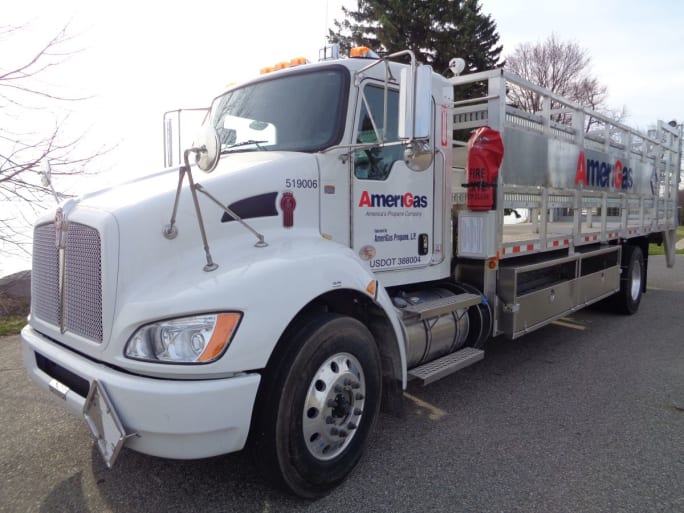
AmeriGas operates nearly 9,000 vehicles of which more than half are medium- and heavy-duty power units.
Photo: Amerigas
According to Massey, AmeriGas has a unique group of drivers. “Home heating is seasonal, so most of our drivers are farmers, who are very familiar with operating equipment and trucks. Since they have downtime at their farms in the winter, we offer them a great opportunity to do local propane deliveries. It’s a win-win. For other type of deliveries, we have a steady group of drivers.”
Massey said spec’ing for driver comfort is something always top of mind. “Our drivers have a tough job and are out in the elements, so when they’re in the cab we want them to be comfortable. We don’t skimp on the specs. For our long-haul trucks, we buy top-of-the-line packages, and include inverters, refrigerators, and the top mattresses that are available.”
When it comes to powertrain specs, Massey said more power is better. “We run our trucks for a long time and have heavy loads, plus we do a lot of mountain driving, so we go with 525 hp engines and 18-speed transmission for our long-haul trucks. We’re also are now spec’ing disc brakes and the Bendix® Wingman® collision mitigation system.”
Since upfitting the trucks with bodies costs as much, if not more than the chassis, Massey said it’s important to have constant communication and teamwork between the truck OEMs he works with and the body suppliers. “It’s a tight-knit group,” he said. “Kenworth engineers talk with our body builders as much I do. We couldn’t be as efficient as we are without that cooperation and common goal to strive to build the best propane truck possible.”
Originally posted on Work Truck Online
More Green Fleet

Merchants Fleet Reports 290M EV Miles as Fleets Navigate Changing Electrification Market
From millions in operating savings to hundreds of millions of EV miles, Merchants Fleet’s latest report reveals what’s working and what’s changing in fleet electrification.
Read More →
The EV Breakdown Nobody's Talking About: Why Most Electric Vehicle Roadside Calls Aren't Mechanical Failures
Here's why EV breakdowns are widely misunderstood.
Read More →
ChargePoint Now Available in Energy Pass
ChargePoint and additional planned charging network integrations were added to GM's Energy Pass.
Read More →
First Look: Slate Auto's Electric Fleet Pickup
Could an affordable, modular EV pickup make electrification more practical for fleets?
Read More →
Slate Debuts Colorful, Unique EV Models
A recent media and client event, studded with electric vehicles dressed up on platforms, planted a new position for the manufacturer in the wider EV market. Fleets will find cost-saving advantages.
Read More →
Slate Electric SUV, Pickup Switchable Model Aims For Light-Duty Fleets
Everything about this EV is counterintuitive and understated, making it stand out from the crowd.
Read More →
Inspiration Mobility Acquires Key Electrada Assets
Inspiration Mobility Group has acquired select assets of Electrada, adding the fleet electrification provider's team, technology, and charging infrastructure development capabilities to its energy management business.
Read More →
Turning Connected Vehicle Data Into Decisions That Matter
Fleet leaders have more data than ever, but turning that data into clear, actionable decisions remains a challenge. This white paper shows how leading organizations are using connected vehicle data to improve safety, reduce costs, and optimize fleet performance. Learn how to turn insight into action across your fleet.
Read More →
Are You Tracking Your Fleet's True Total Cost of Ownership?
Bobit Business Media surveyed 190 fleet professionals and found that while most fleets are tracking costs, fragmented systems and data gaps are keeping true TCO visibility out of reach. With rising pressure to control spend in an increasingly volatile environment, the gap between what fleets think they know and what the data actually shows is wider than you might expect. See how your peers are managing costs today and where the industry still has room to improve.
Read More →