




American Drivers Fail to Secure Their Loads
A new AAA study discovers that during a recent four-year period, 200,000 crashes involving road debris occurred and led to 500 fatalities.

Photo courtesy of AAA Foundation.

Photo courtesy of AAA Foundation.
From 2011 through 2014, more than 200,000 crashes involving debris on U.S. roadways occurred, according to a new study released by the AAA Foundation for Traffic Safety.
The crashes resulted in 39,000 injuries and more than 500 deaths. As a result, AAA is urging drivers to properly secure their loads to prevent dangerous debris.
AAA researchers examined common characteristics of crashes involving road debris and found that:
Nearly 37% of all deaths in road debris crashes resulted from the driver swerving to avoid hitting an object. Overcorrecting at the last moment to avoid debris can increase a driver’s risk of losing control of their vehicle and make a bad situation worse.
More than one in three debris-related crashes occur between 10 a.m. and 3:59 p.m., a time when many people are on the road hauling or moving heavy items such as furniture or construction equipment.
Debris-related crashes are much more likely to occur on interstate highways. Driving at high speeds increases the risk for vehicle parts to become detached or cargo to fall onto the roadway.
“This new report shows that road debris can be extremely dangerous but all of these crashes are preventable,” said Jurek Grabowski, research director for the AAA Foundation for Traffic Safety. “Drivers can easily save lives and prevent injuries by securing their loads and taking other simple precautions to prevent items from falling off the vehicle.”
About two-thirds of debris-related crashes are the result of items falling from a vehicle due to improper maintenance and unsecured loads. The most common types of vehicle debris are:
Parts detached from a vehicle (tires, wheels, etc.) that fall onto the roadway
Unsecured cargo such as furniture, appliances, and other items falling onto the roadway
Tow trailers becoming separated and hitting another vehicle or landing on the roadway.
According to AAA, drivers can decrease their chances of being involved in a road debris crash by:
Maintaining their vehicles — Drivers should have their vehicles checked regularly by trained mechanics. Badly worn or underinflated tires often suffer blowouts that can leave pieces of tire on the roadway. Exhaust systems and the hardware that attach to the vehicle can also rust and corrode, causing mufflers and other parts to drag and eventually break loose. Potential tire and exhaust system problems can easily be spotted by trained mechanics as part of the routine maintenance performed during every oil change.
Securing vehicle loads — When moving or towing furniture, make sure all items are secured. To properly secure a load, drivers should:
Tie down the load with rope, netting, or straps
Tie large objects directly to the vehicle or trailer
Cover the entire load with a sturdy tarp or netting
Ensure the vehicle isn’t overloaded
Double-check the load to make sure it’s secure.
"Drivers have a much bigger responsibility when it comes to preventing debris on the roads than most realize,” said Jennifer Ryan, director of state relations for AAA. “It’s important for drivers to know that many states have hefty fines and penalties for drivers who drop items from their vehicle onto the roadway, and in some cases states impose jail time.”
Currently, every state has laws that make it illegal for items to fall from a vehicle while on the road. Most states’ penalties result in fines ranging from $10-$5,000, with at least 16 states listing jail as a possible punishment for offenders.
To learn more about specific road debris laws for noncommercial vehicles, click here.
Drivers should also practice defensive driving techniques while on the road to prevent debris-related crashes from occurring, AAA advises.
“Continually searching the road at least 12 to 15 seconds ahead can help drivers be prepared in the case of debris,” said William Van Tassel, manager of driver training programs for AAA. “Always try to maintain open space on at least one side of your vehicle in case you need to steer around an object. If you see you are unable to avoid debris on the roadway, safely reduce your speed as much as possible before making contact.”
AAA also recommends that drivers avoid tailgating and remain alert while on the road.
More Safety

Nexar-Nauto Merger Aims to Give Fleets Better Safety Intelligence Through Larger Driving Dataset
Stefan Heck tells Automotive Fleet that combining more than 10 billion miles of driving history with Nexar's AI models will give fleets deeper insights into driver risk and roadway conditions than either company could provide independently.
Read More →
Don't Wait for a Crisis: 5 Ways to Build Mental Health Into Your Fleet Safety Program
For Suicide Prevention Month, fleet and safety leaders have an opportunity to put mental health where it belongs: at the center of workplace safety.
Read More →
How Camera Data Can Strengthen a Fleet’s Insurance Renewal
Insights from a commercial insurance carrier and a broker show how fleets can turn video telematic data, driver coaching, and improved claims results into a stronger case at insurance renewal.
Read More →
The Safest Fleets Aren’t the Ones with the Most Technology
You’ve made the telematics investment. Here’s how to capture the other half of its value and build the safest fleet on the road.
Read More →
Hidden in Plain Sight: Fleet Compliance Risks
Fleet compliance isn't just about having policies — it's about consistently enforcing them. This practical guide reveals six hidden compliance risks common in public sector and shared fleet operations and outlines proven strategies to improve visibility, accountability, and audit readiness
Read More →
NETS Sets 2026 Fleet Safety Benchmark Conference for Indianapolis
The Sept. 15–17 program will feature fleet benchmarking data, case studies, emerging technologies, and implementation strategies while running alongside the NSC Safety Congress & Expo.
Read More →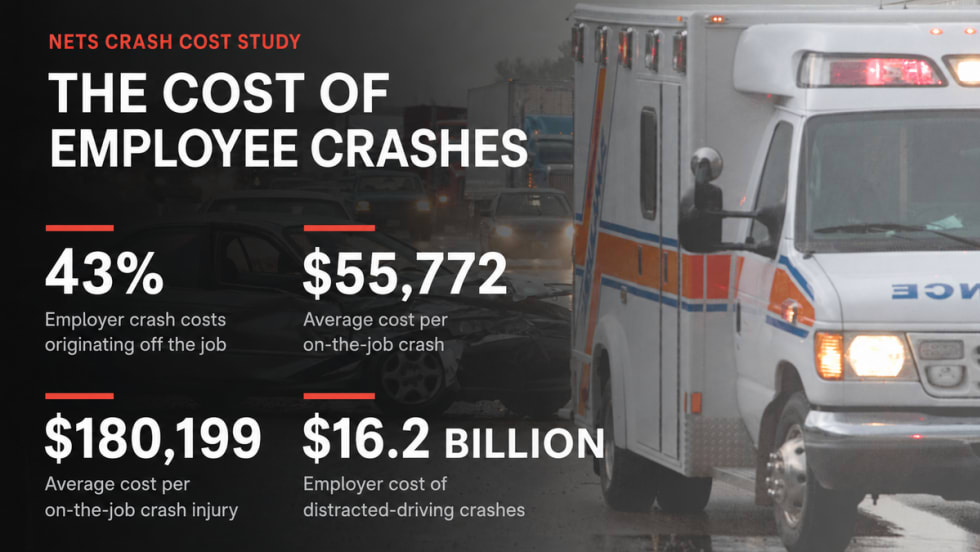
Off-the-Job Crashes Account for 43% of Employers’ $61.7 Billion Crash Burden
NETS quantifies costs dispersed across fleet, risk, HR, and other departments while providing new per-crash benchmarks for employers.
Read More →
Ram Recalls More Than 1.27 Million 1500 Pickups for Seat Belt Anchor Issue
The recall affects certain 2019-2026 Ram 1500 pickups that may have improperly attached second-row seat belt buckle anchors.
Read More →
How Better Visibility Cut Speeding Violations by 48%
Fleet leaders don't need more data, they need clearer visibility into what the data is saying. This case study explores how one utility replaced speeding-event counts with a single metric — miles driven in violation — to strengthen safety and significantly reduce speeding violations.
Read More →
Operation Safe Driver Week: Why the Industry's Oldest Safety Campaign Still Matters to Fleets
A look at how a 2007 enforcement initiative became one of the most consequential weeks on the fleet safety calendar, and what it means for your drivers in 2026.
Read More →