




Air Quality Board Serious About Violations
In just one recent example, a waste removal company was fined $219,500 by the California Air Resources Board (CARB), for emissions violations.
In looking at the recent news from the California Air Resources Board (CARB), you can see that the board is serious about imposing fines on fleets for emissions violations. CARB is a department of the California Environmental Protection Agency and oversees all air pollution control efforts in California to attain and maintain health based air quality standards.
In one recent example, CARB in September fined Southern California waste removal company EDCO Disposal Corp. $219,500 for emissions violations during 2005 and 2006. A CARB investigation showed EDCO complied with the state's trash truck emissions rule, but failed to perform the annual smoke inspection test on some of its diesel trucks as required by law at nine of its facilities. Owners of California-registered truck fleets are required to regularly inspect their vehicles to ensure that their engine emissions meet state air quality regulations.
"Companies that routinely inspect their diesel fleet help improve the air quality and overall public health of their community," said CARB Chairman Mary D. Nichols.
But many companies aren't doing this adequately, if you look at several recent fines that CARB has imposed recently. The board fined Montebello, Calif.-based waste hauler Key Disposal, Inc. $500,000 for failing to adequately inspect its fleet and retrofit some of its vehicles with diesel filters as required by state law. CARB fined Pacific Petroleum $21,000 for failing to properly inspect its diesel vehicles for smoke emissions at its Santa Maria, Calif., terminal. CARB also fined the city of Ventura, Calif. for failing to conduct annual inspections on some of its heavy-duty on-road diesel vehicles. And CARB fined Humboldt Transit Authority $24,000 for failing to meet transit fleet vehicle requirements and for failing to inspect all the vehicles in its heavy-duty diesel fleet. All of these recent CARB actions were announced in October.
In addition to the fines, the requirements that the fleets must meet as a result of CARB action are often numerous. For example, as part its settlement with CARB, EDCO Disposal must meet several requirements:
EDCO employees who are responsible for conducting the emissions must attend a California Community College training class on diesel emissions compliance testing and provide certificates of completion within one year. EDCO must also provide documentation to CARB that timely inspections are being carried out for the next four years; ensure that software on all applicable heavy-duty diesel vehicles is updated with the latest low-NOx (oxides of nitrogen emissions) programming; instruct vehicle operators to comply with the state's idling regulations; and ensure all diesel truck engines are up to federal emissions standards for the vehicle model year and are properly labeled with an emission-control certification label.
More Green Fleet

The EV Breakdown Nobody's Talking About: Why Most Electric Vehicle Roadside Calls Aren't Mechanical Failures
Here's why EV breakdowns are widely misunderstood.
Read More →
ChargePoint Now Available in Energy Pass
ChargePoint and additional planned charging network integrations were added to GM's Energy Pass.
Read More →

First Look: Slate Auto's Electric Fleet Pickup
Could an affordable, modular EV pickup make electrification more practical for fleets?
Read More →
Slate Debuts Colorful, Unique EV Models
A recent media and client event, studded with electric vehicles dressed up on platforms, planted a new position for the manufacturer in the wider EV market. Fleets will find cost-saving advantages.
Read More →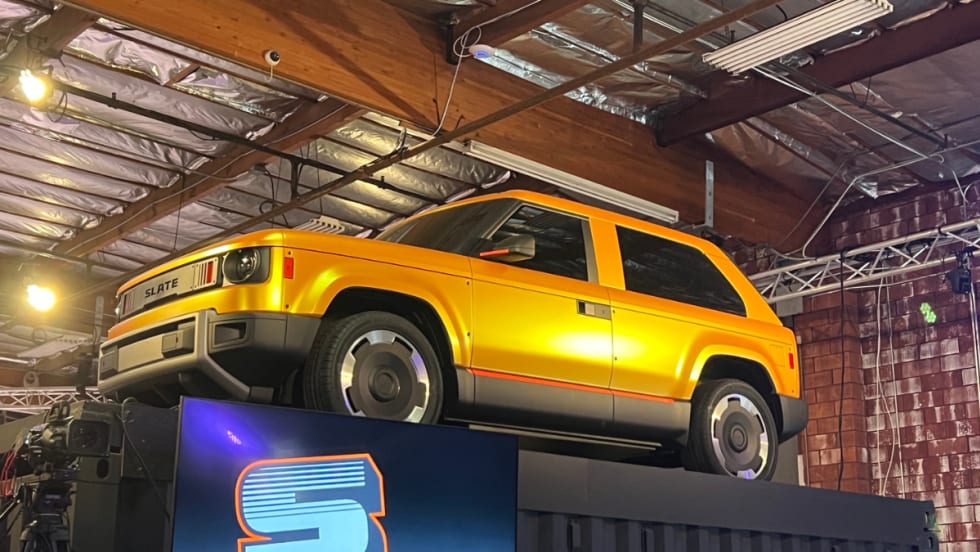
Slate Electric SUV, Pickup Switchable Model Aims For Light-Duty Fleets
Everything about this EV is counterintuitive and understated, making it stand out from the crowd.
Read More →
Inspiration Mobility Acquires Key Electrada Assets
Inspiration Mobility Group has acquired select assets of Electrada, adding the fleet electrification provider's team, technology, and charging infrastructure development capabilities to its energy management business.
Read More →
Turning Connected Vehicle Data Into Decisions That Matter
Fleet leaders have more data than ever, but turning that data into clear, actionable decisions remains a challenge. This white paper shows how leading organizations are using connected vehicle data to improve safety, reduce costs, and optimize fleet performance. Learn how to turn insight into action across your fleet.
Read More →
Are You Tracking Your Fleet's True Total Cost of Ownership?
Bobit Business Media surveyed 190 fleet professionals and found that while most fleets are tracking costs, fragmented systems and data gaps are keeping true TCO visibility out of reach. With rising pressure to control spend in an increasingly volatile environment, the gap between what fleets think they know and what the data actually shows is wider than you might expect. See how your peers are managing costs today and where the industry still has room to improve.
Read More →
Hybrids: Electrification Without the Challenges
For fleet managers, fuel is one of the biggest line items in the budget — and it's one hybrids can shrink without changing how your people work. Download the eBook to see the numbers, understand the technology, and get a step-by-step guide to making the switch.
Read More →