




Advanced Safety Systems Help Reduce Road Deaths
EL SEGUNDO, CA - Statistics show that 2009 was the least deadly year on American roads in nearly 60 years. With the growing use of advanced driver assist systems (ADAS), that momentum should continue into the future.
EL SEGUNDO, CA - Statistics show that 2009 was the least deadly year on American roads in nearly 60 years. With the growing use of advanced driver assist systems (ADAS), that momentum should continue into the future.
"In the United States, as well as in nearly every other country, automotive OEMs are steadily increasing the availability and visibility of their safety and driver assistance systems," said Jeremy Carlson, automotive researcher for iSuppli, a technology market research firm. "Many ADAS that would have had an effect on highway-speed fatalities and injuries have only been available for the last several years, given that the systems were introduced around model year 2006. Since then, ADAS systems have found wider usage, undoubtedly impacting NHTSA data positively."
A recently released report from the U.S. Department of Transportation's National Highway Traffic Safety Administration (NHTSA) revealed that 33,808 people died from traffic accidents in the United States in 2009, representing a 9.7-percent decline in total road deaths over the previous year and the lowest number of deaths since 1950.
Fatalities declined for all categories of vehicle occupants and non-occupants, including motorcycles, which had previously seen a continuous 11-year increase, and pedestrians, who generally have no built-in protection system when colliding with a motor vehicle.
Surprisingly, these across-the-board decreases in fatalities occurred in a year when total vehicle miles traveled increased by 0.2 percent to just less than 3 trillion miles. The result is a historically low fatality and injury rate of 1.13 deaths per 100 million vehicle miles traveled, the lowest ever recorded.
What is not surprising, however, is that such results appear at a time when both the government and automotive industry are pushing safety like never before, including the use of ADAS.
ADAS systems include adaptive cruise control, collision avoidance and mitigation, lane departure warning, side object detection and driver monitoring.
In 2009, 4 million ADAS units were included in North American cars, according to iSuppli. iSuppli forecasts that by 2017, total OEM ADAS will reach 30.7 million vehicles in North America, equating to a compound annual growth rate of 29.0 percent from 2009 to 2017.
As OEMs steadily increase the availability of current systems, both OEMs and suppliers also continue to work on the next generation of automotive safety. Vehicle-to-vehicle communications, such as the kind found in the U.S. Department of Transportation's IntelliDrive project, can address up to 82 percent of all crashes by unimpaired drivers, which will have considerable impact on the fatality and injury statistics reported by the NHTSA. The government also is helping with its own efforts and hopes for even better results in 2010.
In many cases, these initiatives become joint efforts encompassing government agencies, automotive OEMs and industry suppliers. Projects such as IntelliDrive in the United States or CVIS in Europe are prime examples of such cooperation, while industry events such as the ITS World Congress, SVOX Forum and various auto shows provide the venues to make connections and begin discussions on how to maximize the impact of these projects.
More Safety

Nexar-Nauto Merger Aims to Give Fleets Better Safety Intelligence Through Larger Driving Dataset
Stefan Heck tells Automotive Fleet that combining more than 10 billion miles of driving history with Nexar's AI models will give fleets deeper insights into driver risk and roadway conditions than either company could provide independently.
Read More →
Don't Wait for a Crisis: 5 Ways to Build Mental Health Into Your Fleet Safety Program
For Suicide Prevention Month, fleet and safety leaders have an opportunity to put mental health where it belongs: at the center of workplace safety.
Read More →
How Camera Data Can Strengthen a Fleet’s Insurance Renewal
Insights from a commercial insurance carrier and a broker show how fleets can turn video telematic data, driver coaching, and improved claims results into a stronger case at insurance renewal.
Read More →
The Safest Fleets Aren’t the Ones with the Most Technology
You’ve made the telematics investment. Here’s how to capture the other half of its value and build the safest fleet on the road.
Read More →
Hidden in Plain Sight: Fleet Compliance Risks
Fleet compliance isn't just about having policies — it's about consistently enforcing them. This practical guide reveals six hidden compliance risks common in public sector and shared fleet operations and outlines proven strategies to improve visibility, accountability, and audit readiness
Read More →
NETS Sets 2026 Fleet Safety Benchmark Conference for Indianapolis
The Sept. 15–17 program will feature fleet benchmarking data, case studies, emerging technologies, and implementation strategies while running alongside the NSC Safety Congress & Expo.
Read More →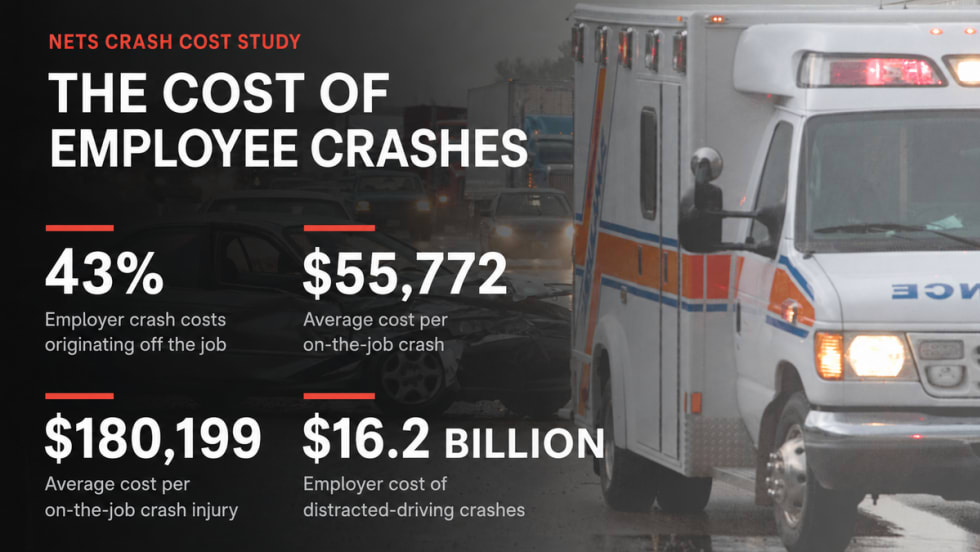
Off-the-Job Crashes Account for 43% of Employers’ $61.7 Billion Crash Burden
NETS quantifies costs dispersed across fleet, risk, HR, and other departments while providing new per-crash benchmarks for employers.
Read More →
Ram Recalls More Than 1.27 Million 1500 Pickups for Seat Belt Anchor Issue
The recall affects certain 2019-2026 Ram 1500 pickups that may have improperly attached second-row seat belt buckle anchors.
Read More →
How Better Visibility Cut Speeding Violations by 48%
Fleet leaders don't need more data, they need clearer visibility into what the data is saying. This case study explores how one utility replaced speeding-event counts with a single metric — miles driven in violation — to strengthen safety and significantly reduce speeding violations.
Read More →
Operation Safe Driver Week: Why the Industry's Oldest Safety Campaign Still Matters to Fleets
A look at how a 2007 enforcement initiative became one of the most consequential weeks on the fleet safety calendar, and what it means for your drivers in 2026.
Read More →