




Adsorbent Natural Gas Tank Applied to First Fleet Vehicle
Cenergy Solutions has been testing an adsorbent natural gas (ANG) tank on a 2001 Dodge Ram 2500 van. ANG tanks can extend a vehicle’s range and lower the cost of gas because it needn’t be pumped to high pressures.

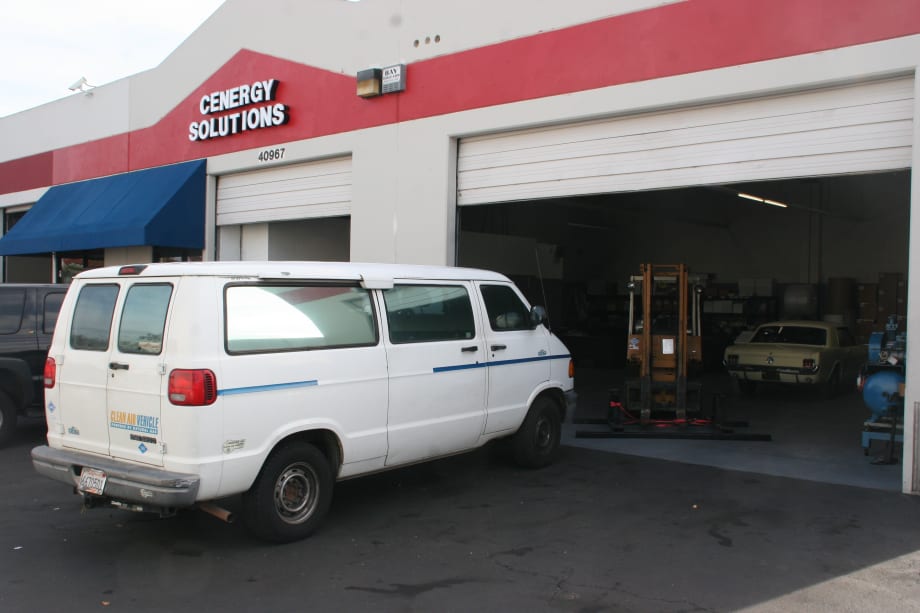
Dodge B2500 is back in the fleet customer's hands after Cenergy outfitted the van with an ANG tank. It still has its original CNG tanks. Photo courtesy of Cenergy Solutions.
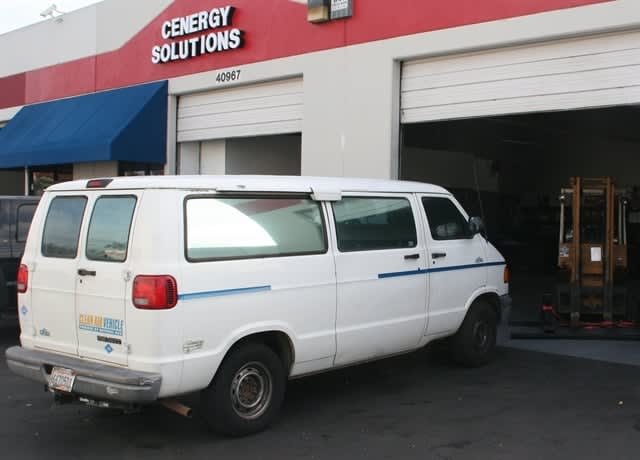
Dodge B2500 is back in the fleet customer's hands after Cenergy outfitted the van with an ANG tank. It still has its original CNG tanks. Photo courtesy of Cenergy Solutions.
Cenergy Solutions, a developer of adsorbent natural gas storage systems, reports that it has delivered its first ANG vehicle to be used in a commercial fleet.
The fleet customer sent the truck to Cenergy for modification, said Gary Fanger, Cenergy’s chief operating officer, and now it’s been returned. The 2001 Dodge Ram B2500 van, with a 5.2-liter V-8 engine, is used by technicians who service power generation equipment. It was originally set up by Chrysler to use compressed natural gas.
Cenergy technicians added an ANG tank, then tested the truck to gauge performance and gas flow to the engine.
“We have been getting great results driving it in a variety of conditions, including steep grades in the mountains” near Cenergy’s tech center in Fremont, Calif., Fanger said. “You couldn’t tell the difference” in performance whether gas was taken from the ANG tank or stock CNG tanks.
“Some questioned whether the flow rate for ANG would be sufficient, and it seemed to be better,” Fanger said. “We think gas is de-adsorbing in the tank and flows better” than when it’s released under higher pressure from the stock tanks.
Cenergy’s adsorbent system uses carbon blocks or powder inside a tank, according to Fanger. When gas is pumped in, high amounts of it cling to the carbon instead of having to be crammed into the tank under high pressure. An adsorbent tank can hold six times more natural gas at 250 psi than a conventional tank, and 20% more in a tank pumped to 3,600 psi, the usual fill-up pressure for CNG.
ANG tanks can extend a vehicle’s range and lower the cost of gas because it needn’t be pumped to high pressures, Fanger said. Technicians are now retrofitting existing DOT compliant natural gas cylinders with their proprietary system. This equipment makes it possible to use low pressure (350- to 500-psi) tanks that are lighter and can be conformed to fit in various areas of empty space in a vehicle.
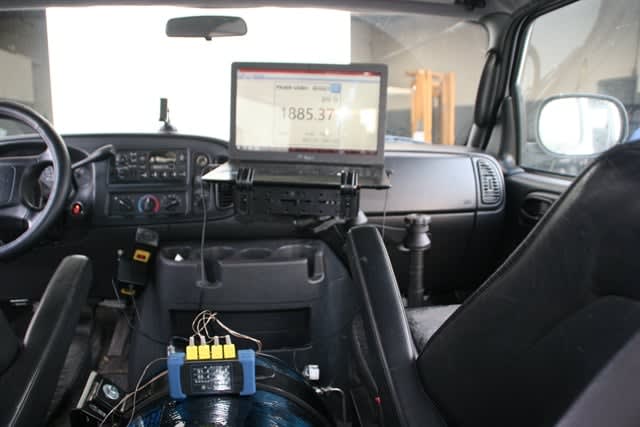
Test instruments in a Dodge Ram van measures gas flow and engine performance. ANG tank sits between the seats per customer's request. Photo courtesy of Cenergy Solutions.
As work continues, a concrete ready-mix company in the Midwest that has committed to fueling its trucks with natural gas is interested in using adsorption tanks, which would be the first application in heavy trucks.
Cenergy meanwhile is working with a California biomethane-generation plant to boost storage capacity in existing tanks with ANG technology. The plant has been in operation for two years and will soon exceed storage capacity for natural gas in its low-pressure tanks.
Cenergy's ANG system is getting considerable interest from overseas because it has uses in stationary as well as vehicle fuel storage, he said.
ANG technology can be applied to virtually any type of natural gas storage system, including CNG vehicles, fueling stations, transport trucks and stationary natural gas storage. In its development work, Cenergy is collaborating with EnerG2, a global energy storage supplier.
More Green Fleet
New Propane Autogas Program Offers Fleet Compensation
Qualified commercial fleets can receive $7,500 per eligible propane autogas vehicle and up to $10,000 for new refueling site prep. Learn how the program works and see whether your fleet qualifies.
Read More →
EV Charging Use Is Outpacing Infrastructure Growth
ChargePoint’s 2026 Charging Forward Report points to rising charger use, higher-powered charging, commercial vehicle electrification, and energy-management technology. Here’s what fleets should know.
Read More →
Merchants Fleet Reports 290M EV Miles as Fleets Navigate Changing Electrification Market
From millions in operating savings to hundreds of millions of EV miles, Merchants Fleet’s latest report reveals what’s working and what’s changing in fleet electrification.
Read More →

The EV Breakdown Nobody's Talking About: Why Most Electric Vehicle Roadside Calls Aren't Mechanical Failures
Here's why EV breakdowns are widely misunderstood.
Read More →
ChargePoint Now Available in Energy Pass
ChargePoint and additional planned charging network integrations were added to GM's Energy Pass.
Read More →

First Look: Slate Auto's Electric Fleet Pickup
Could an affordable, modular EV pickup make electrification more practical for fleets?
Read More →
Slate Debuts Colorful, Unique EV Models
A recent media and client event, studded with electric vehicles dressed up on platforms, planted a new position for the manufacturer in the wider EV market. Fleets will find cost-saving advantages.
Read More →
Slate Electric SUV, Pickup Switchable Model Aims For Light-Duty Fleets
Everything about this EV is counterintuitive and understated, making it stand out from the crowd.
Read More →
Inspiration Mobility Acquires Key Electrada Assets
Inspiration Mobility Group has acquired select assets of Electrada, adding the fleet electrification provider's team, technology, and charging infrastructure development capabilities to its energy management business.
Read More →