





Related: Expert to Show Marijuana’s Effect on the Brain While Driving
AAA: Marijuana Involved Fatal Crashes on the Rise in Washington
The latest AAA Foundation research found that between 2008 and 2012 — the five-year period before the drug was legal — an estimated 8.8% of Washington drivers involved in fatal crashes were positive for THC.
January 30, 2020
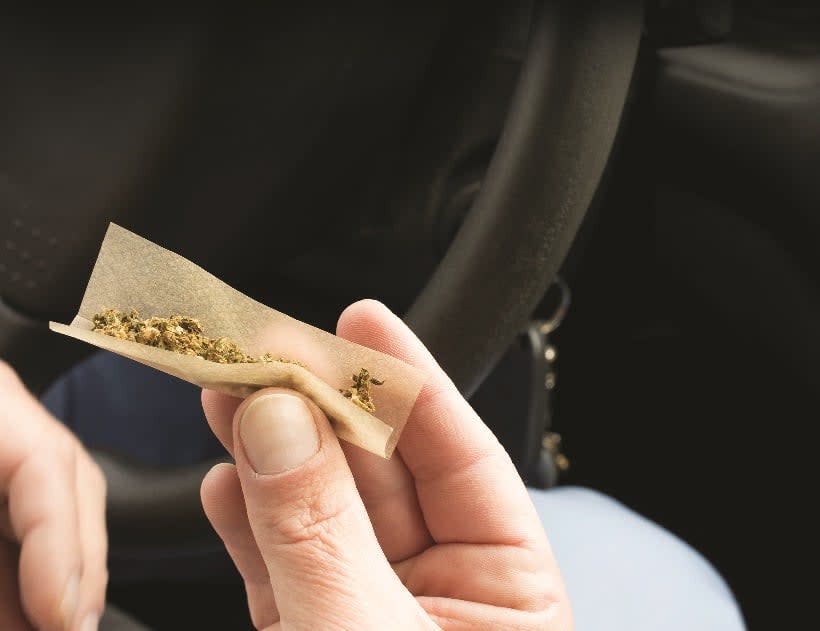
Marijuana use can inhibit concentration, slow reaction times, and cloud judgment.
Photo courtesy of iStockphoto via Jasondoiy.
3 min to read
A significant number of Washington state drivers involved in fatal crashes are testing positive for recent use of marijuana, according to new research from the AAA Foundation for Traffic Safety.
The share of drivers who, after a fatal crash, tested positive for active THC — the drug’s main psychoactive ingredient — has doubled since the state legalized marijuana in December 2012. AAA believes the increase raises important traffic safety concerns for drivers across the country, because recreational marijuana use is now legal in 11 states and Washington, D.C.
The latest AAA Foundation research found that between 2008 and 2012 — the five-year period before the drug was legal — an estimated 8.8% of Washington drivers involved in fatal crashes were positive for THC. That rate rose to 18% between 2013 and 2017.
The average number of THC-positive drivers increased, too. In the five years before legalization, an average of 56 drivers involved in fatal crashes each year were THC-positive. In the five years after legalization, the average jumped to 130. The new numbers bolster the findings of a similar report the AAA Foundation released in 2016. The study did not attempt to determine if marijuana contributed to the crashes included in its latest research. It focused only on the prevalence of drivers who tested positive for active THC.
“This study enabled us to review a full 10-years’ worth of data about the potential impact of marijuana on driving safety — and it raises significant concerns,” Dr. David Yang, executive director of the AAA Foundation for Traffic Safety, said in a statement. “Results from the analysis suggest that legalization of recreational use of marijuana may increase the rate of THC-positive drivers involved in fatal crashes.”
Marijuana use can inhibit concentration, slow reaction times, and cloud judgment. Its effects vary by individual, but a number of studies have concluded that marijuana use impairs the ability to drive safely. Previous research suggests that users who drive high are up to twice as likely to be involved in a crash.
Eleven states and Washington, D.C. have legalized marijuana for both recreational and medical use. Another 22 states have legalized it for medical use only. State legislative sessions for 2020 are getting underway and recreational use is expected to be a popular topic. The legislative interest combined with likely November ballot measures could result in additional states taking a hard look at the issue.
AAA opposes the legalization of marijuana for recreational use because of its inherent traffic safety risks and because of the difficulties in writing legislation that protects the public and treats drivers fairly.
In an attempt to curtail drug-impaired driving, seven states have set legal non-zero, or “per se,” limits on the amount of THC drivers can have in their system. While well-intended, AAA believes imposing such limits is problematic because no data reliably shows what level of THC impairs driving, the chemical’s effects vary by user, and THC testing often cannot be done until hours after a crash.
AAA believes that states that have legalized the drug should not rely solely on an arbitrary legal limit to determine if a driver is impaired.
They should adopt a two-pronged approach that requires:
A positive test for recent marijuana use
Behavioral and physiological evidence of driver impairment
“Simply put, if you’ve used marijuana, don’t drive,” said Jake Nelson, AAA’s director of traffic safety advocacy and research. “And if you plan to drive, don’t use marijuana.”
Last year, a Foundation survey found that nearly 70% of Americans think it’s unlikely a driver will get caught by police for driving shortly after using marijuana. The survey also revealed that an estimated 14.8 million drivers report getting behind the wheel within one hour after using marijuana in the past 30 days.
Originally posted on Work Truck Online
More Safety

Nexar-Nauto Merger Aims to Give Fleets Better Safety Intelligence Through Larger Driving Dataset
Stefan Heck tells Automotive Fleet that combining more than 10 billion miles of driving history with Nexar's AI models will give fleets deeper insights into driver risk and roadway conditions than either company could provide independently.
Read More →
Don't Wait for a Crisis: 5 Ways to Build Mental Health Into Your Fleet Safety Program
For Suicide Prevention Month, fleet and safety leaders have an opportunity to put mental health where it belongs: at the center of workplace safety.
Read More →
How Camera Data Can Strengthen a Fleet’s Insurance Renewal
Insights from a commercial insurance carrier and a broker show how fleets can turn video telematic data, driver coaching, and improved claims results into a stronger case at insurance renewal.
Read More →
The Safest Fleets Aren’t the Ones with the Most Technology
You’ve made the telematics investment. Here’s how to capture the other half of its value and build the safest fleet on the road.
Read More →
Sponsored•August 7, 2026
Hidden in Plain Sight: Fleet Compliance Risks
Fleet compliance isn't just about having policies — it's about consistently enforcing them. This practical guide reveals six hidden compliance risks common in public sector and shared fleet operations and outlines proven strategies to improve visibility, accountability, and audit readiness
Read More →
NETS Sets 2026 Fleet Safety Benchmark Conference for Indianapolis
The Sept. 15–17 program will feature fleet benchmarking data, case studies, emerging technologies, and implementation strategies while running alongside the NSC Safety Congress & Expo.
Read More →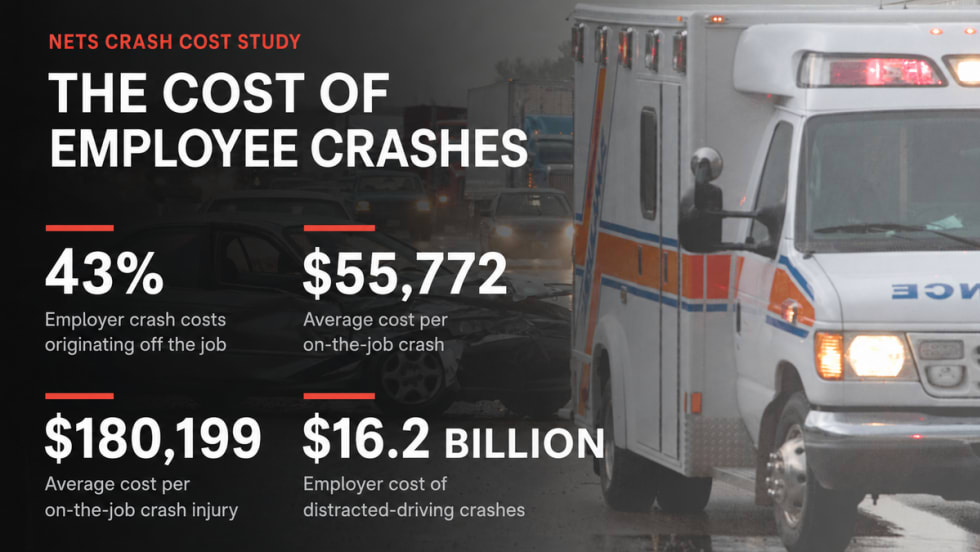
Off-the-Job Crashes Account for 43% of Employers’ $61.7 Billion Crash Burden
NETS quantifies costs dispersed across fleet, risk, HR, and other departments while providing new per-crash benchmarks for employers.
Read More →
Ram Recalls More Than 1.27 Million 1500 Pickups for Seat Belt Anchor Issue
The recall affects certain 2019-2026 Ram 1500 pickups that may have improperly attached second-row seat belt buckle anchors.
Read More →
Sponsored•July 17, 2026
How Better Visibility Cut Speeding Violations by 48%
Fleet leaders don't need more data, they need clearer visibility into what the data is saying. This case study explores how one utility replaced speeding-event counts with a single metric — miles driven in violation — to strengthen safety and significantly reduce speeding violations.
Read More →
Operation Safe Driver Week: Why the Industry's Oldest Safety Campaign Still Matters to Fleets
A look at how a 2007 enforcement initiative became one of the most consequential weeks on the fleet safety calendar, and what it means for your drivers in 2026.
Read More →