




AAA Identifies Special Vehicle Features for Aging Drivers
NEW YORK – AAA, in partnership with the University of Florida's National Older Driver Research and Training Center (NODRTC), has released its Smart Features for Mature Drivers, which identifies vehicle features that can assist drivers with visual, physical, and mental changes that are frequently encountered as they age.
NEW YORK – AAA, in partnership with the University of Florida's National Older Driver Research and Training Center (NODRTC), has released its Smart Features for Mature Drivers, which identifies vehicle features that can assist drivers with visual, physical, and mental changes that are frequently encountered as they age.
The announcement addresses conditions often faced by senior adults — including diminished vision, arthritic hands, hip and leg pain, and limited upper-body range of motion — and highlights features that best address each condition with examples of vehicles exemplifying those features.
"Many of the changes our bodies experience as we age can affect our ability to safely operate a vehicle," said Dennis P. McCarthy, co-director of the University of Florida's NODRTC. "When looking for ways to help maintain an older person's safety, it's important to address the vehicle they are driving. Today, specific vehicle features can help improve driver comfort and safety."
In a recent survey, AAA found that 43 percent of motorists over the age of 55 suffered from at least one of nine driving related difficulties commonly caused by aging, and nearly one out of four motorists over 55 plan to purchase a vehicle in the next two years.
Because everyone ages differently, AAA recommends mature drivers look for vehicles with features that address their specific needs and health issues. Some of the recommendations included in Smart Features for Mature Drivers include:
Drivers suffering from hip or leg pain, decreased leg strength, or limited knee range of motion should look for vehicles with six-way adjustable power seats and seat heights that come between the driver's mid-thigh and lower buttocks. Both of these features can make it easier for drivers to enter and exit a vehicle.
Drivers with arthritic hands, painful, or stiff fingers or diminished fine motor skills would benefit from four-door models, thick steering wheels, keyless entry and ignition, power mirrors and seats, and larger dashboard controls with buttons.
Drivers with diminished vision or problems with low contrast sensitivity will find helpful vehicles with extendable sun visors, large audio, and climate controls and displays with contrasting text.
Concurrent to the release of Smart Features for Mature Drivers, AAA launched a Web site with content devoted to senior drivers and their families at www.AAA.com/seniors.
More Safety

Nexar-Nauto Merger Aims to Give Fleets Better Safety Intelligence Through Larger Driving Dataset
Stefan Heck tells Automotive Fleet that combining more than 10 billion miles of driving history with Nexar's AI models will give fleets deeper insights into driver risk and roadway conditions than either company could provide independently.
Read More →
Don't Wait for a Crisis: 5 Ways to Build Mental Health Into Your Fleet Safety Program
For Suicide Prevention Month, fleet and safety leaders have an opportunity to put mental health where it belongs: at the center of workplace safety.
Read More →
How Camera Data Can Strengthen a Fleet’s Insurance Renewal
Insights from a commercial insurance carrier and a broker show how fleets can turn video telematic data, driver coaching, and improved claims results into a stronger case at insurance renewal.
Read More →
The Safest Fleets Aren’t the Ones with the Most Technology
You’ve made the telematics investment. Here’s how to capture the other half of its value and build the safest fleet on the road.
Read More →
Hidden in Plain Sight: Fleet Compliance Risks
Fleet compliance isn't just about having policies — it's about consistently enforcing them. This practical guide reveals six hidden compliance risks common in public sector and shared fleet operations and outlines proven strategies to improve visibility, accountability, and audit readiness
Read More →
NETS Sets 2026 Fleet Safety Benchmark Conference for Indianapolis
The Sept. 15–17 program will feature fleet benchmarking data, case studies, emerging technologies, and implementation strategies while running alongside the NSC Safety Congress & Expo.
Read More →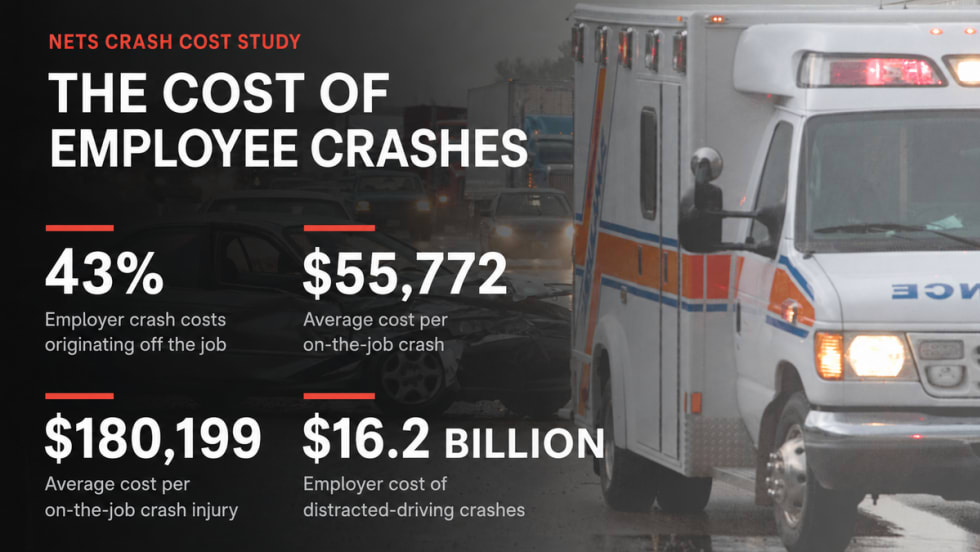
Off-the-Job Crashes Account for 43% of Employers’ $61.7 Billion Crash Burden
NETS quantifies costs dispersed across fleet, risk, HR, and other departments while providing new per-crash benchmarks for employers.
Read More →
Ram Recalls More Than 1.27 Million 1500 Pickups for Seat Belt Anchor Issue
The recall affects certain 2019-2026 Ram 1500 pickups that may have improperly attached second-row seat belt buckle anchors.
Read More →
How Better Visibility Cut Speeding Violations by 48%
Fleet leaders don't need more data, they need clearer visibility into what the data is saying. This case study explores how one utility replaced speeding-event counts with a single metric — miles driven in violation — to strengthen safety and significantly reduce speeding violations.
Read More →
Operation Safe Driver Week: Why the Industry's Oldest Safety Campaign Still Matters to Fleets
A look at how a 2007 enforcement initiative became one of the most consequential weeks on the fleet safety calendar, and what it means for your drivers in 2026.
Read More →