




AAA Backs Mandatory Ignition Interlocks for All DUI Offenders
SANTA ANA, CA – AAA, citing the need to protect the public against drunk drivers, announced its support of ignition interlocks for all convicted DUI offenders.
SANTA ANA, CA – AAA, citing the need to protect the public against drunk drivers, announced its support of ignition interlocks for all convicted DUI offenders.
AAA stressed that it is not alone in its concern about impaired driving. According to the 2012 Traffic Safety Culture Index conducted by the AAA Foundation for Traffic Safety, more than nine in 10 drivers consider drinking and driving by others a serious threat to their personal safety. Nearly all (97 percent) surveyed find it unacceptable for drivers to get behind the wheel when they have had too much to drink. Nearly eight in 10 support requiring ignition interlocks for all convicted DUI offenders, even if it’s their first conviction.
Research has identified ignition interlock devices (IIDs) as a proven way to save lives, AAA said. Further, research confirms that IIDs are more effective than other methods at reducing re-arrest among convicted drunk drivers and keeping impaired drivers off the road.
AAA said it is reaching out to motorists on the heels of a recent National Transportation Safety Board (NTSB) decision to support laws requiring IID use for all first-time DUI offenders — one of several new recommendations issued to help curb alcohol-related traffic injury and death.
“I commend AAA for stepping up for safety,” said NTSB Chairman Deborah Hersman. “Technologies, such as ignition interlocks, will reduce alcohol-related crashes on our nation's roadways.”
Seventeen states have passed laws mandating statewide use of ignition IIDs for all offenders. Since 2010, California has mandated a pilot program in four counties (Los Angeles, Alameda, Sacramento and Tulare) covering 13 million people, requiring installation of IIDs for first-time and multiple offenders. Drivers in other counties may also be required to install an IID at a judge’s discretion.
“Safety can be improved by requiring IID use for all first-time DUI offenders,” said Anita Lorz, Auto Club traffic safety and community programs manager. “However, simply mandating the device is not enough. We need to ensure that judges actually order IID use and that there is effective oversight and enforcement to ensure offenders have the devices in place on their vehicles. The results of California’s extensive IID first-time offender pilot program, which runs through 2015, will provide critical information to determine how best to use IIDs in the state.”
According to the Auto Club, a first-offense misdemeanor DUI conviction in California can cost approximately $15,649 or more. That figure is up 29% from just two years ago – largely due to a 37% increase in auto insurance and state and county fees and penalties. The Auto Club estimate also includes:
State-mandated (minimum) fine
Vehicle towing and storage fees
DMV license re-issue fee
DUI education class
Victim restitution fund fee
Booking and other court charges
Attorney fees.
These costs do not include other common charges, such as the cost of an IID ($70 or more per month), bail ($2,500), and transportation costs while a driver has a suspended license, lost wages, vehicle property damage, and hospital and medical costs. The cost of an under age 21 first-offense misdemeanor DUI is estimated to be $22,492, due to a larger increase in insurance.
More Safety

Nexar-Nauto Merger Aims to Give Fleets Better Safety Intelligence Through Larger Driving Dataset
Stefan Heck tells Automotive Fleet that combining more than 10 billion miles of driving history with Nexar's AI models will give fleets deeper insights into driver risk and roadway conditions than either company could provide independently.
Read More →
Don't Wait for a Crisis: 5 Ways to Build Mental Health Into Your Fleet Safety Program
For Suicide Prevention Month, fleet and safety leaders have an opportunity to put mental health where it belongs: at the center of workplace safety.
Read More →
How Camera Data Can Strengthen a Fleet’s Insurance Renewal
Insights from a commercial insurance carrier and a broker show how fleets can turn video telematic data, driver coaching, and improved claims results into a stronger case at insurance renewal.
Read More →
The Safest Fleets Aren’t the Ones with the Most Technology
You’ve made the telematics investment. Here’s how to capture the other half of its value and build the safest fleet on the road.
Read More →
Hidden in Plain Sight: Fleet Compliance Risks
Fleet compliance isn't just about having policies — it's about consistently enforcing them. This practical guide reveals six hidden compliance risks common in public sector and shared fleet operations and outlines proven strategies to improve visibility, accountability, and audit readiness
Read More →
NETS Sets 2026 Fleet Safety Benchmark Conference for Indianapolis
The Sept. 15–17 program will feature fleet benchmarking data, case studies, emerging technologies, and implementation strategies while running alongside the NSC Safety Congress & Expo.
Read More →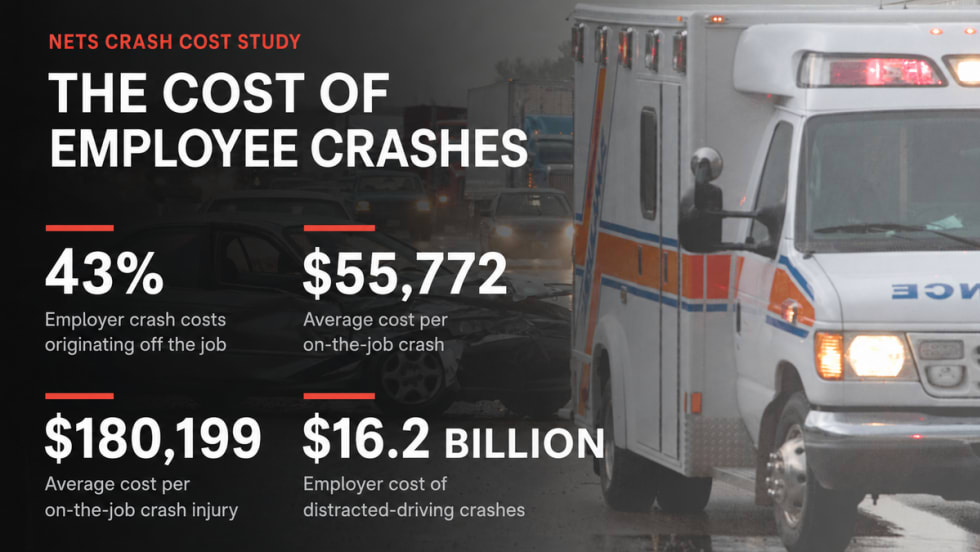
Off-the-Job Crashes Account for 43% of Employers’ $61.7 Billion Crash Burden
NETS quantifies costs dispersed across fleet, risk, HR, and other departments while providing new per-crash benchmarks for employers.
Read More →
Ram Recalls More Than 1.27 Million 1500 Pickups for Seat Belt Anchor Issue
The recall affects certain 2019-2026 Ram 1500 pickups that may have improperly attached second-row seat belt buckle anchors.
Read More →
How Better Visibility Cut Speeding Violations by 48%
Fleet leaders don't need more data, they need clearer visibility into what the data is saying. This case study explores how one utility replaced speeding-event counts with a single metric — miles driven in violation — to strengthen safety and significantly reduce speeding violations.
Read More →
Operation Safe Driver Week: Why the Industry's Oldest Safety Campaign Still Matters to Fleets
A look at how a 2007 enforcement initiative became one of the most consequential weeks on the fleet safety calendar, and what it means for your drivers in 2026.
Read More →