




8 States Push to Increase Zero-Emission Cars
Eight states, which roughly make up 23 percent of the country’s auto market, recently vowed to increase the nation’s number of zero-emission vehicles (ZEV) to 3.3 million by 2025.
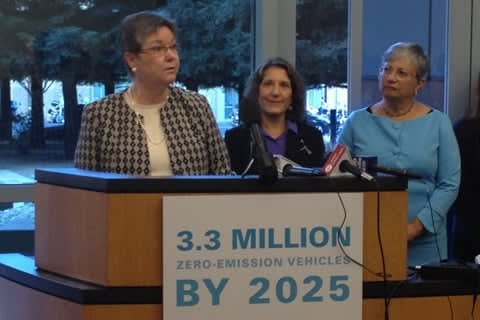
(L to R): Mary D. Nichols, Chairman, California Air Resources Board; Deb Markowitz, Secretary, Vermont Agency of Natural Resources; Susan Griffin, Director of the Board, American Lung Association. Photo courtesy of the California Air Resoures Board.
Eight states, which roughly make up 23 percent of the country’s auto market, recently vowed to increase the nation’s number of zero-emission vehicles (ZEV) to 3.3 million by 2025. The aggressive plan would involve moving ahead with the construction of charging stations and other necessary infrastructure.
The message was supported by governors from California, Connecticut, Maryland, Massachusetts, New York, Oregon, Rhode Island and Vermont, all of whom see the benefits to reducing greenhouse gas emissions, improving air quality and public health, enhancing energy diversity, saving consumers money, and promoting economic growth.
"This is not just an agreement, but a serious and profoundly important commitment," said California Governor Jerry Brown. "From coast to coast, we're charging ahead to get millions of the world's cleanest vehicles on our roads."
The cooperative agreement, or “Memorandum of Understanding,” includes creating and participating in a multi-state ZEV Program Implementation Task Force to help support and oversee the implementation of related regulations. The agreement would also include:
Harmonize building codes to make it easier to construct new electric car charging stations
Lead by example by including zero emission vehicles in their public fleets
Evaluate and establish, where appropriate, financial and other incentives to promote zero emission vehicles
Consider establishing favorable electricity rates for home charging systems; and
Develop common standards for roadway signs and charging networks.
The next step, according to California Air Resources Board representative Dave Clegern, is to form a task force with the signatory states to evaluate everyone’s existing rules, levels of regulation, resources and needs. The report should be completed within six months of the signing, and will take the form of an action plan for the states.
More Green Fleet
EV Charging Use Is Outpacing Infrastructure Growth
ChargePoint’s 2026 Charging Forward Report points to rising charger use, higher-powered charging, commercial vehicle electrification, and energy-management technology. Here’s what fleets should know.
Read More →
Merchants Fleet Reports 290M EV Miles as Fleets Navigate Changing Electrification Market
From millions in operating savings to hundreds of millions of EV miles, Merchants Fleet’s latest report reveals what’s working and what’s changing in fleet electrification.
Read More →
The EV Breakdown Nobody's Talking About: Why Most Electric Vehicle Roadside Calls Aren't Mechanical Failures
Here's why EV breakdowns are widely misunderstood.
Read More →
ChargePoint Now Available in Energy Pass
ChargePoint and additional planned charging network integrations were added to GM's Energy Pass.
Read More →

First Look: Slate Auto's Electric Fleet Pickup
Could an affordable, modular EV pickup make electrification more practical for fleets?
Read More →
Slate Debuts Colorful, Unique EV Models
A recent media and client event, studded with electric vehicles dressed up on platforms, planted a new position for the manufacturer in the wider EV market. Fleets will find cost-saving advantages.
Read More →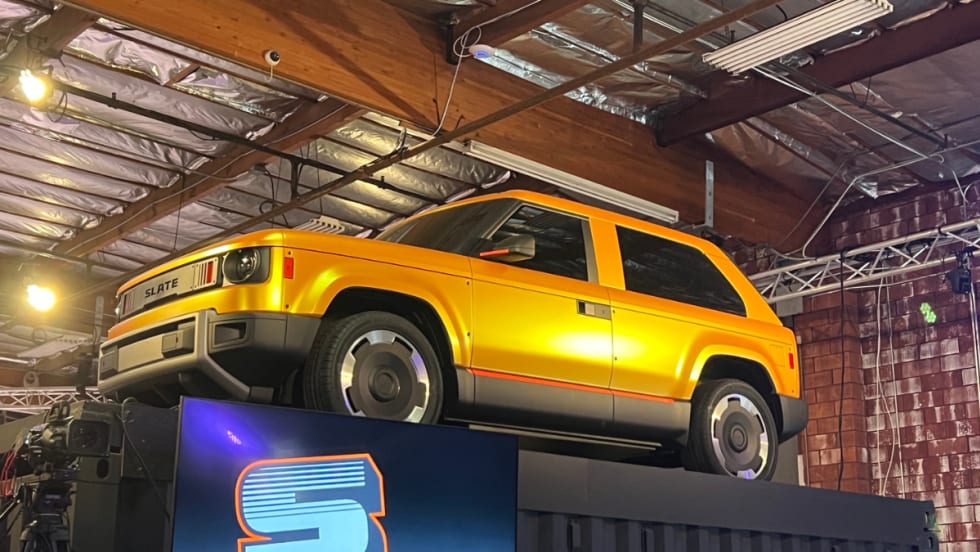
Slate Electric SUV, Pickup Switchable Model Aims For Light-Duty Fleets
Everything about this EV is counterintuitive and understated, making it stand out from the crowd.
Read More →
Inspiration Mobility Acquires Key Electrada Assets
Inspiration Mobility Group has acquired select assets of Electrada, adding the fleet electrification provider's team, technology, and charging infrastructure development capabilities to its energy management business.
Read More →
Turning Connected Vehicle Data Into Decisions That Matter
Fleet leaders have more data than ever, but turning that data into clear, actionable decisions remains a challenge. This white paper shows how leading organizations are using connected vehicle data to improve safety, reduce costs, and optimize fleet performance. Learn how to turn insight into action across your fleet.
Read More →