




75% of Oregon Drivers Admit to Driving Distracted
The Oregon Department of Transportation releases a new distracted driving study that identifies the trend as an epidemic.
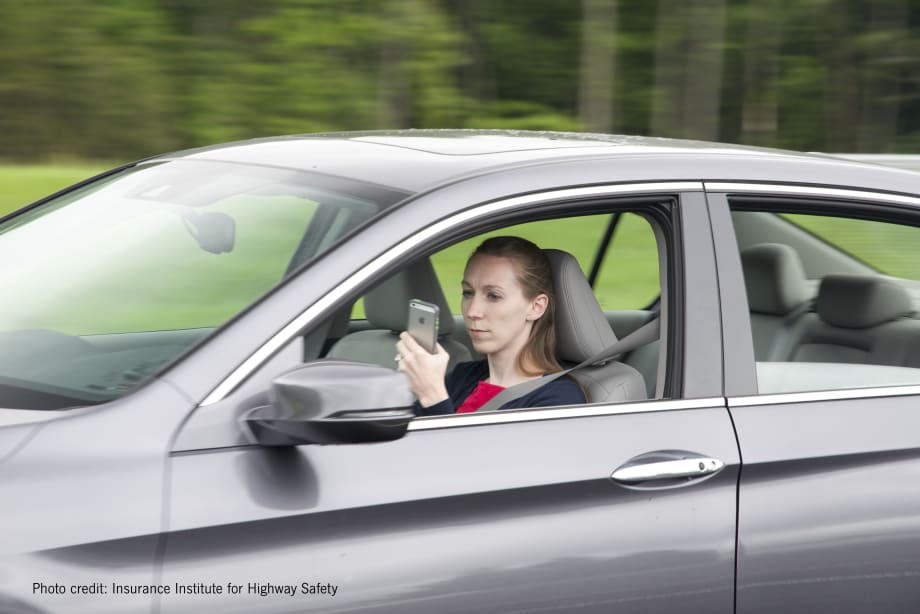
Three-quarters of Oregon drivers questioned in a recent survey admitted to driving while distracted, mostly as a result of cell phone use.
The newly released distracted driving study was commissioned by the Oregon Department of Transportation. Southern Oregon University conducted the surveys in February.
The report calls distracted driving an epidemic in Oregon and recommends that the state launch a targeted media campaign — including public service announcements and social media — aimed at educating the public and changing attitudes. Also recommended is greater enforcement of the state's distracted driving laws and higher fines for violations.
Nearly 1,600 Oregonians participated in the survey, and most of them — 84% — said they feel uncomfortable riding as a passenger with a driver who is distracted. Yet 44% admitted to driving distracted with passengers in their vehicle, and 75% of respondents admitted to driving distracted when alone in their vehicles.
“Our goal is nothing short of a change in cultural norms when it comes to distracted driving,” said ODOT Director Matt Garrett. “We are mobilizing all our assets at ODOT, putting together a coalition of partners that will use this study and others to help us effectively engage, influence and ultimately change the behavior of Oregon drivers.”
A total of 83% of respondents agreed that distracted driving incidents are increasing and believe that stronger laws, better use of technology, and increased awareness are keys to helping address the problem.
Specifically, the study revealed that 29% of respondents feel there's a need for stronger laws. Currently, the fine for non-hands-free use of a cell phone amounts to $500 in Oregon. The study recommends raising that limit to $1,000.
Nearly half of survey participants said they believe technology can reduce distraction. Use of technology includes apps that prevent drivers from using their cell phones while behind the wheel.
ODOT crash data reveals that on average, over the five-year period from 2010 to 2014, a distracted driver crash occurred every 2.5 hours and someone received a conviction for using a cell phone while driving every half-hour. In Oregon on average, more than 11 people die in distracted driving crashes each year, and over 2,800 are injured.
“It’s actually very difficult to determine if distraction was the primary cause of a crash, because people don’t often admit if they were using their cell phones or otherwise distracted,” said Tom Fuller, communications section manager and sponsor of the study. “It’s likely the real numbers are far higher.”
To download the study, click here.
More Safety

Nexar-Nauto Merger Aims to Give Fleets Better Safety Intelligence Through Larger Driving Dataset
Stefan Heck tells Automotive Fleet that combining more than 10 billion miles of driving history with Nexar's AI models will give fleets deeper insights into driver risk and roadway conditions than either company could provide independently.
Read More →
Don't Wait for a Crisis: 5 Ways to Build Mental Health Into Your Fleet Safety Program
For Suicide Prevention Month, fleet and safety leaders have an opportunity to put mental health where it belongs: at the center of workplace safety.
Read More →
How Camera Data Can Strengthen a Fleet’s Insurance Renewal
Insights from a commercial insurance carrier and a broker show how fleets can turn video telematic data, driver coaching, and improved claims results into a stronger case at insurance renewal.
Read More →
The Safest Fleets Aren’t the Ones with the Most Technology
You’ve made the telematics investment. Here’s how to capture the other half of its value and build the safest fleet on the road.
Read More →
Hidden in Plain Sight: Fleet Compliance Risks
Fleet compliance isn't just about having policies — it's about consistently enforcing them. This practical guide reveals six hidden compliance risks common in public sector and shared fleet operations and outlines proven strategies to improve visibility, accountability, and audit readiness
Read More →
NETS Sets 2026 Fleet Safety Benchmark Conference for Indianapolis
The Sept. 15–17 program will feature fleet benchmarking data, case studies, emerging technologies, and implementation strategies while running alongside the NSC Safety Congress & Expo.
Read More →
Off-the-Job Crashes Account for 43% of Employers’ $61.7 Billion Crash Burden
NETS quantifies costs dispersed across fleet, risk, HR, and other departments while providing new per-crash benchmarks for employers.
Read More →
Ram Recalls More Than 1.27 Million 1500 Pickups for Seat Belt Anchor Issue
The recall affects certain 2019-2026 Ram 1500 pickups that may have improperly attached second-row seat belt buckle anchors.
Read More →
How Better Visibility Cut Speeding Violations by 48%
Fleet leaders don't need more data, they need clearer visibility into what the data is saying. This case study explores how one utility replaced speeding-event counts with a single metric — miles driven in violation — to strengthen safety and significantly reduce speeding violations.
Read More →
Operation Safe Driver Week: Why the Industry's Oldest Safety Campaign Still Matters to Fleets
A look at how a 2007 enforcement initiative became one of the most consequential weeks on the fleet safety calendar, and what it means for your drivers in 2026.
Read More →