




4 Automakers Offer Auto-Braking Standard on Most Cars
Tesla, Mercedes-Benz, Volvo and Toyota already offer automatic emergency braking as a standard feature on most of their vehicles, according to a new progress report.
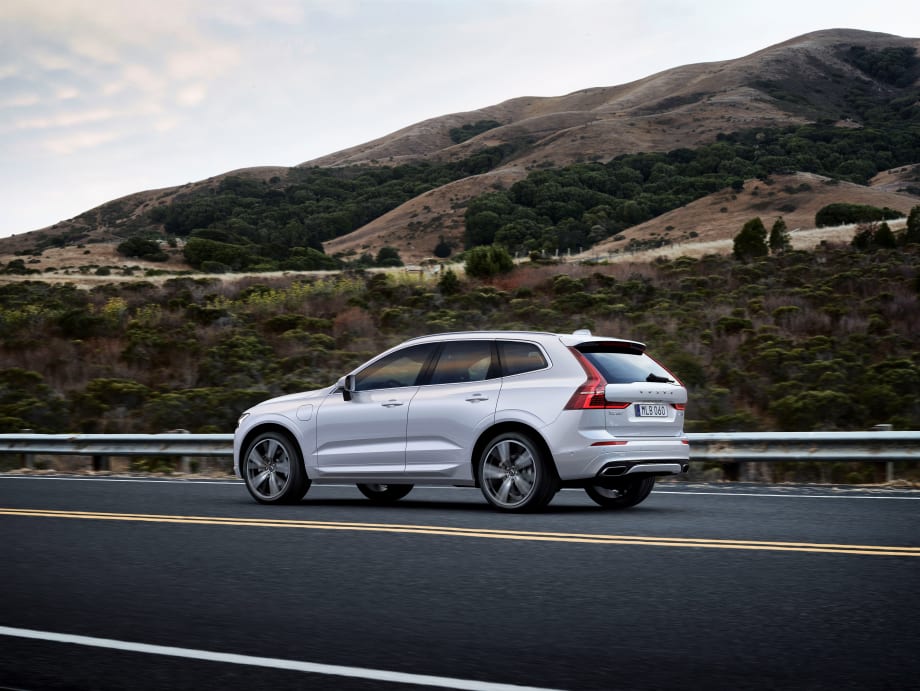
The 2017 Volvo XC60 SUV includes an updated City Safety AEB system. Photo courtesy of Volvo.
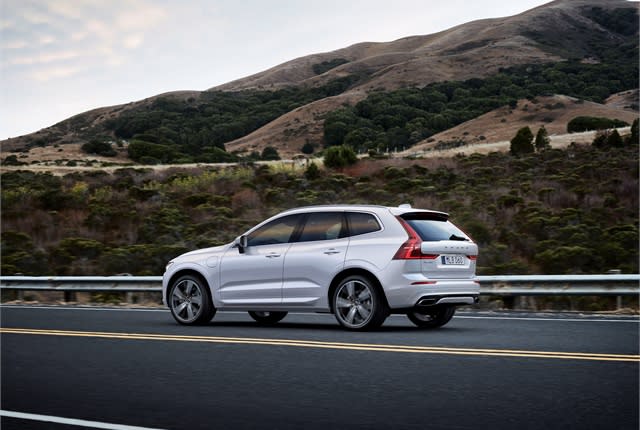
The 2017 Volvo XC60 SUV includes an updated City Safety AEB system. Photo courtesy of Volvo.
Four of 20 automakers reported that automatic emergency braking (AEB) is standard on more than half of their 2017 model-year vehicles, according to an update released jointly by the National Highway Traffic Safety Administration and the Insurance Institute for Highway Safety.
The four automakers are Tesla (99.8% of fleet), Mercedes-Benz (96%), Volvo (68%) and Toyota (56%). They are followed by Honda (30%), Hyundai (9%) and Kia (5%).
Even without making AEB standard, another five automakers reported that at least 30% of vehicles they produced in 2017 are equipped with AEB. They are Audi (73%), BMW (58%), Subaru (47%), Volkswagen (36%) and Maserati/Alfa Romeo (30%).
The 20 automakers previously agreed to voluntarily equip virtually all of their new passenger vehicles with a low-speed AEB system by September 2022. These systems will include forward collision warning. The technology is designed to prevent and mitigate front-to-rear crashes.
“The growing number of vehicles offering automated emergency braking is good news for America’s motorists and passengers,” said U.S. Transportation Secretary Elaine L. Chao. “With each model year, manufacturers will increasingly utilize technology to allow vehicles to ‘see’ the world around them and navigate it more safely.”
The voluntary agreement to make AEB standard was announced in March 2016. The goal is to get the technology into a wider swath of the vehicle fleet faster.
“IIHS is pleased to see that automakers are steadily moving toward the shared goal of putting standard AEB into every new car they sell,” said David Zuby, executive vice president and chief research officer of IIHS. “This is a big win for safety on our nation’s roads, which will see fewer crashes and injuries because of this commitment.”
By 2025, the commitment will prevent 28,000 crashes and 12,000 injuries, IIHS estimated. Consumer Reports has agreed to assist in monitoring automaker progress.
“This progress is great news for luxury car buyers and many others, but many automakers still need to do more, as Consumer Reports analysis indicates that only 19% of 2017 models included these lifesaving technologies as standard features,” said David Friedman, director of cars and product policy and analysis at Consumers Union. Consumers Union is the policy and mobilization division of Consumer Reports.
“Automakers, safety groups and the government should also work together to make highway operation and pedestrian detection standard features on all AEB systems,” Friedman added.
Manufacturers recently submitted their first yearly AEB agreement progress reports for vehicles manufactured from Sept. 1, 2016, through Aug. 31, 2017, for the U.S. market.
The participating automakers include Audi, BMW, Fiat Chrysler, Ford, General Motors, Honda, Hyundai, Jaguar Land Rover, Kia, Maserati, Mazda, Mercedes-Benz, Mitsubishi Motors, Nissan, Porsche, Subaru, Tesla Motors, Toyota, Volkswagen and Volvo. These companies represent more than 99% of the U.S. automobile market.
Toyota is the frontrunner when it comes to having the largest number of 2017 vehicles with standard AEB. The automaker equipped 56% of its 2017 fleet — 1.4 of 2.5 million vehicles — with AEB. General Motors has the second-highest number of 2017 models with AEB — 551,777 of 2.8 million vehicles, representing 20% of its 2017 fleet. Honda is third-highest with 492,330 of 1.6 million vehicles with AEB, representing 30% of its 2017 fleet.
Other manufacturers have yet to make significant progress. Fewer than 10% of 2017 vehicles sold by Fiat Chrysler, Ford, Hyundai, Kia and Mitsubishi have AEB. Jaguar Land Rover and Porsche didn’t offer the feature at all on 2017 vehicles.
More Safety
Does Your Fleet's Culture Encourage Distracted Driving?
What happens when the people responsible for enforcing safety rules are the ones setting the wrong example? The answer may reveal why some of the biggest risks to fleet drivers have little to do with what's written in the employee handbook.
Read More →
Fleet Manager’s Ultimate Playbook: Navigating the New Standard in OEM Connectivity
Rising operating costs, driver safety concerns, and unplanned downtime are putting unprecedented pressure on modern fleets. Discover how fleet managers use embedded OEM connectivity and real-time vehicle data to cut TCO, prevent downtime, and protect drivers without aftermarket telematics hardware.
Read More →
From Driver Well-Being to EV Charging | AF News Recap
Mental health belongs in the fleet safety conversation. This week, we’re looking at five ways fleets can support employee well-being before a crisis, plus Holman’s expansion in Mexico, new one-day Fleet Forward passes, and why EV charging demand is outpacing infrastructure growth.
Read More →
Nexar-Nauto Merger Aims to Give Fleets Better Safety Intelligence Through Larger Driving Dataset
Stefan Heck tells Automotive Fleet that combining more than 10 billion miles of driving history with Nexar's AI models will give fleets deeper insights into driver risk and roadway conditions than either company could provide independently.
Read More →
Don't Wait for a Crisis: 5 Ways to Build Mental Health Into Your Fleet Safety Program
For Suicide Prevention Month, fleet and safety leaders have an opportunity to put mental health where it belongs: at the center of workplace safety.
Read More →
How Camera Data Can Strengthen a Fleet’s Insurance Renewal
Insights from a commercial insurance carrier and a broker show how fleets can turn video telematic data, driver coaching, and improved claims results into a stronger case at insurance renewal.
Read More →
The Safest Fleets Aren’t the Ones with the Most Technology
You’ve made the telematics investment. Here’s how to capture the other half of its value and build the safest fleet on the road.
Read More →
Hidden in Plain Sight: Fleet Compliance Risks
Fleet compliance isn't just about having policies — it's about consistently enforcing them. This practical guide reveals six hidden compliance risks common in public sector and shared fleet operations and outlines proven strategies to improve visibility, accountability, and audit readiness
Read More →
NETS Sets 2026 Fleet Safety Benchmark Conference for Indianapolis
The Sept. 15–17 program will feature fleet benchmarking data, case studies, emerging technologies, and implementation strategies while running alongside the NSC Safety Congress & Expo.
Read More →
Off-the-Job Crashes Account for 43% of Employers’ $61.7 Billion Crash Burden
NETS quantifies costs dispersed across fleet, risk, HR, and other departments while providing new per-crash benchmarks for employers.
Read More →