




'08 Ford Taurus X SUV Earns Top Safety Pick Award
ARLINGTON, Va. --- The Insurance Institute for Highway Safety announced that the 2008 Ford Taurus X, a midsize SUV, meets the criteria for the Top Safety Pick award.
ARLINGTON, Va. --- The Insurance Institute for Highway Safety announced that the 2008 Ford Taurus X, a midsize SUV, meets the criteria for the Top Safety Pick award. Winners of this designation demonstrate superior overall crash protection among the vehicles in their class. To qualify for Top Safety Pick, a vehicle must earn the highest rating of "good" in all three tests --- front, side and rear --- and be equipped with electronic stability control. "Criteria to win are tough because the award is intended to drive continued safety improvements such as high crash test ratings and rapid addition of electronic stability control, which is standard equipment on the Taurus X," said Institute President Adrian Lund. "Recognizing vehicles at the head of the class for safety helps consumers distinguish the best overall choices without having to sort through multiple results." Initially only 13 cars, minivans and SUVs qualified for 2007 awards. As automakers introduce new models or make safety changes to existing ones, the institute adds winners throughout the year. Ford's Freestyle, predecessor to the Taurus X, earned top crash test ratings but didn't qualify for the 2007 award because electronic stability control wasn't available. "In a competitive marketplace, automakers are striving to earn safety accolades," Lund pointed out. "We congratulate Ford for having more models that earn Top Safety Pick from the institute than any other car company." Seven of the 22 current Top Safety Picks are from Ford or its subsidiary, Volvo. The institute's frontal crashworthiness evaluations are based on results of 40 mph frontal offset crash tests. Each vehicle's overall evaluation is based on measurements of intrusion into the occupant compartment, injury measures recorded on a Hybrid III dummy in the driver seat, and analysis of slow-motion film to assess how well the restraint system controlled dummy movement during the test. Side evaluations are based on performance in a crash test in which the side of a vehicle is struck by a barrier moving at 31 mph. The barrier represents the front end of a pickup or SUV. Ratings reflect injury measures recorded on two instrumented SID-IIs dummies, assessment of head protection countermeasures, and the vehicle's structural performance during the impact. Injury measures obtained from the two dummies, one in the driver seat and the other in the back seat behind the driver, are used to determine the likelihood that a driver and/or passenger in a similar real-world crash would sustain serious injury to various parts of the body. The movements and contacts of the dummies' heads during the test also are evaluated. Structural performance is based on measurements indicating the amount of B-pillar intrusion into the occupant compartment. Rear crash protection is rated according to a two-step procedure. Starting points for the ratings are measurements of head restraint geometry --- the height of a restraint and its horizontal distance behind the back of the head of an average-size man. Seat/head restraints with good or acceptable geometry are tested dynamically using a dummy that measures forces on the neck.
More Safety
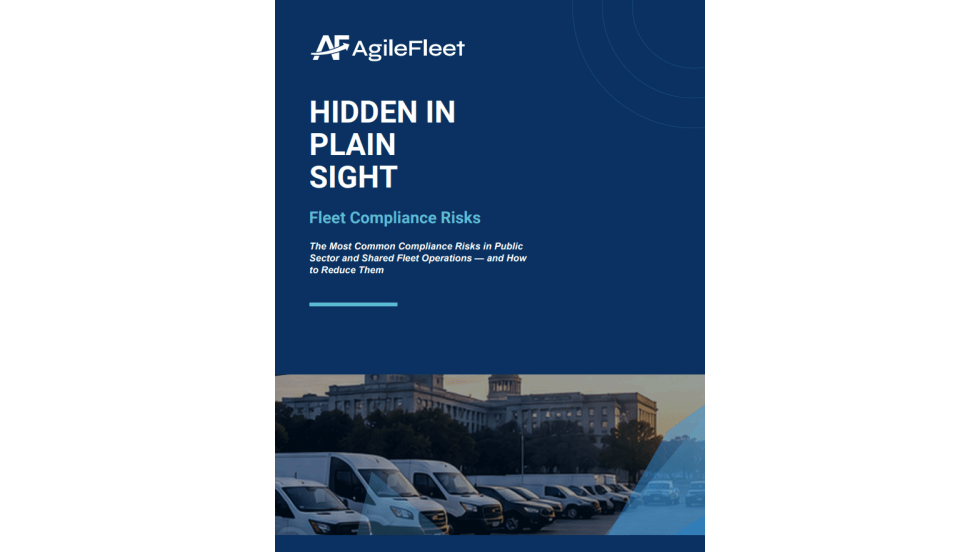
Hidden in Plain Sight: Fleet Compliance Risks
Fleet compliance isn't just about having policies — it's about consistently enforcing them. This practical guide reveals six hidden compliance risks common in public sector and shared fleet operations and outlines proven strategies to improve visibility, accountability, and audit readiness
Read More →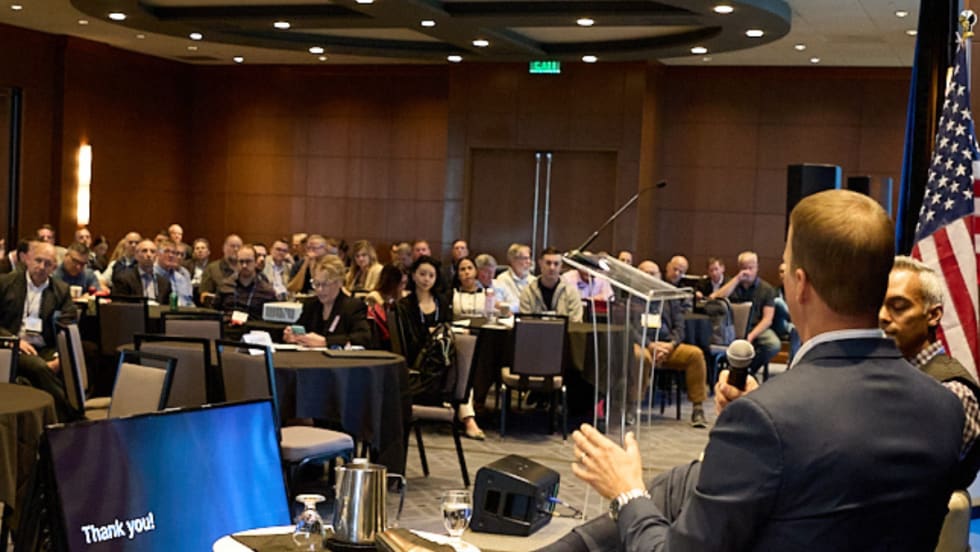
NETS Sets 2026 Fleet Safety Benchmark Conference for Indianapolis
The Sept. 15–17 program will feature fleet benchmarking data, case studies, emerging technologies, and implementation strategies while running alongside the NSC Safety Congress & Expo.
Read More →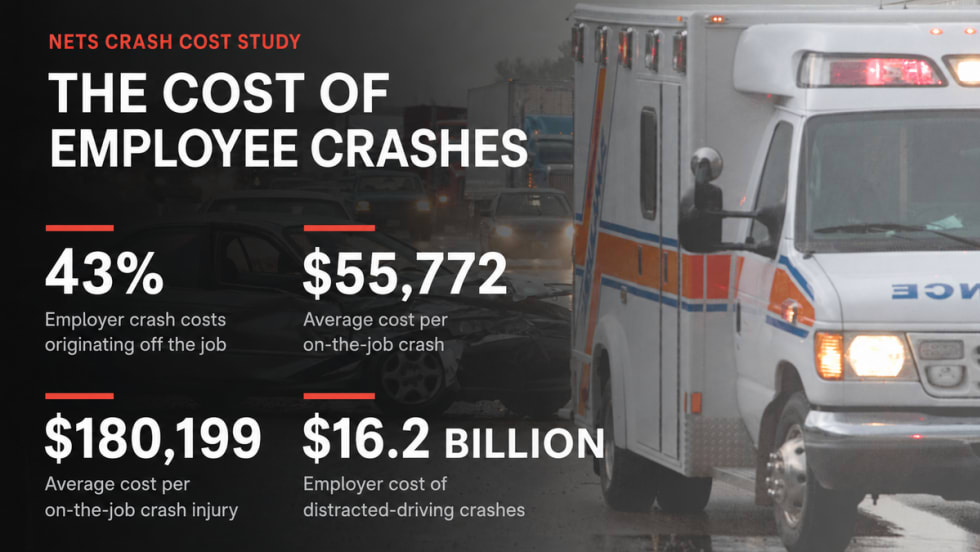
Off-the-Job Crashes Account for 43% of Employers’ $61.7 Billion Crash Burden
NETS quantifies costs dispersed across fleet, risk, HR, and other departments while providing new per-crash benchmarks for employers.
Read More →
Ram Recalls More Than 1.27 Million 1500 Pickups for Seat Belt Anchor Issue
The recall affects certain 2019-2026 Ram 1500 pickups that may have improperly attached second-row seat belt buckle anchors.
Read More →
How Better Visibility Cut Speeding Violations by 48%
Fleet leaders don't need more data, they need clearer visibility into what the data is saying. This case study explores how one utility replaced speeding-event counts with a single metric — miles driven in violation — to strengthen safety and significantly reduce speeding violations.
Read More →
Operation Safe Driver Week: Why the Industry's Oldest Safety Campaign Still Matters to Fleets
A look at how a 2007 enforcement initiative became one of the most consequential weeks on the fleet safety calendar, and what it means for your drivers in 2026.
Read More →
Nexar-Nauto Merger Aims to Give Fleets Better Safety Intelligence Through Larger Driving Dataset
Stefan Heck tells Automotive Fleet that combining more than 10 billion miles of driving history with Nexar's AI models will give fleets deeper insights into driver risk and roadway conditions than either company could provide independently.
Read More →
From Silos to Solutions: Relationship Management for Safer Fleets
From telematics adoption and driver accountability to policy consistency and risk mitigation, this episode breaks down what it really takes to build a safer fleet culture without slowing business down.
Read More →
IIHS Launches First Commercial Vehicle Safety Evaluations
The Insurance Institute for Highway Safety has begun evaluating heavy-duty pickups and cargo vans for driver protection. Which models earned top marks?
Read More →
Reducing Risk by Eliminating Phone Use Behind the Wheel
Hosted with the cofounder of Lifesaver Mobile, this episode addresses phone use behind the wheel and how to design a driving environment that actually helps prevents accidents.
Read More →