




2018 GMC Terrain Adds Diesel V-6
The 2018 GMC Terrain compact SUV will enter its second generation with a four-cylinder turbo-diesel and appearance that mirrors the larger 2017 GMC Acadia, General Motors announced at the Detroit auto show.
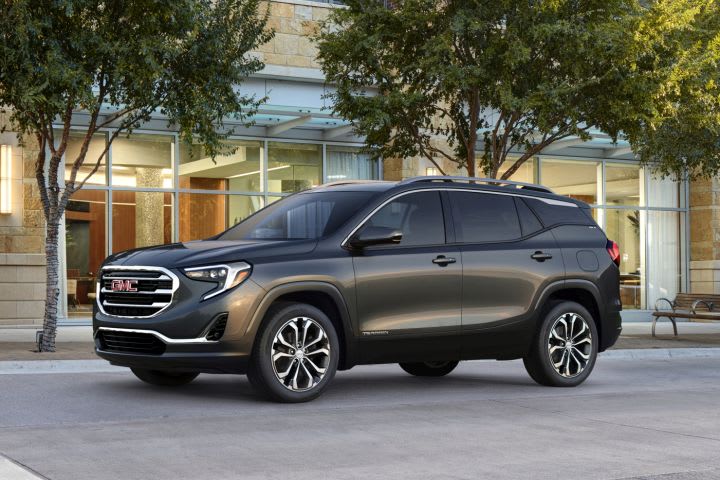
Photo of 2018 GMC Terrain SLT courtesy of GM.
Photo of 2018 GMC Terrain SLT courtesy of GM.
The 2018 GMC Terrain compact SUV will enter its second generation with a four-cylinder turbo-diesel and appearance that mirrors the larger 2017 GMC Acadia, General Motors announced at the Detroit auto show.
The 2018 Terrain will offer a trio of new turbocharged engines, including the 1.6L diesel, standard 1.5L and optional 2.0L gasoline powerplants. GMC will pair the diesel engine with a 6-speed transmission and the two gasoline engines with a new 9-speed transmission. The front-wheel Terrain will also offer an optional all-wheel-drive system that includes a FWD mode that increases fuel efficiency.
The diesel 1.6L engine will make 252 hp and 260 lb.-ft. of torque, while the 1.5L will make 170 hp and 204 lb.-ft. The 2.0L engine will make 252 hp and 260 lb.-ft.
The announcement comes two months after GM announced the 2018 Chevrolet Equinox would enter its third generation. The two vehicles will be built on GM's D2XX platform and share major components, reports Autoblog.
GM will offer the 2018 Terrain in the SL, SLE, SLT, and Denali trims.
Improved technology options include a standard 7-inch center display, available 8-inch display, Apply CarPlay and Android Auto across the lineup, and an available Wi-Fi hotspot. New available safety features include a surround vision camera system, vibrating Safety Alert Seat, forward-collision alert, low-speed forward automatic braking, lane-keep assist and lane-departure warning.
In 2016, GM Fleet customers purchased more than 8,700 GMC Terrain vehicles, according to Rita Kass-Shamoun, a GM Fleet spokesperson.
More Operations

Company Vehicle or Reimbursement? How Fleets Are Rethinking Assignments
As fleet costs and insurance pressures rise, fleet managers are taking a closer look at which employees need company-provided vehicles and when a reimbursement program may make more sense.

Fleetio, ASE Launch Scholarship Program for Automotive Technicians
The second annual program will award 15 scholarships totaling $35,000 to support ASE certification, testing fees, and equipment costs.

Reading the Global Signals: What AI and the Energy Transition Mean for Fleets Now
In this opening keynote of the 2026 Fleet Forward Conference, John Rossant, founder of CoMotion, How can fleet managers navigate a never-ending, changing industry landscape?

90% Use Telematics. Are Fleets Getting Safer? | AF News Recap
This week, we're breaking down which industries have the highest rates, how Jamie McKay manages 2,400 vehicles, what's happening with the 2027 fleet awards, and why software-defined vehicles could introduce new costs.

What's Best Handled by an FMC, and What's Better Done Directly?
Fleet managers continue to rely on FMCs for essential services but are taking a closer look at where working directly with suppliers can improve efficiency and responsiveness.

Fleet Meets: Erin Gilchrist
Meet Erin Gilchrist, the inaugural Mike Antich Spirit of Fleet Award winner, as she shares insights on leadership, mentorship, the power of industry connections, and why people remain at the heart of fleet's future.

How 2026 Fleet Visionary Jamie McKay Manages 2,400 Vehicles Across 37 States
How do you keep 2,400 vehicles running across 37 states? Fleet Visionary Award winner Jamie McKay shares how collaboration, flexibility, and a few simple strategies help her tackle fleet management challenges at Aptive Pest Control.

Managing Fleet Costs in an Era of Permanent Volatility
Fleet operating costs have risen more than 20% since 2020, raising a key question: When does extending a vehicle's service life stop making financial sense?

The Next Evolution of Fleet Management: Autonomous Operations
This opening keynote session at the Fleet Forward Conference highlights the future of autonomous driving for fleets.

How to Reduce the Total Cost of Risk From Catalytic Converter Theft
A stolen catalytic converter can cost fleets far more in downtime and lost productivity than in repairs. A total-cost-of-risk approach can help fleet managers quantify their exposure and prioritize theft prevention.