




Related: Mercedes-Benz Gives 2017 E-Class Major Interior Upgrade
2017 E-Class Adds Turbo 4, Driver Assistance Tech
The Mercedes-Benz 2017 E-Class will enter its next generation with increased size, a new turbocharged four-cylinder, and an array of new driver assistance systems.
by Staff
January 11, 2016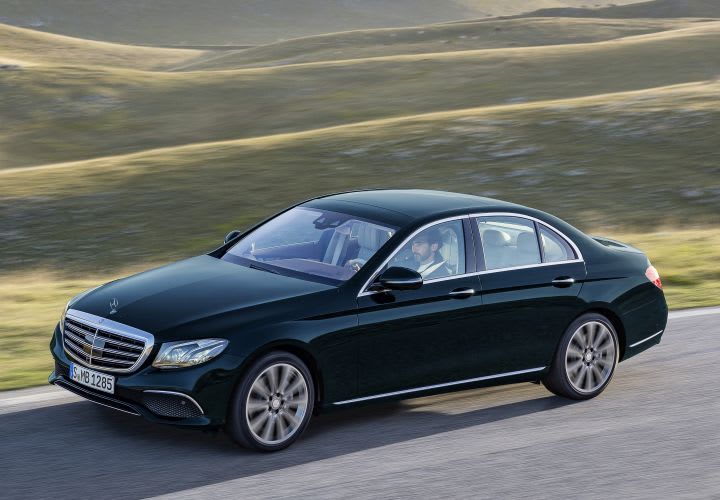
Photo of Euro-spec 2017 E-Class courtesy of MBUSA.
2 min to read
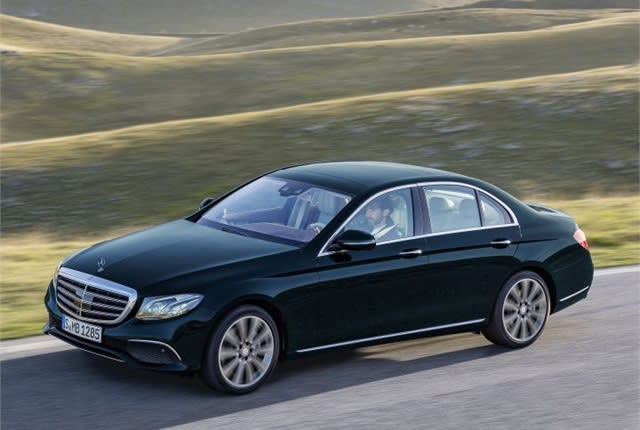
Photo of Euro-spec 2017 E-Class courtesy of MBUSA.
The Mercedes-Benz 2017 E-Class will enter its next generation with increased size, a new turbocharged four-cylinder, and an array of new driver assistance systems, the automaker announced at the North American International Auto Show in Detroit.
The 2017 E-Class increases its overall length by 1.7 inches to 193.8 inches and its wheelbase by 2.6 inches to 115.7 inches. The vehicle follows the C-Class before it with a new, more sporty and muscular design.
The 2017 E-Class will be powered by a new turbocharged 2.0L four-cylinder engine that makes 241 hp and 273 lb.-ft. of torque. Mercedes-Benz will offer additional models after launching the vehicle in the summer. The 2016 E-Class engine lineup includes a 2.1L 4-cylinder diesel, 3.0L V-6 twin-turbo, 3.5L V-6, and 4.7L V-8. The base 3.5L V-6 makes 302 hp and 273 lb.-ft. of torque.
The 2017 E-Class will deliver its power via a 9-speed 9G-Tronic automatic transmission that provides fast gear shifts and low engine revs while cruising, according to the automaker.
The E-Class arrives with standard steel-spring suspension and two available air suspension systems with selective damping tuned to "comfort" or "sport" driving styles. The body will include a higher proportion of aluminum and ultra-high-strength steel components than its predecessor, including front fenders, hood, trunk lid and large sections of the front and rear ends made of sheet or cast aluminum to reduce fuel consumption.
New driver assistance features include Drive Pilot that can follow traffic at speeds up to 130 mph, Active Brake Assist that detects crossing traffic and applies braking if the driver doesn't respond, Evasive Steering Assist that helps a driver avoid a pedestrian, advanced assistance systems for lane keeping and blind-spot monitoring, and Remote Parking Pilot that allows a smartphone user to move the vehicle in and out of parking spaces.
Mercedes-Benz is also giving the interior a major update that includes a high-resolution display that appears to hover in space, finger-swipe controls for the infotainment system, and touch-sensitive steering wheel buttons, the automaker announced in December.
The 2017 E-Class will arrive at dealers in the summer.
More Operations

Fleet Has a Talent Pipeline Problem. What Comes Next? | AF News Recap
Where will fleet’s next generation of leaders come from? This week, we’re looking at the industry’s talent pipeline, what certification can add to a fleet career, how to build an award-worthy track record, and the return of Automotive Fleet’s Personal Use Survey.
Read More →
Smith System Launches Driver Risk Management Program
Fleets have more driver data than ever, but identifying risky behavior doesn't necessarily correct it. Smith System's new Driver Risk Management program combines monitoring, training, and follow-up coaching to help fleets connect risk signals with driver intervention.
Read More →
Automotive Fleet Opens 2026 Personal Use Survey for Commercial Fleet Managers
Less than two weeks left! Commercial and corporate fleet managers are invited to share how their organizations handle company vehicle personal-use policies, charges, and driver eligibility.
Read More →
From AI Prompts to AI-Generated Safety Songs | AF News Recap
Can better prompts make AI more useful for fleet managers? This week, we’re breaking down smarter fleet analysis, an AI-assisted experiment that turned safety training into music, and what happened to fuel prices in August.
Read More →
How to Write Better AI Prompts for Fleet Analysis
Include these six elements in your fleet prompts to generate more relevant analysis and accurate answers.
Read More →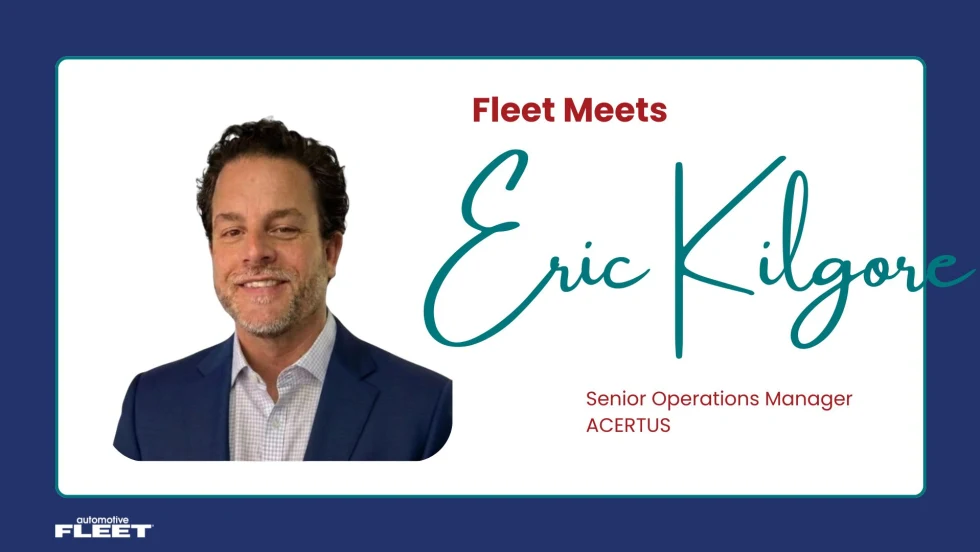
Fleet Meets: Eric Kilgore
This edition of the Fleet Meets series features one of the industry's best leaders driving multi-market and national operations.
Read More →
Why Reactive Fleet Management Is Becoming Too Expensive to Sustain
Research highlights a growing need for proactive management strategies to address rising costs in fleet operations effectively.
Read More →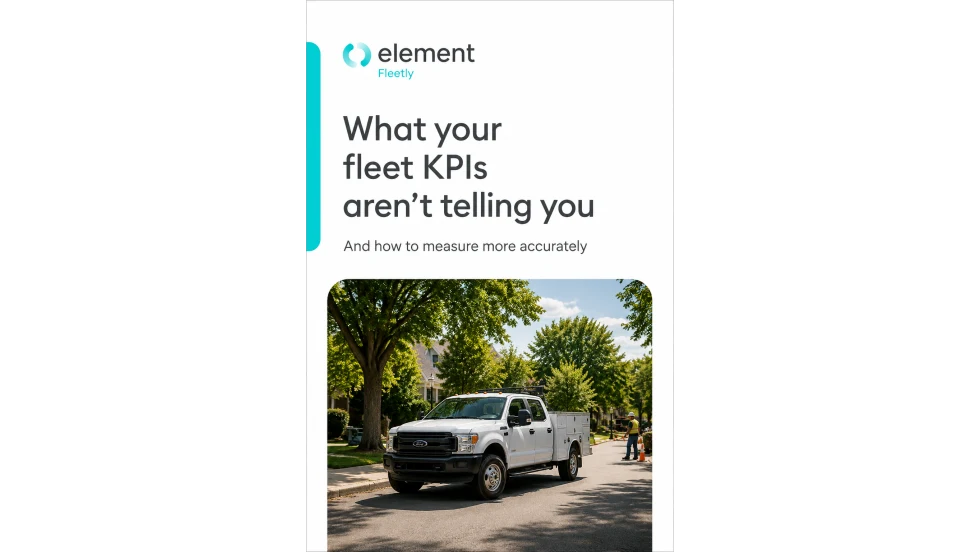
Sponsored•August 12, 2026
What Your Fleet KPIs Aren’t Telling You
Tracking fleet metrics is only useful when the data leads to better decisions. This guide helps fleet leaders assess cost, utilization, and downtime more accurately, identify performance gaps, and prioritize the actions that can improve operational results.
Read More →
Sponsored•August 7, 2026
Hidden in Plain Sight: Fleet Compliance Risks
Fleet compliance isn't just about having policies — it's about consistently enforcing them. This practical guide reveals six hidden compliance risks common in public sector and shared fleet operations and outlines proven strategies to improve visibility, accountability, and audit readiness
Read More →
Turning Fleet Payment Data into Executive Insights
Does data alone drive results in operations?
Read More →