




2016 Ushers in New Traffic Laws
At the beginning of this month, thousands of new state laws took effect — including many of special interest to fleet managers and drivers.
This month has seen thousands of new state laws go into effect, including a driver earbud ban in California, a new gasoline-pumping rule in Oregon, and DUI law reforms in Illinois.
Here are just a few of the highlights:
In Illinois, drivers convicted of a second DUI can only operate a vehicle equipped with a breath alcohol ignition interlock device as a condition of a restricted driving permit. A number of other DUI-related reforms also take effect. Other new laws permit refuse trucks to use amber flashing or oscillating lights, allow law enforcement to impound a vehicle driven by an uninsured driver, impose requirements for street operation of low-speed vehicles, and prohibit parking a regular car at an electric car charging station.
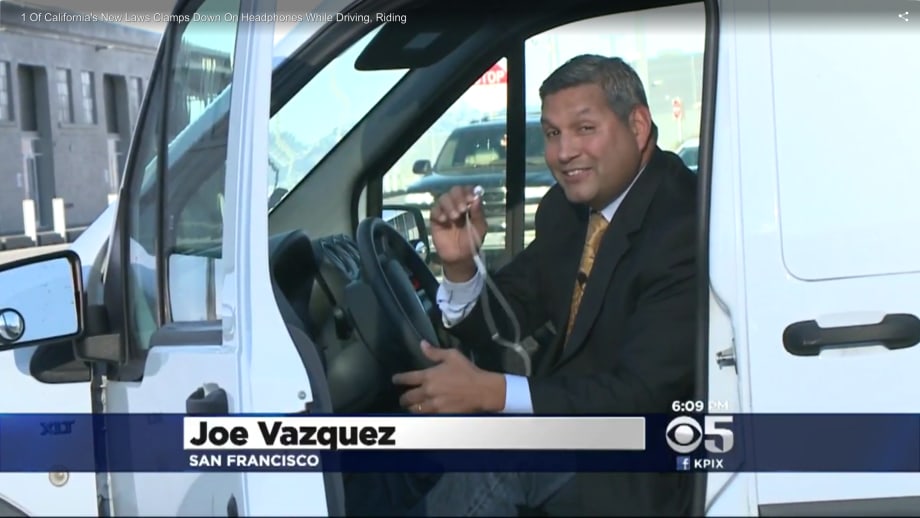
In California, drivers are prohibited from wearing earbuds in both ears while driving a vehicle or bicycle. (To view a video report on this law, click on the link or photo below the headline.) The law doesn’t apply to first-responders, construction equipment operators or refuse truck operators who use safety earplugs. Also, a new law extends an ignition interlock device pilot project to July 1, 2017.
The Virginia Department of Motor Vehicles can ask drivers to add an emergency contact person to agency records to help law enforcement during emergencies. License-holders are free to update the contact information online at any time.
Minnesota requires proof of auto insurance for drivers registering any motor vehicle or motorcycle. The new rule also applies when transferring vehicle ownership.
When pulled over by police, Michigan drivers are permitted to show proof of auto insurance on a phone or other mobile device instead of a paper copy of the insurance certificate. Officers, however, can require drivers to forward an electronic copy so that it can be verified as authentic. Drivers who can’t produce evidence of insurance are subject to a civil infraction.
Oregon drivers in non-commercial vehicles can now legally pump their own gas at a gas station, during the hours from 6 p.m. to 6 a.m., in rural areas. Also in Oregon, parking a non-electric car in a spot reserved for electric cars only is subject to a $250 fine.
Tennessee drivers face higher fines for not wearing a seat belt. A first-time offense fine climbs from $10 to $25. The penalty charged to repeat offenders rises from $20 to $50. Additionally, if a driver can’t show proof of insurance during a traffic stop, the car can be immediately towed. The minimum penalty for not carrying proof of insurance jumps from $100 to $300.
In Utah, all drivers applying for a first-time original or provisional Class D license must pass an additional test before receiving a permanent license. Test questions will cover driving safety topics.
Nevada launches a Yellow Dot Program for Clark County. Under the program, drivers can place a large yellow sticker on their vehicle window to alert first-responders about special medical needs in the event of a crash.
In Texas, new fees for getting a commercial driver’s license or permit go into effect.
More Safety
Tips for Driving Safely on Halloween Night
This video features a reminder from the Connecticut Department of Transportation (DOT) and the Connecticut Police Chiefs Association, urging drivers to prioritize safety this Halloween.
Read More →
IIHS Crash Avoidance Tests Reveal Safety Gaps in Cargo Vans and Work Trucks
New crash-avoidance ratings from the Insurance Institute for Highway Safety reveal inconsistent performance among commercial vehicles, with several popular cargo vans and heavy-duty pickups struggling to avoid collisions with other vehicles and pedestrians.
Read More →
What’s Next for Fleet? Safety, AI & Industry Recognition | AF News Recap
Could your company's culture be encouraging distracted driving? This week, we're exploring how workplace expectations affect driver safety, what AI, EVs, and autonomous vehicles could mean for the future of fleet management, and how fleet professionals can strengthen their award nominations.
Read More →
Does Your Fleet's Culture Encourage Distracted Driving?
What happens when the people responsible for enforcing safety rules are the ones setting the wrong example? The answer may reveal why some of the biggest risks to fleet drivers have little to do with what's written in the employee handbook.
Read More →
Fleet Manager’s Ultimate Playbook: Navigating the New Standard in OEM Connectivity
Rising operating costs, driver safety concerns, and unplanned downtime are putting unprecedented pressure on modern fleets. Discover how fleet managers use embedded OEM connectivity and real-time vehicle data to cut TCO, prevent downtime, and protect drivers without aftermarket telematics hardware.
Read More →
From Driver Well-Being to EV Charging | AF News Recap
Mental health belongs in the fleet safety conversation. This week, we’re looking at five ways fleets can support employee well-being before a crisis, plus Holman’s expansion in Mexico, new one-day Fleet Forward passes, and why EV charging demand is outpacing infrastructure growth.
Read More →
Nexar-Nauto Merger Aims to Give Fleets Better Safety Intelligence Through Larger Driving Dataset
Stefan Heck tells Automotive Fleet that combining more than 10 billion miles of driving history with Nexar's AI models will give fleets deeper insights into driver risk and roadway conditions than either company could provide independently.
Read More →
Don't Wait for a Crisis: 5 Ways to Build Mental Health Into Your Fleet Safety Program
For Suicide Prevention Month, fleet and safety leaders have an opportunity to put mental health where it belongs: at the center of workplace safety.
Read More →
How Camera Data Can Strengthen a Fleet’s Insurance Renewal
Insights from a commercial insurance carrier and a broker show how fleets can turn video telematic data, driver coaching, and improved claims results into a stronger case at insurance renewal.
Read More →
The Safest Fleets Aren’t the Ones with the Most Technology
You’ve made the telematics investment. Here’s how to capture the other half of its value and build the safest fleet on the road.
Read More →