




11 States Get Rail Safety Crossing Grants Totaling $200,000
The money will fund public awareness campaigns and host community events that provide critical rail safety advice to all motorists including professional fleet drivers.

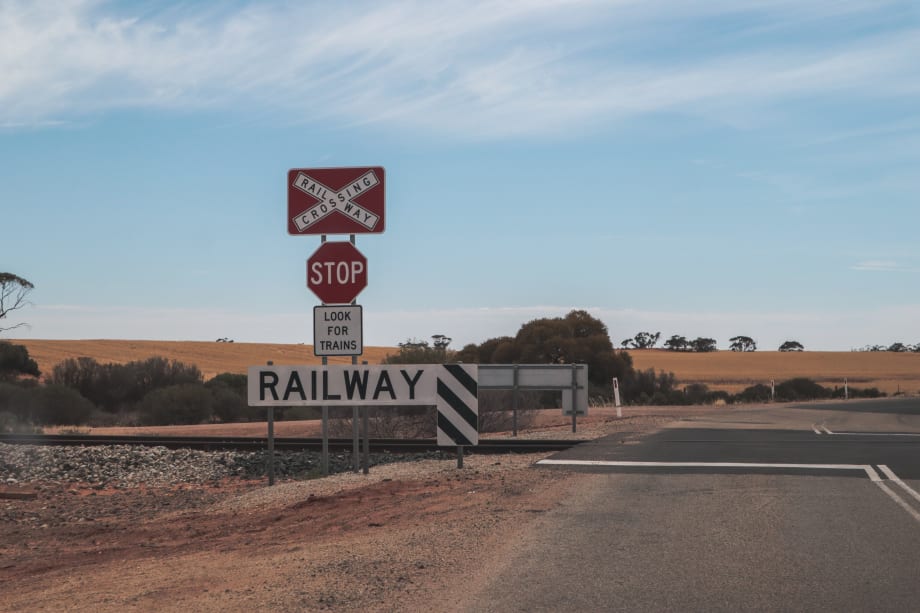
Specifically, the grants will be funded by FHWA and awarded to Operation Lifesaver organizations in Arizona, California, Indiana, Kansas, Minnesota, North Carolina, New York, Pennsylvania, South Carolina, Tennessee and Washington.
Photo via Pexels.com/Felix Haumann.
Railway crossing safety relates to both drivers and pedestrians, which has prompted Operation Lifesaver, Inc. (OLI) and the Federal Highway Administration (FHWA) to award $200,000 in grants to eleven states to implement educational programs on the topic.
Specifically, the grants will be funded by FHWA and awarded to Operation Lifesaver organizations in Arizona, California, Indiana, Kansas, Minnesota, North Carolina, New York, Pennsylvania, South Carolina, Tennessee and Washington.
The state programs will draw on the funds to launch public awareness campaigns and host community events that provide critical rail safety advice to all motorists including professional fleet drivers.
Reducing track tragedies is the primary goal of the educational grants. In 2020, there were an estimated 1,889 vehicle-train collisions resulting in 202 fatalities and 675 injuries at highway-rail grade crossings.
The grants were awarded through a competitive process. Recipients were selected based on the defined safety need, the number of highway-rail collisions in the state, and how the proposal leverages federal funds with private partnerships.
Winning state projects include:
Arizona will conduct a campaign to include digital geofencing ads, radio public service announcements (PSAs) and OTT (over the top) video PSAs in 10 cities and other high-incident areas. The four-month campaign will include Rail Safety Week, Sept. 20-26.
California will kick off a campaign during September (California Rail Safety Month) and include Rail Safety Week in 13 high-incident counties, with digital radio and video PSAs distributed over Connected TV (CTV) and OTT video. Targeted areas and audiences include business districts, sports arenas, colleges, homeless populations, freight rail, commuter rail and passenger rail corridors.
Indiana has a multifaceted plan to deliver OLI crossing safety PSAs, including OLI’s new low clearance PSA, to commercial and hazmat truck drivers via geofencing and social conquesting in high incident areas. Local law enforcement and Indiana State Police also will conduct safety blitzes in these areas.
Kansas’ project involves radio advertising targeted to Kansas City Royals baseball fans over 30 Kansas radio stations and one Missouri station to educate fans on safely navigating railroad crossings. The pre-game ads will air for all 162 games and will feature Denny Matthews, the “Voice of the Royals.” A digital geofencing ad campaign will also run during Rail Safety Week.
Minnesota will conduct a multi-platform geofencing digital ad and radio campaign in August and September, with streaming video OTT PSAs and banner style digital ads targeted at a young male demographic in higher-incident counties with a goal of reaching this audience both in their vehicles and on digital devices.
North Carolina will conduct a video PSA campaign targeting males 18-49 between June 14 and Sept. 27 (including Rail Safety Week) via cable television advertising in seven markets with the highest incident rates, effectively covering the state and some markets in South Carolina and Virginia.
New York will work in partnership with Metro-North Commuter Railroad Company (MNR) on a campaign with the message that distracted driving is particularly dangerous around railroad crossings. The campaign will include social media, geofencing, on-line influencers and print collateral while also generating earned media through interviews and events.
Pennsylvania will conduct a digital campaign targeting adults 16-45 in 11 high-incident counties through streaming video OTT PSAs to deliver guaranteed media impressions using videos on distraction near railroad tracks and crossing safety.
South Carolina’s program will use personal outreach, social media, streaming audio and digital efforts to reach English and Spanish-speaking workers in farm labor, construction and lawn care professions. The four-month campaign will include the summer/harvest agriculture seasons, Rail Safety Week, Hispanic Heritage Month and National Farm Safety Week.
Tennessee will launch a geofencing, mobile ad retargeting, social media, and digital radio PSA campaign from August through September, including Rail Safety Week. The campaign will include banner ads and audio PSAs to reach people ages 16 and up.
Washington’s initiative will focus on rail safety education for people who live in an area where a new, high-speed passenger rail service will be launched. The campaign will include digital geotargeting and social media ads for eight cities to reach families, school-aged children, and teenagers, as well as males and females between the ages of 18-35.
More Safety
IIHS Crash Avoidance Tests Reveal Safety Gaps in Cargo Vans and Work Trucks
New crash-avoidance ratings from the Insurance Institute for Highway Safety reveal inconsistent performance among commercial vehicles, with several popular cargo vans and heavy-duty pickups struggling to avoid collisions with other vehicles and pedestrians.
Read More →
What’s Next for Fleet? Safety, AI & Industry Recognition | AF News Recap
Could your company's culture be encouraging distracted driving? This week, we're exploring how workplace expectations affect driver safety, what AI, EVs, and autonomous vehicles could mean for the future of fleet management, and how fleet professionals can strengthen their award nominations.
Read More →
Does Your Fleet's Culture Encourage Distracted Driving?
What happens when the people responsible for enforcing safety rules are the ones setting the wrong example? The answer may reveal why some of the biggest risks to fleet drivers have little to do with what's written in the employee handbook.
Read More →
Fleet Manager’s Ultimate Playbook: Navigating the New Standard in OEM Connectivity
Rising operating costs, driver safety concerns, and unplanned downtime are putting unprecedented pressure on modern fleets. Discover how fleet managers use embedded OEM connectivity and real-time vehicle data to cut TCO, prevent downtime, and protect drivers without aftermarket telematics hardware.
Read More →
From Driver Well-Being to EV Charging | AF News Recap
Mental health belongs in the fleet safety conversation. This week, we’re looking at five ways fleets can support employee well-being before a crisis, plus Holman’s expansion in Mexico, new one-day Fleet Forward passes, and why EV charging demand is outpacing infrastructure growth.
Read More →
Nexar-Nauto Merger Aims to Give Fleets Better Safety Intelligence Through Larger Driving Dataset
Stefan Heck tells Automotive Fleet that combining more than 10 billion miles of driving history with Nexar's AI models will give fleets deeper insights into driver risk and roadway conditions than either company could provide independently.
Read More →
Don't Wait for a Crisis: 5 Ways to Build Mental Health Into Your Fleet Safety Program
For Suicide Prevention Month, fleet and safety leaders have an opportunity to put mental health where it belongs: at the center of workplace safety.
Read More →
How Camera Data Can Strengthen a Fleet’s Insurance Renewal
Insights from a commercial insurance carrier and a broker show how fleets can turn video telematic data, driver coaching, and improved claims results into a stronger case at insurance renewal.
Read More →
The Safest Fleets Aren’t the Ones with the Most Technology
You’ve made the telematics investment. Here’s how to capture the other half of its value and build the safest fleet on the road.
Read More →
Hidden in Plain Sight: Fleet Compliance Risks
Fleet compliance isn't just about having policies — it's about consistently enforcing them. This practical guide reveals six hidden compliance risks common in public sector and shared fleet operations and outlines proven strategies to improve visibility, accountability, and audit readiness
Read More →