




10 States Draw Top Scores for Traffic Safety Laws
A new report from Advocates for Highway and Auto Safety recommends 15 traffic safety laws and scores all 50 states based primarily on how many of these laws they've already adopted.

All states except New Hampshire have a seat belt law, but only 34 states and Washington, D.C., allow primary enforcement of their seat belt laws. Photo courtesy of NHTSA.

All states except New Hampshire have a seat belt law, but only 34 states and Washington, D.C., allow primary enforcement of their seat belt laws. Photo courtesy of NHTSA.
Ten states and Washington, D.C., have drawn top safety scores — "green" overall ratings — from Advocates for Highway and Auto Safety in recognition of enactment of certain traffic safety laws.
The national safety advocacy group released a new report that argues for universal adoption of 15 traffic safety laws. The report also evaluated all 50 states based on how many of those laws they've already adopted. The 10 states that came out on top were California, Delaware, Hawaii, Illinois, Indiana, Louisiana, Maine, Oregon, Rhode Island and Washington.
The nine states that scored the lowest, drawing a "red" overall rating, were Arizona, Florida, Iowa, Mississippi, Montana, Nebraska, North Dakota, South Dakota and Wyoming.
The remaining 31 states received a "yellow" rating, showing "moderately positive performance" but still having a number of gaps in their highway safety laws, according to Advocates for Highway and Auto Safety.
The 15 recommended laws include a primary-enforcement front seat belt law, a primary-enforcement rear seat belt law, an all-rider motorcycle helmet law, a booster seat law, a law setting a minimum age of 16 for a learner's permit (learner's stage), a law setting a six-month holding period during which the teen driver must be supervised by an adult licensed driver at all times (learner's stage), a law requiring 30-50 hours of supervised driving for teens (learner's stage), and a nighttime driving restriction for unsupervised teen drivers (intermediate stage).
Other recommended laws include limits for the number of teenage passengers who may legally ride with a teen driver without adult supervision (intermediate stage), a law prohibiting all use of cellular devices by beginning teen drivers (except in the case of an emergency), a law prohibiting teen drivers from obtaining an unrestricted license until age 18, a law mandating installation of ignition interlock devices for all convicted drunk driving offenders, a child endangerment law, an open container law and an all-driver text messaging restriction.
The report includes specific requirements for all 15 laws. And some laws are given special status when the group scores states. No state without a primary-enforcement seat belt law covering both front and rear seats is eligible for the advocacy group's green overall rating, no matter how many other laws it has in effect.
Also, a state is ineligible for the green overall rating if it has repealed an existing all-rider motorcycle helmet law within the previous 10 years.
The report’s introduction sharply criticized some recent state legislative efforts to relax or repeal safe driving laws already on the books.
“Last year, there were several state legislatures where bills were seriously considered to repeal or weaken laws for seatbelt and motorcycle helmet use, bans on texting while driving, as well as essential protections for novice teen drivers,” noted Jacqueline S. Gillan, president of Advocates for Highway and Auto Safety. “These efforts confound logic, commonsense and fiscal responsibility.”
But Gillan commended elected officials in Kentucky, Mississippi, Oklahoma, Texas, Utah and West Virginia for enacting safety laws meeting the group’s criteria in 2015.
To download the report, click here.
More Safety

Nexar-Nauto Merger Aims to Give Fleets Better Safety Intelligence Through Larger Driving Dataset
Stefan Heck tells Automotive Fleet that combining more than 10 billion miles of driving history with Nexar's AI models will give fleets deeper insights into driver risk and roadway conditions than either company could provide independently.
Read More →
Don't Wait for a Crisis: 5 Ways to Build Mental Health Into Your Fleet Safety Program
For Suicide Prevention Month, fleet and safety leaders have an opportunity to put mental health where it belongs: at the center of workplace safety.
Read More →
How Camera Data Can Strengthen a Fleet’s Insurance Renewal
Insights from a commercial insurance carrier and a broker show how fleets can turn video telematic data, driver coaching, and improved claims results into a stronger case at insurance renewal.
Read More →
The Safest Fleets Aren’t the Ones with the Most Technology
You’ve made the telematics investment. Here’s how to capture the other half of its value and build the safest fleet on the road.
Read More →
Hidden in Plain Sight: Fleet Compliance Risks
Fleet compliance isn't just about having policies — it's about consistently enforcing them. This practical guide reveals six hidden compliance risks common in public sector and shared fleet operations and outlines proven strategies to improve visibility, accountability, and audit readiness
Read More →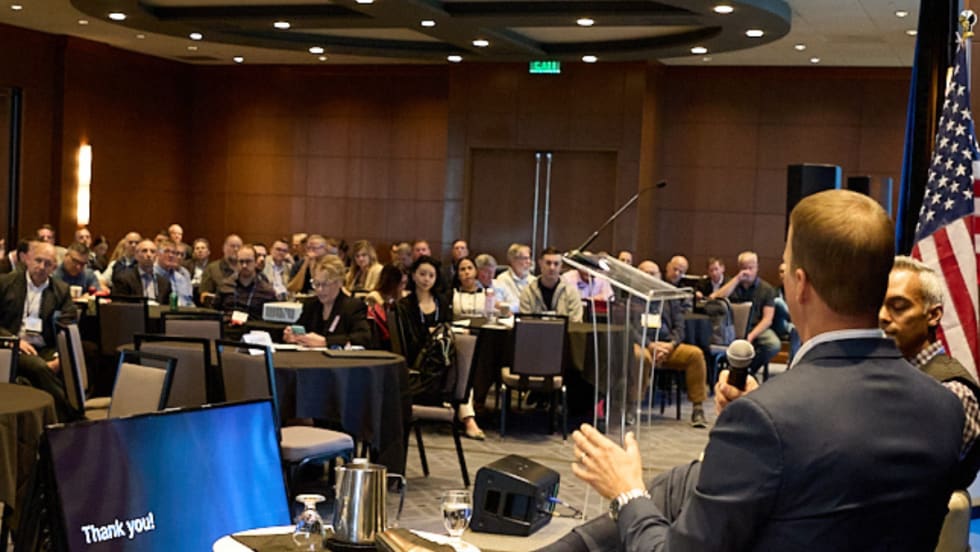
NETS Sets 2026 Fleet Safety Benchmark Conference for Indianapolis
The Sept. 15–17 program will feature fleet benchmarking data, case studies, emerging technologies, and implementation strategies while running alongside the NSC Safety Congress & Expo.
Read More →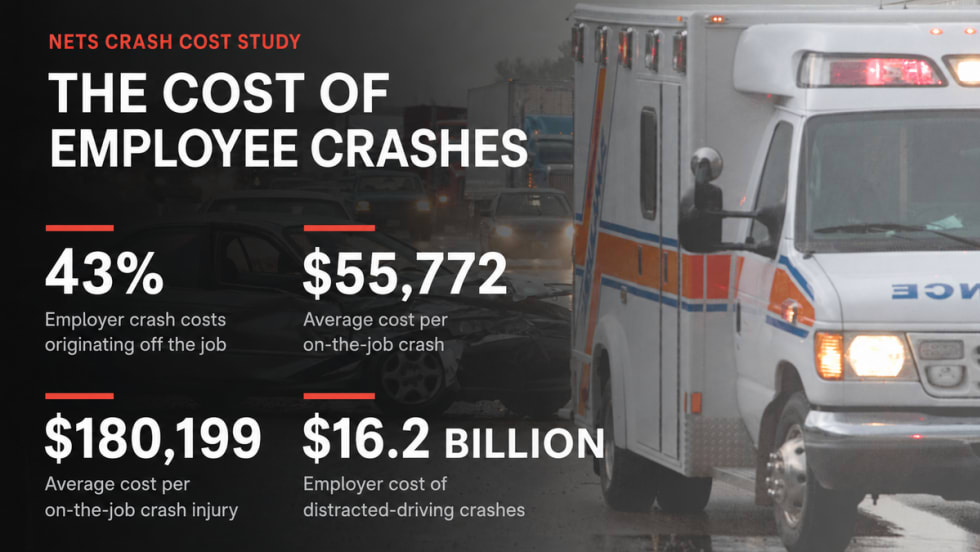
Off-the-Job Crashes Account for 43% of Employers’ $61.7 Billion Crash Burden
NETS quantifies costs dispersed across fleet, risk, HR, and other departments while providing new per-crash benchmarks for employers.
Read More →
Ram Recalls More Than 1.27 Million 1500 Pickups for Seat Belt Anchor Issue
The recall affects certain 2019-2026 Ram 1500 pickups that may have improperly attached second-row seat belt buckle anchors.
Read More →
How Better Visibility Cut Speeding Violations by 48%
Fleet leaders don't need more data, they need clearer visibility into what the data is saying. This case study explores how one utility replaced speeding-event counts with a single metric — miles driven in violation — to strengthen safety and significantly reduce speeding violations.
Read More →
Operation Safe Driver Week: Why the Industry's Oldest Safety Campaign Still Matters to Fleets
A look at how a 2007 enforcement initiative became one of the most consequential weeks on the fleet safety calendar, and what it means for your drivers in 2026.
Read More →