




Will EZ Pass Become a Pain in the Neck?
For fleet managers, EZ Pass is becoming an administrative pain in the neck. More and more fleet managers are reporting an unexplained increase in EZ Pass violations.
As of Jan. 22, 2001, more than a million EZ Pass tags have been issued, according to the New Jersey Turnpike Authority, which is the lead agency for the EZ Pass Regional Consortium. This milestone is significant since it was reached only 26 months after the first electronic toll collection tag was issued. For readers who live in states that don’t use EZ Pass, it is an electronic toll collection system that allows motorists to drive through designated EZ Pass lanes without stopping to pay a cash toll. One incentive to participate in EZ Pass is that most toll collection authorities provide discounts that average around 10 percent. Currently, EZ Pass, or equivalent systems, are used on some or all turnpikes and bridges in the states of Delaware, Illinois, Massachusetts, New Jersey, New York, Maryland, Pennsylvania, Texas, and West Virginia. However, for fleet managers, EZ Pass is becoming an administrative pain in the neck. More and more fleet managers are reporting an unexplained increase in EZ Pass violations. For instance, Sheryl Grossman, fleet manager for GE Medical Systems, says she is receiving 10 to 15 EZ Pass toll violations per week. “This problem started the beginning of this year,” said Grossman. EZ Pass violations now represent 25 percent of all tickets issued to GE Medical Systems drivers. Fines for EZ Pass violations run between $10 and $25. “However, it probably costs us $100 just to issue a check to pay a $10 violation, when you factor in productivity and administrative expense,” said Grossman. GE Medical Systems is not alone in this complaint. Other fleets are similarly reporting an unexplained increase in EZ Pass violations. One such fleet is Pfizer. “We’re also experiencing an increase and we haven’t been able to identify the reason for this. We’re trying to get to the bottom of it,” said Marjorie Schraut, assistant fleet manager for Pfizer. Likewise, AstraZeneca is experiencing the same problem, said Irene Lovisa, fleet manager. “If anyone can shed some light on this, I’d like to know why this is occurring.” This Promises to Become a Bigger Problem The bad news it that this problem will most likely become worse in the coming years. “This is going to become a bigger issue for fleet managers, especially those who manage leased fleets,” said Tim Duckworth, manager of title and license for GE Capital Fleet Services. “The reason is because, somehow or other, EZ Pass toll violations are being sent directly to the lessee and, in some cases, the driver. This is creating confusion for fleet managers because in the past EZ Pass states mailed violations directly to the vehicle’s registered owner, namely the lessor.” It appears that there are three reasons for the increase in EZ Pass violations: 1. The improper installation of EZ Pass tags. 2. Drivers becoming lax about ensuring there are sufficient funds in their pre-paid account. 3. Limited oversight by toll collection agencies on whether their equipment (transponder and receiver) is working properly. A key problem is the improper installation of an EZ Pass tag on a vehicle. When a motorist opens an EZ Pass account, he or she must affix a small electronic tag (about the size of an audiocassette tape) with self-sticking fasteners to the inside of the windshield behind the rearview mirror. When you drive through a designated EZ Pass lane, an antenna in the toll booth reads the tag’s ID number to automatically deduct the toll, along with an administrative fee, from your pre-paid account. If something blocks a unit from receiving the transmitted signal, it will not transmit back its ID number. For instance, a wire grid in a windshield, such as an instant de-icing system, can act as an electronic shield, preventing the EZ Pass unit from working properly in which case it is necessary to mount the tag on the license plate. However, some drivers are concerned that mounting the EZ Pass tag on the windshield or license plate will make it vulnerable to theft. However, unless an EZ Pass is mounted exactly as shown in the installation instructions, it may not be “read” by the toll both antenna. The following methods usually do not work: Leaving a tag on the car seat, console, or dashboard. Holding the tag up to the windshield or out the window when passing through an EZ Pass lane. Placing the tag in another location inside or outside the vehicle that is less visible to would-be thieves. Another reason for an EZ Pass violation is insufficient funds in a pre-paid account. If you are paying by credit card, the system will automatically bill your credit card. The problem arises when a driver is paying by cash, check, or money order and forgets to replenish his or her account. A simple way to eliminate this problem is to stipulate in fleet policy that a credit card must be used to open an EZ Pass account. As to whether EZ Pass properly recorded a toll evasion, some erroneous violations are easily identifiable. For instance, Joe Pesce, fleet manager for Prime Corp. in Houston, says that with a tractor-trailer, only the tractor needs an EZ Pass tag. “Sometimes a trailer shows up as a violation, but that is an error by EZ Pass,” said Pesce. However, in most cases, to prove a system error will cost you much more than simply paying the fine. According to Duckworth, “Violations, if challenged, are rarely reversed and you usually end up paying them. At some point, you ask yourself if $10 is worth challenging.” Let me know what you think. mike.antich@bobit.com
More Blog Posts
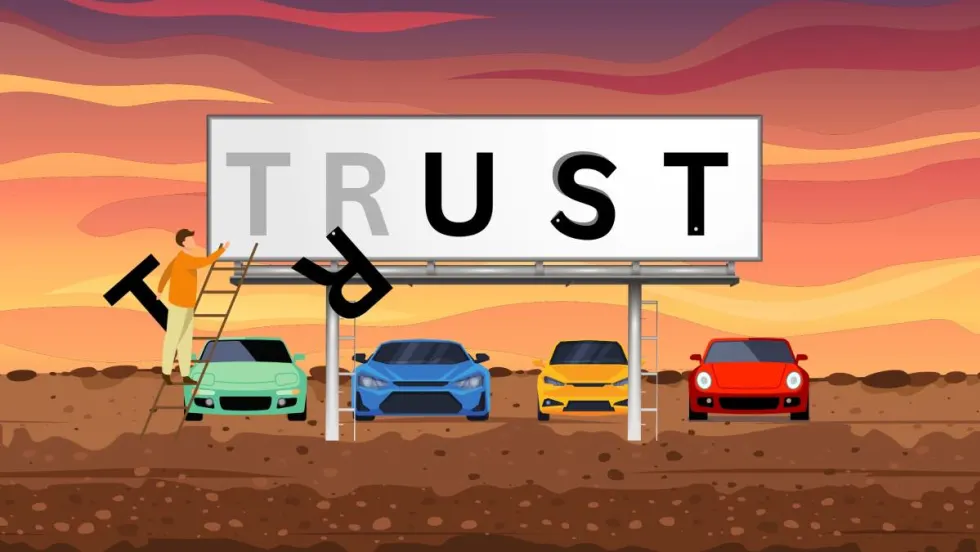
Fleets Want Trust Restored with Suppliers
During this period of ongoing supply constraints, the trust that fleet managers had with OEMs, upfitters, and dealers has been strained. Fleet managers say they have had too many experiences over the past three years coping with erroneous information, adjusting to multiple price increases, and feeling betrayed by inadequate transparency from suppliers.
Read More →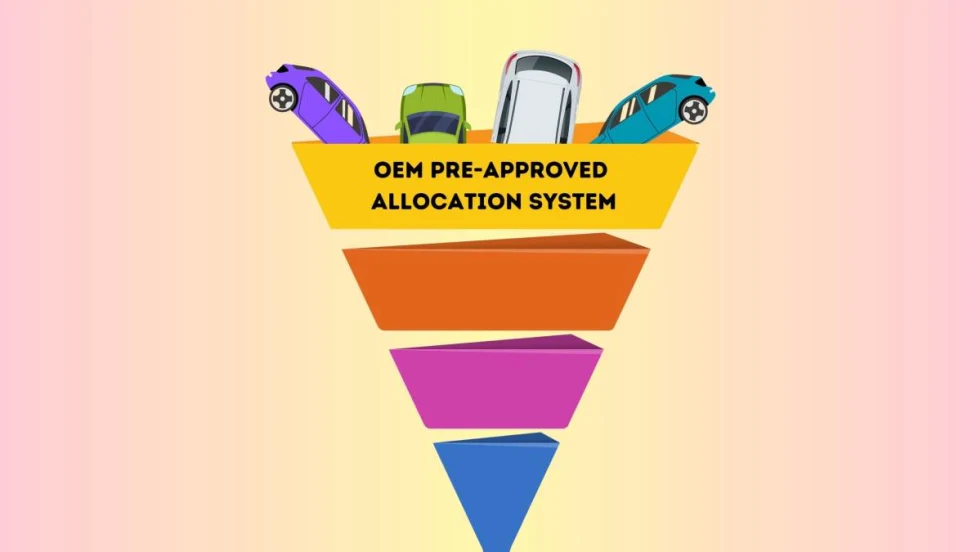
Scheduled Replacement Cycles Are Becoming a Distant Memory
The ongoing difficulty in sourcing replacement vehicles is forcing companies to extend the service lives of vehicles that are unable to be replaced, which, inevitably, increases unscheduled maintenance expenses.
Read More →
Fleet Simplification is the Antidote to Asset Variability
Fleet simplification identifies asset functions to uncover commonality among the equipment and assets. Simplification increases operational efficiency as end-users become accustomed to the controls, displays, and operation of less diverse units.
Read More →
The Dangers of Static Fleet Policies
A fleet policy is a living document, flexible enough to adapt to evolving business priorities, developing industry trends, and changing industry best practices and standards.
Read More →
Short-Term vs. Long-Term Cost Reductions
Corporate procurement staff are often driven by short-term, immediate cost reductions. However, a longer perspective to soft cost savings is critical because fixating on short-term results will hurt a company in the long run.
Read More →
Uptick in Unscheduled Maintenance Increasing Vehicle Downtime
Fleet data analysis can identify recurring downtime issues. It’s important to determine the root causes of downtime so procedures can be developed to minimize such problems.
Read More →
Eliminate Needless Curb Weight to Maximize ICE & EV Efficiencies
Vehicle weight relates directly to fuel economy. In today’s era of electrification, there is also a direct correlation between vehicle weight and battery range.
Read More →
Tech Dependence Risks Dumbing Down Fleet Manager Expertise
The line between creative thinking and problem solving and doing what the data indicates is thin. To lead in fleet management, you need to balance understanding the fundamentals and embracing what smart technology offers.
Read More →
Leverage the Synergy of Safe Driving to Achieve Sustainability and Cost Goals
Safe driving, emission reductions, and cost containment can all be achieved at the same time.
Read More →
The Playbook for Fleet Manager Success
There are many paths to success — most of them involve being flexible, open-minded, and willing to learn.
Read More →