




Three Black Swan Events Threaten to Change the Fleet Management Paradigm
The three future Black Swan events that have the potential to turn today’s fleet management paradigm upside down are the advancement of 3D printing, widespread use of remote diagnostics, and the growing preference of next-gen employees for virtual meetings.


A black swan event is a metaphor to describe an event that unexpectedly changes an existing business or societal paradigm.
photo: gettyimages.com/Ellerslie77
A "black swan event" is a metaphor to describe an event that unexpectedly changes an existing paradigm. One example of a Black Swan event of yesteryear was the unexpected OPEC Oil Embargo of 1973, which ushered an era of vehicle downsizing that continues to this day, fundamentally changing the types of vehicles operated by corporate fleets. Another Black Swan event of yesteryear was the emergence of the Internet as a business tool, which completely revolutionized fleet management.
Below are three future Black Swan events that have the potential to turn today’s fleet management paradigm upside down.
3D Printing to Decrease Last Mile Deliveries
Three dimensional printing, known as 3D printing, is an existing technology used to “manufacture” specialized parts that is currently in use in a variety of businesses such as manufacturing, the medical field, the computer industry, and by the military aboard ships at sea to replace malfunctioning one-off parts.
3D printing is an additive manufacturing technology that creates products by laying down layer upon layer of a substance in three dimensions. The design of a product is digitized in a software format that communicates to the 3D printer on how the layers are to be applied.
This Black Swan scenario postulates that additive manufacturing machines (3D printers) will evolve in the future to be used by businesses and consumers to download and print needed products at their premises without the need to physically deliver these products. What will be the impact on local delivery companies and over-the-road fleets that transport products from factories to distribution centers?
Today’s additive manufacturing technology prints parts on demand using a wide variety of materials including metals, concrete, and biomaterials. The Food and Drug Administration (FDA) has already approved more than 350 3D-printed implant devices for use today in the medical and dental industries. The Federal Aviation Administration (FAA) is allowing machine-printed parts for planes, including a GE jet engine nozzle and titanium parts for the new Boeing 787 Dreamliner.
Additive manufacturing could be a game changer for how products are made and distributed, especially as online retailers reach the limit as to how much further they can compress purchase-to-delivery times. It’s not hard to imagine where future consumers will purchase a one-time license to 3D print household products right in their own home. Or, could future autonomous UPS or FedEx vehicles be equipped with onboard 3D printers to print a product while en route to the customer?
Remote Diagnostics Displaces On-Site Service
The Internet of Things (IoT) is the network of physical devices, vehicles, home appliances, and other items embedded with electronics, software, sensors, actuators, and connectivity which enables these "things" to connect and exchange data. The number of IoT devices increased 31% year-over-year to 8.4 billion in 2017 and it is estimated that there will be 30 billion connected devices by 2020.
The pervasive digitization of business and consumer products will increase the ability for remote diagnostics and the capability to download corrective software, which will minimize the need for many of today’s service calls requiring a technician in a service vehicle to travel to a customer's premises. We're seeing glimpses of it today with the remote updating of smart phones and vehicle-embedded software.
Virtual Meetings vs. Face-to-Face Meetings
Today’s fleet industry was founded on the company sales car almost 80 years ago. The sales car became a corporate tool to transport sales personnel from customer to customer within assigned sales territories and carried product samples, literature, and point-of-sale merchandise. The expense of company sales vehicles was justified by the sales truism that advocates getting into the field to meet face-to-face with customers and prospective customers.
Technology creates a risk of disintermediation, which, in the case of fleet, is a process that provides direct access to a product, service, or information without requiring a vehicle to connect a seller with a buyer. One possible disintermediation of fleet vehicles is the next generation of remote visualization technologies. As corporate generational demographics change, I foresee a growing personal preference to communicate remotely versus driving in a vehicle to a specific location for a face-to-face meeting, in which the drive itself takes longer than the meeting.
Remote visualization will be viewed as a cost-effective and a “smart” way to conduct business. A two-hour roundtrip drive to have a one-hour meeting will increasingly be viewed as an “old school” business practice that is neither cost-effective nor time-efficient nor is it environmentally friendly to corporate sustainability goals.
The Encroaching Disintermediation of Fleet?
I don’t foresee these Black Swan events causing the fleet function to be disintermediated. There will always be a need for vocational vehicles, which are integral to the business model of many companies. But I do foresee tomorrow’s workforce demanding alternative communication tools in sales operations. Likewise, I foresee senior management implementing new technologies for operational efficiencies and to reduce delivery and service expenses.
Let me know what you think.
More Blog Posts
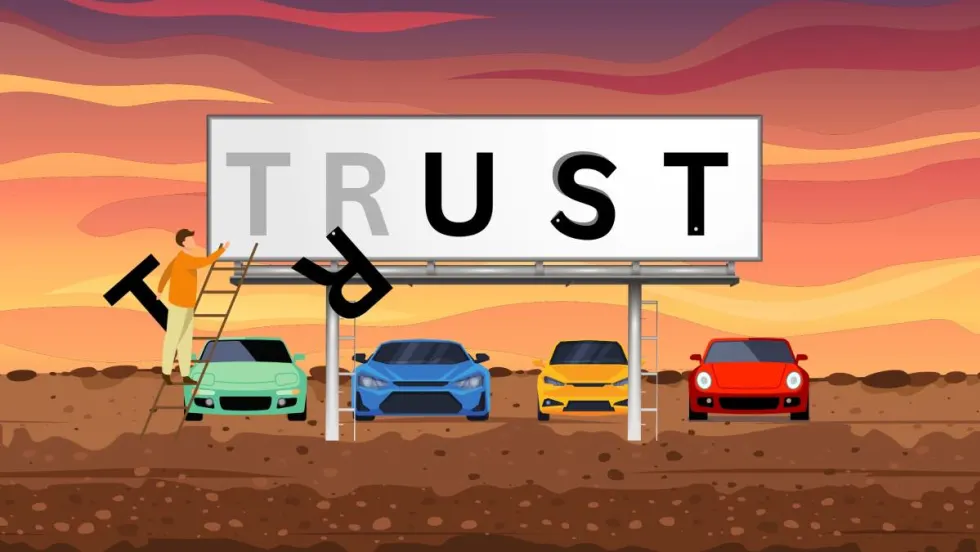
Fleets Want Trust Restored with Suppliers
During this period of ongoing supply constraints, the trust that fleet managers had with OEMs, upfitters, and dealers has been strained. Fleet managers say they have had too many experiences over the past three years coping with erroneous information, adjusting to multiple price increases, and feeling betrayed by inadequate transparency from suppliers.
Read More →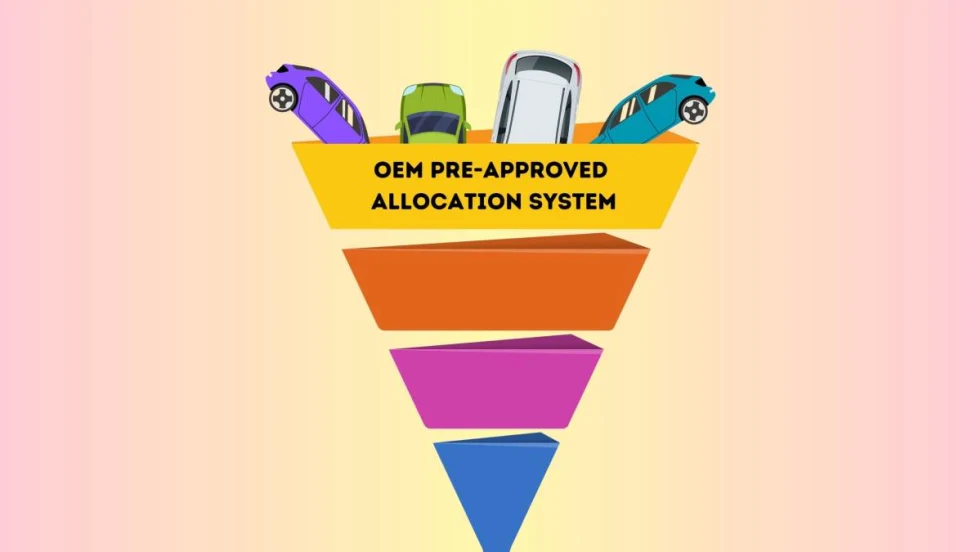
Scheduled Replacement Cycles Are Becoming a Distant Memory
The ongoing difficulty in sourcing replacement vehicles is forcing companies to extend the service lives of vehicles that are unable to be replaced, which, inevitably, increases unscheduled maintenance expenses.
Read More →
Fleet Simplification is the Antidote to Asset Variability
Fleet simplification identifies asset functions to uncover commonality among the equipment and assets. Simplification increases operational efficiency as end-users become accustomed to the controls, displays, and operation of less diverse units.
Read More →
The Dangers of Static Fleet Policies
A fleet policy is a living document, flexible enough to adapt to evolving business priorities, developing industry trends, and changing industry best practices and standards.
Read More →
Short-Term vs. Long-Term Cost Reductions
Corporate procurement staff are often driven by short-term, immediate cost reductions. However, a longer perspective to soft cost savings is critical because fixating on short-term results will hurt a company in the long run.
Read More →
Uptick in Unscheduled Maintenance Increasing Vehicle Downtime
Fleet data analysis can identify recurring downtime issues. It’s important to determine the root causes of downtime so procedures can be developed to minimize such problems.
Read More →
Eliminate Needless Curb Weight to Maximize ICE & EV Efficiencies
Vehicle weight relates directly to fuel economy. In today’s era of electrification, there is also a direct correlation between vehicle weight and battery range.
Read More →
Tech Dependence Risks Dumbing Down Fleet Manager Expertise
The line between creative thinking and problem solving and doing what the data indicates is thin. To lead in fleet management, you need to balance understanding the fundamentals and embracing what smart technology offers.
Read More →
Leverage the Synergy of Safe Driving to Achieve Sustainability and Cost Goals
Safe driving, emission reductions, and cost containment can all be achieved at the same time.
Read More →
The Playbook for Fleet Manager Success
There are many paths to success — most of them involve being flexible, open-minded, and willing to learn.
Read More →