




NHTSA’s New 5-Star Crash-Test Criteria Will Increase Safety and Acquisition Costs
On Dec. 8, 2015, the U.S. Department of Transportation proposed upgrading the National Highway Traffic Safety Administration (NHTSA) 5-Star Safety Rating system for new vehicles by adding new standards for accident-avoidance technology, which will make it much tougher for OEMs to achieve a 5-Star Rating. Without a doubt these safety technologies are beneficial, but they cost money and will also exert upward pressure on new-vehicle acquisition costs. What are the full fleet implications?

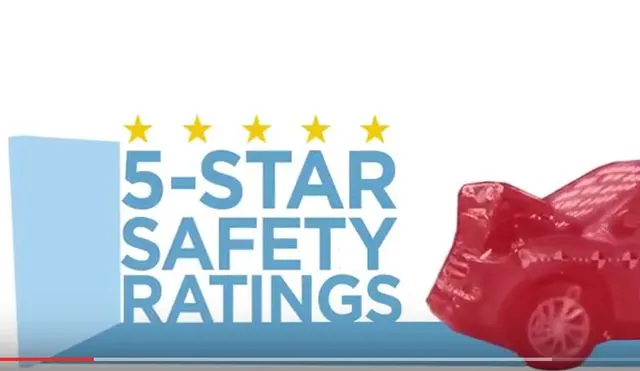
Graphic courtesy of NHTSA.
Graphic courtesy of NHTSA.
On Dec. 8, 2015, the U.S. Department of Transportation proposed upgrading the National Highway Traffic Safety Administration (NHTSA) 5-Star Safety Rating system for new vehicles by adding new standards for accident-avoidance technology, which will make it much tougher for OEMs to achieve a 5-Star Rating. The agency will collect public comments for 60 days, then issue a final decision notice on the planned changes by the end of 2016. If approved, the new crash-test criteria will be implemented for the 2019 model-year. “NHTSA’s 5-Star Safety Ratings have set the bar on safety since it began in 1978, and today we are raising that bar,” said U.S. Transportation Secretary Anthony Fox.
But, what are the fleet implications of this raised bar?
Increased Pressure to Add Safety Technology
The NHTSA 5-Star Safety Ratings, also known as the New Car Assessment Program, was the world’s first-ever vehicle safety rating system that was subsequently modified and adopted in all major automotive global markets. Every year, NHTSA crash tests new vehicles and rates them on how well they protect occupants in frontal, side, and rollover crashes. The test results are compiled into a rating of 1 to 5 stars, with more stars indicating a safer car. These safety ratings appear on Monroney stickers of new vehicles, and are also searchable on NHTSA’s Safercar.gov website.
Today’s program does not require crash-avoidance technologies to earn a four- or five-star rating from NHTSA. But, NHTSA’s new proposal, if approved, will take crash-avoidance technologies into account when it crash tests new cars in MY-2019 to determine how well they protect drivers and occupants. Also, starting with testing for 2019 model-year, an additional 5-Star Rating will be added to evaluate technology designed to protect pedestrians. The two safety technologies that would fall under the “pedestrian protection rating” category are pedestrian automatic emergency braking and rear automatic braking. NHTSA hopes that adding a pedestrian-safety component to ratings will give manufacturers an incentive to incorporate pedestrian protections in U.S. models, which have already been incorporated by several OEMs elsewhere in the world.
The new assessments of crash-avoidance technologies will include lane-departure detection, automatic emergency braking, frontal-collision warning, blind-spot detection, and visibility-related elements, such as high-performance low-beam headlights. Although these features are increasingly common in new vehicles, there is currently no way to assess which company’s equipment performs best. NHTSA wants to change that with its new ratings system. Another planned change to the 5-Star Safety Ratings system will be to add half-star increments to the star rating score.
As a result, the proposed crash-testing criteria will cause some OEMs to receive lower scores if their vehicles do not utilize these safety technologies. By making it harder for cars to get top rankings, the government hopes to encourage OEMs to expand the adoption of these safety technologies in more vehicles, not just the top-of-the-line models or only in higher trim levels or option packages. The lack of availability of these features as standard equipment in popular fleet models is an ongoing complaint from fleets that want to spec safety equipment, but are forced to add undesired items that are bundled into option packages.
The underlying hope is that NHTSA’s new test criteria will eventually pressure OEMs to make this equipment standard in all models similar to what occurred with air bags, electronic stability control, and rear-view parking cameras. The argument is the proposed crash-testing criteria will stimulate faster adoption of advanced safety technologies by OEMs. In fact, in September 2015, 10 automakers voluntarily pledged to install automatic emergency braking in all future vehicles sold in the U.S. Other proponents of the new safety testing criteria argue it will increase the number of semi-autonomous vehicles on the road, facilitating the creation of a technology foundation to transition to fully-autonomous cars.
The Cost of New Vehicle Safety Technologies
Without a doubt these safety technologies are beneficial, but they cost money and will also exert upward pressure on new-vehicle acquisition costs. Although these safety technologies are not mandated, the new crash-test criteria will put tremendous pressure on OEMs to consider adding this equipment. I have argued for quite some time about impending higher acquisition costs that will impact fleets in coming years to meet government mandates. There will be a significant additional expense to meet 2025 CAFE requirements – which are mandated – resulting in far more expensive corporate fleet assets. In addition, there are future looming mandates, such as the DOT pledge to issue a rule requiring the use of vehicle-to-vehicle communication technology by the end of 2016, which too will additional cost to build a vehicle.
The cumulative “sticker shock” of these new technologies will inevitably cause renewed calls by management to increase driver eligibility to receive a company vehicle, re-examination of the viability of reimbursement programs, and downsizing overall fleet size. These safety technologies, along with other equipment required to meet existing government fuel economy mandates, plus anticipated forthcoming mandates, will ultimately be the catalyst for significant changes in the financial equation of offering company-provided fleet in coming years.
Let me know what you think.
More Blog Posts

Fleets Want Trust Restored with Suppliers
During this period of ongoing supply constraints, the trust that fleet managers had with OEMs, upfitters, and dealers has been strained. Fleet managers say they have had too many experiences over the past three years coping with erroneous information, adjusting to multiple price increases, and feeling betrayed by inadequate transparency from suppliers.
Read More →
Scheduled Replacement Cycles Are Becoming a Distant Memory
The ongoing difficulty in sourcing replacement vehicles is forcing companies to extend the service lives of vehicles that are unable to be replaced, which, inevitably, increases unscheduled maintenance expenses.
Read More →
Fleet Simplification is the Antidote to Asset Variability
Fleet simplification identifies asset functions to uncover commonality among the equipment and assets. Simplification increases operational efficiency as end-users become accustomed to the controls, displays, and operation of less diverse units.
Read More →
The Dangers of Static Fleet Policies
A fleet policy is a living document, flexible enough to adapt to evolving business priorities, developing industry trends, and changing industry best practices and standards.
Read More →
Short-Term vs. Long-Term Cost Reductions
Corporate procurement staff are often driven by short-term, immediate cost reductions. However, a longer perspective to soft cost savings is critical because fixating on short-term results will hurt a company in the long run.
Read More →
Uptick in Unscheduled Maintenance Increasing Vehicle Downtime
Fleet data analysis can identify recurring downtime issues. It’s important to determine the root causes of downtime so procedures can be developed to minimize such problems.
Read More →
Eliminate Needless Curb Weight to Maximize ICE & EV Efficiencies
Vehicle weight relates directly to fuel economy. In today’s era of electrification, there is also a direct correlation between vehicle weight and battery range.
Read More →
Tech Dependence Risks Dumbing Down Fleet Manager Expertise
The line between creative thinking and problem solving and doing what the data indicates is thin. To lead in fleet management, you need to balance understanding the fundamentals and embracing what smart technology offers.
Read More →
Leverage the Synergy of Safe Driving to Achieve Sustainability and Cost Goals
Safe driving, emission reductions, and cost containment can all be achieved at the same time.
Read More →
The Playbook for Fleet Manager Success
There are many paths to success — most of them involve being flexible, open-minded, and willing to learn.
Read More →