




Is Technology 'Dumbing Down' Fleet Managers?
While technology has transformed fleet management to a science, it has also created the risk that, ultimately, technology may “dumb down” fleet managers. In the past, fleet managers would personally perform the calculations and engage in the “cerebral sweat” to accomplish almost all fleet functions. Nowadays (and increasingly so in the future), sophisticated fleet management systems perform these calculations and analyses with the fleet manager only seeing the end result, not the prrocess.

While technology has transformed fleet management from a craft to a science, it has also created the risk that, ultimately, technology may “dumb down” fleet managers. In the past, fleet managers would personally perform the calculations and engage in the “cerebral sweat” to accomplish almost all fleet functions. Nowadays (and increasingly so in the future), sophisticated fleet management systems perform these calculations and analyses in a “back room” setting with the fleet manager only seeing the end result, not the process. I see this as a future concern, especially for inexperienced brand-new fleet managers, and so do others.
“Since fleet management companies (FMCs) are increasingly developing solutions to take the administrative burden off of their clients, the fleet manager has fewer opportunities to observe first-hand operational issues or efficiencies. They run the fleet by exception and reports supplied by the lessor,” said Michael Bieger, senior director global procurement for ADP. “As this increasingly happens, the new fleet manager becomes dependent on the FMCs to provide strategic ideas and direction because he or she will not have the day-to-day contact with the work of managing a fleet.”
Bieger does not believe this is a fait accompli; rather, he offers it as a cautionary tale about the future of the fleet manager position. For instance, if a fleet manager is dependent on managing a fleet by exception and summary reports, does it position him or her to truly be strategic in their thinking? This is analogous to the outsourcing of product manufacturing that has occurred over the past several decades. This has resulted in lost in-house expertise by not staying current with innovations in manufacturing processes because a company is no longer in the manufacturing business, but simply contract management. This can ultimately become a strategic deficit. A recent story about Apple illustrates this situation. According to the news story, Apple is designing a yet-to-be-released iPhone, which is extremely sophisticated and complex and the designers were not certain whether the product could be manufactured as designed. It had to go to the manufacturing outsourcer to see if they could develop a manufacturing system to build the phone. Although Apple is a highly innovative company, some would say this lack of manufacturing expertise is a strategic deficit. This could be similar to the fleet manager of the future, who may come up with “strategic ideas,” but needs their outsourcer to determine whether the ideas are feasible to implement.
“Technology is a two-edged sword. On the one hand, with the time constraints and lack of sheer manpower, it’s very convenient to have systems in place to pull the data and prepare the analysis. On the other hand, you lose some of the knowledge on where those numbers come from and the in-depth knowledge of what the numbers mean,” said Rachel Johnson, CAFM, fleet specialist for Region Americas for Konecranes, Inc. “If you have a business management or accounting degree, it’s not a concern because you have already learned those types of analyses. However, if you don’t have that background, it’s important to pursue continuing education, either through the NAFA CAFM program or others.”
The Counter Arguments
Without a doubt, fleet management has changed immeasurably since its inception, due to the advances in technology. The list of the positive impacts of technology far outweighs the disadvantages. However, there is a legitimate concern about our growing over-dependence on technology. If you don’t think we’re too dependent on technology, watch what happens the next time there is a power outage, your server goes down, or phone battery dies.
As the technology of the future becomes more intuitive and predictive, it ultimately poses the risk of diminishing the stature of the fleet manager by making technology the real value-added in fleet management, not the individual. But, not everyone agrees with this scenario. The counter-argument is that technology frees up the fleet managers to learn new skills in other related areas.
“Granted, technology has taken the fleet manager out of the day-to-day business of defining policy, consolidating specifications for a selector, and managing most day-to-day operations. But, at the same time, it has allowed the fleet manager to grow in other areas, such as analytics, forecasting, reporting, risk awareness, logistics, benchmarking, and fleet financials. Considering the complex market, the changing and fast-moving nature of our industry, and the demands from customers and executive management alike, a good fleet manager needs to be a master of each one of these capabilities,” said Jim McCarthy, director, Vehicle Management Services, CSCM, a division of Siemens Corp.
Technology also allows fleet managers to be more granular in fleet decision-making. “Technology gives us the facility and desire to drill down further than would have been possible 20 to 30 years ago,” said Bob Stanton, fleet manager for the City of San Antonio. “Technology, in my view, is not contributing to the ‘dumbing down’ of the fleet manager. Instead, the broadened skill levels required for success may be muting or even masking the specific fleet-related skills still needed for success.”
Regardless of your perspective on the impact of technology, one point is certain; if you don’t make a concerted effort to expand your skill set, you run the risk making yourself obsolete.
Let me know what you think.
More Blog Posts
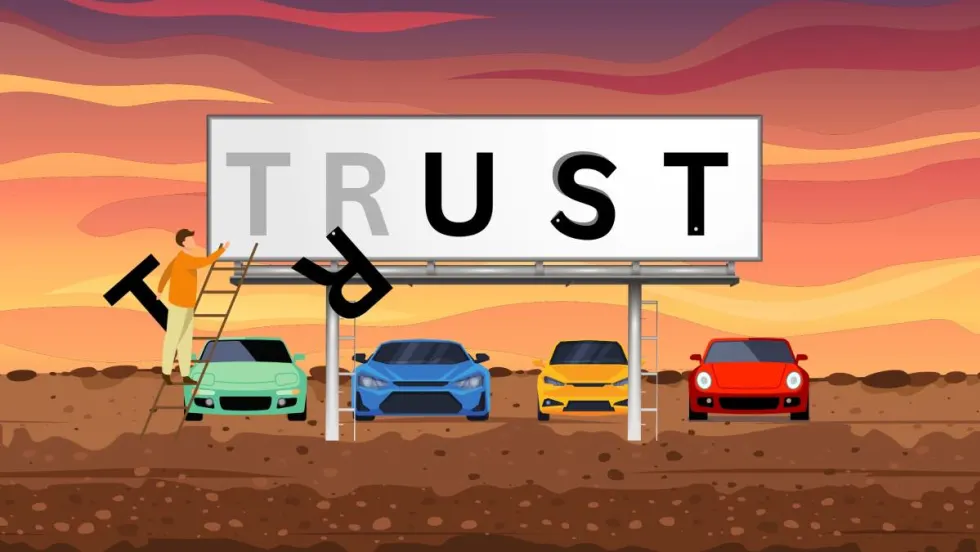
Fleets Want Trust Restored with Suppliers
During this period of ongoing supply constraints, the trust that fleet managers had with OEMs, upfitters, and dealers has been strained. Fleet managers say they have had too many experiences over the past three years coping with erroneous information, adjusting to multiple price increases, and feeling betrayed by inadequate transparency from suppliers.
Read More →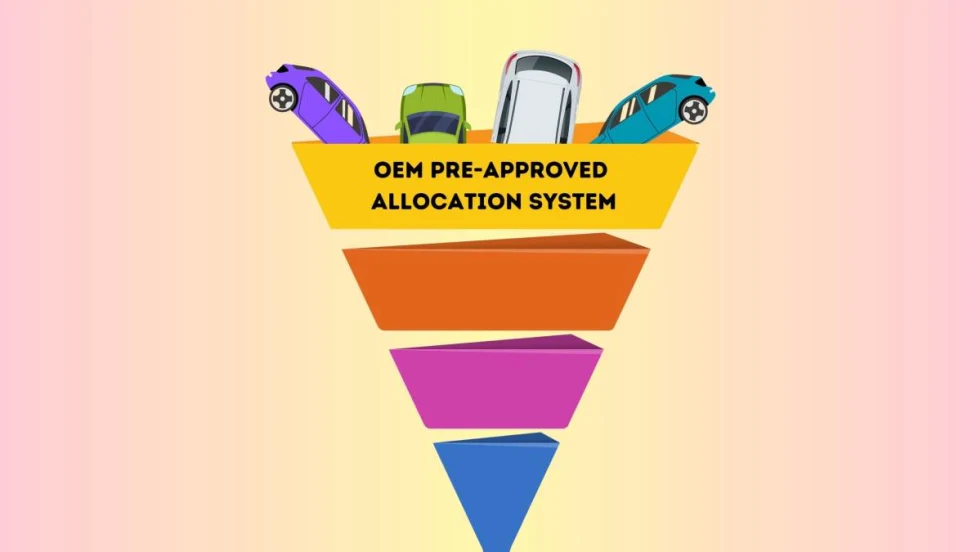
Scheduled Replacement Cycles Are Becoming a Distant Memory
The ongoing difficulty in sourcing replacement vehicles is forcing companies to extend the service lives of vehicles that are unable to be replaced, which, inevitably, increases unscheduled maintenance expenses.
Read More →
Fleet Simplification is the Antidote to Asset Variability
Fleet simplification identifies asset functions to uncover commonality among the equipment and assets. Simplification increases operational efficiency as end-users become accustomed to the controls, displays, and operation of less diverse units.
Read More →
The Dangers of Static Fleet Policies
A fleet policy is a living document, flexible enough to adapt to evolving business priorities, developing industry trends, and changing industry best practices and standards.
Read More →
Short-Term vs. Long-Term Cost Reductions
Corporate procurement staff are often driven by short-term, immediate cost reductions. However, a longer perspective to soft cost savings is critical because fixating on short-term results will hurt a company in the long run.
Read More →
Uptick in Unscheduled Maintenance Increasing Vehicle Downtime
Fleet data analysis can identify recurring downtime issues. It’s important to determine the root causes of downtime so procedures can be developed to minimize such problems.
Read More →
Eliminate Needless Curb Weight to Maximize ICE & EV Efficiencies
Vehicle weight relates directly to fuel economy. In today’s era of electrification, there is also a direct correlation between vehicle weight and battery range.
Read More →
Tech Dependence Risks Dumbing Down Fleet Manager Expertise
The line between creative thinking and problem solving and doing what the data indicates is thin. To lead in fleet management, you need to balance understanding the fundamentals and embracing what smart technology offers.
Read More →
Leverage the Synergy of Safe Driving to Achieve Sustainability and Cost Goals
Safe driving, emission reductions, and cost containment can all be achieved at the same time.
Read More →
The Playbook for Fleet Manager Success
There are many paths to success — most of them involve being flexible, open-minded, and willing to learn.
Read More →