




How Will Autonomous Vehicles Disrupt Fleet Management?
Publicly held corporations include risk factors in their annual reports that forecast potential market forces that may impact their business. Recently, three insurance companies and an auto-parts supplier cited the emergence of autonomous vehicles as potentially disruptive to their future business.

If autonomous vehicles strictly adhere to posted speed limits and parking restrictions, what impact will the reduction in traffic and parking fines have on governmental budgets?
Photo: Automotive Fleet
Publicly held corporations include risk factors in their annual reports that forecast potential market forces that may impact their business in the future. Recently, four companies — three insurance companies and an auto-parts supplier — cited the emergence of autonomous vehicles as potentially disruptive to their future business.
This is the first time autonomous vehicles have ever been cited by companies in an annual report as a disruptive market force.
The three insurance companies — Travelers, Mercury General Corp., and Cincinnati Financial Corp. — anticipate a decrease in accidents that occur due to driver error, which may decrease future consumer demand for auto insurance products. Similarly, auto-parts supplier LKQ Corporation said its business will be impacted if the volume of accident repairs declines due to fewer accidents.
These reports got me thinking: What impact would autonomous vehicles have on the fleet market?
Benefits of Autonomous Vehicles
Many of the newer vehicles on the road today are, in reality, semi-autonomous vehicles, capable of performing actions independent of the driver, such as adaptive cruise control, collision avoidance braking, parking assist, and lane assist and lane departure warnings. These driver-assist technologies, coupled with advances in vehicle connectivity and vehicle-to-vehicle and vehicle-to-infrastructure communication, are the necessary precursors, or building blocks, to developing a fully autonomous vehicle.
In many ways, autonomous vehicles will be very beneficial to the fleet industry in a variety of applications.
For instance:
Fewer Accidents
On average, 20 percent of a fleet’s vehicles are involved annually in an accident. If autonomous vehicles reduce the frequency of accidents, this will represent substantial savings for fleets. The focus of autonomous vehicle design will be to avoid crashes in the first place as opposed to today’s philosophy of designing vehicles that allow occupants to survive a crash.
The early fleet adopters of autonomous vehicles will most likely be companies with ingrained safety cultures that have strong senior management support. However, autonomous vehicles, due to their reduced frequency of accidents, could be disruptive to other companies providing services to the vehicle accident market, such as the healthcare industry, legal profession, auto insurers, replacement parts industry, and vehicle rental replacement business.
Enhanced Driver Productivity
Autonomous vehicles will allow drivers to spend less time driving a vehicle, allowing more time to completing other tasks while in transit or commuting. Some studies predict that "wasted commute time" could be reduced by as much as 90 percent. Will this create a new aftermarket of productivity tools or driver amenities to be used during currently non-productive commute travel?
Here’s another example of how autonomous vehicles can enhance driver productivity. Currently, several OEMs offer automated parking assist capabilities for certain models, which involve no driver interaction with the vehicle. It’s not too much of a stretch to predict this could be a precursor to a more sophisticated "autonomous valet parking" capability to enhance driver productivity and time management.
Theoretically, using this envisioned technology, a driver could disembark at a destination and electronically dispatch the vehicle to autonomously locate a nearby parking structure or available street parking. It would be an interesting exercise to calculate the amount of unproductive time drivers devote annually to finding parking spaces, especially in a congested urban setting.
Maximized Vehicle Utilization
Autonomous vehicles could potentially modify the current fleet business model of assigning a specific company vehicle to a specific driver. Theatrically, one autonomous vehicle could service multiple drivers and could eliminate the need for driver-assigned company vehicles. Based on anecdotal discussions, it would be safe to say a company vehicle spends, on average, at least 50 percent of the work day idle and non-productive waiting for the driver to return. Instead of sitting idle, couldn’t a sophisticated fleet-based routing system allow a single autonomous vehicle to serve multiple nearby employees, thereby maximizing vehicle utilization to levels undreamed today?
Early Adoption by Specialized Fleet Applications
Fleet has always been an early adopter of new technology and autonomous vehicles will be no exception, especially with in specialized fleet applications. In some delivery applications, companies only need to get a payload from Point A to Point B, which is repeated on a daily basis, with onsite personnel handling the loading and unloading of materials, which would be an ideal use of autonomous vehicles.
Other potential early adopters could be the mining industry and shuttle services on corporate or university campuses where vehicles have limited variability in their driving patterns, or, where there are set routes, such as municipal transit agencies.
Maximize Fuel Efficiency via More Efficient Routing
Autonomous vehicles using vehicle-to-vehicle and vehicle-to-infrastructure communication will avoid traffic congestion or road construction by rerouting itself to take the most efficient route to a destination. The same would be true for delivery and service applications.
Disruptive Aspects of Autonomous Vehicles
Higher Acquisition Cost
One thing is certain, autonomous vehicles will be more expensive than the traditional driver-operated vehicle. Another big unknown is the impact on total cost of ownership. As cited earlier, it is anticipated that fuel economy will increase, maintenance and repair costs will decrease, but there is uncertainty about the rate of depreciation and the ultimate impact on residual values.
Will Companies Need Fleets or Simply Pay for Usage?
Could the future portend daily rental companies operating fleets of autonomous vehicles that can be summoned as needed using an Uber-style reservation system, with corporations simply paying for actual usage, eliminating vehicle depreciation expense, which is currently fleet's No. 1 cost category. In the long-term, could fleet management companies evolve into ultra-sophisticated "vehicle dispatch companies," providing units to clients on a precise as-needed basis?
Unintended Consequences
If autonomous vehicles strictly adhere to posted speed limits and parking restrictions, what impact will the reduction in traffic and parking fines have on governmental budgets? If autonomous driving becomes widespread, it is certain that DUI arrests will plummet and road-rage incidents will become an antiquated concept from yesteryear.Will MVRs even be necessary in the future?
The Long Arm of Governmental Regulation
Will governmental regulators, such as NHTSA, constrain or liberate the use of autonomous vehicles? Although NHTSA has expressed support for enhanced vehicle connectivity for vehicle-to-vehicle and vehicle-to-infrastructure communication, it remains unknown how willing it will be to embrace advancing autonomous technologies by inhibiting their adoption and application.
I am confident that the topics discussed in this editorial just scratch the surface and, as they say, the devil will be discovered in the details. What did I miss?
Welcome to the brave new world of fleet management.
Let me know what you think.
Mike Antich
mike.antich@bobit.com
More Blog Posts

Fleets Want Trust Restored with Suppliers
During this period of ongoing supply constraints, the trust that fleet managers had with OEMs, upfitters, and dealers has been strained. Fleet managers say they have had too many experiences over the past three years coping with erroneous information, adjusting to multiple price increases, and feeling betrayed by inadequate transparency from suppliers.
Read More →
Scheduled Replacement Cycles Are Becoming a Distant Memory
The ongoing difficulty in sourcing replacement vehicles is forcing companies to extend the service lives of vehicles that are unable to be replaced, which, inevitably, increases unscheduled maintenance expenses.
Read More →
Fleet Simplification is the Antidote to Asset Variability
Fleet simplification identifies asset functions to uncover commonality among the equipment and assets. Simplification increases operational efficiency as end-users become accustomed to the controls, displays, and operation of less diverse units.
Read More →
The Dangers of Static Fleet Policies
A fleet policy is a living document, flexible enough to adapt to evolving business priorities, developing industry trends, and changing industry best practices and standards.
Read More →
Short-Term vs. Long-Term Cost Reductions
Corporate procurement staff are often driven by short-term, immediate cost reductions. However, a longer perspective to soft cost savings is critical because fixating on short-term results will hurt a company in the long run.
Read More →
Uptick in Unscheduled Maintenance Increasing Vehicle Downtime
Fleet data analysis can identify recurring downtime issues. It’s important to determine the root causes of downtime so procedures can be developed to minimize such problems.
Read More →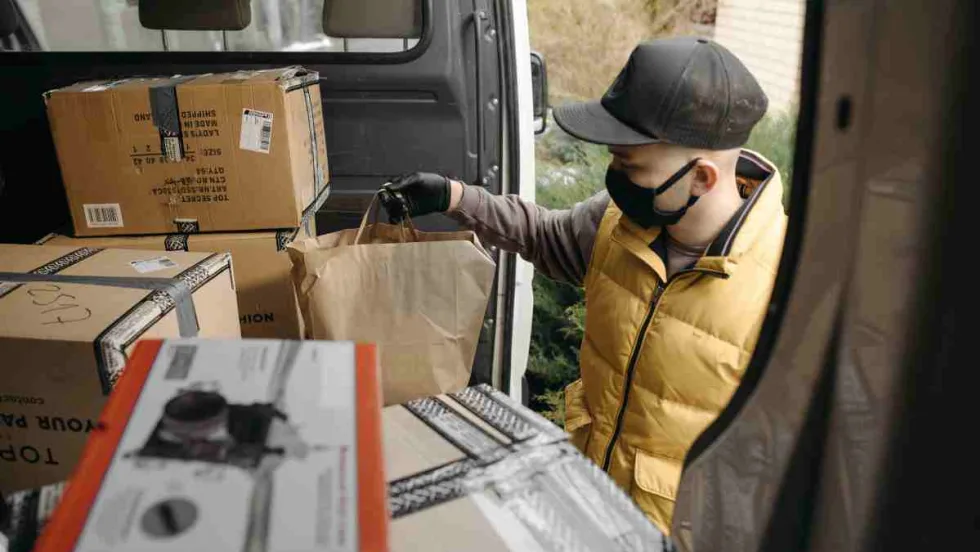
Eliminate Needless Curb Weight to Maximize ICE & EV Efficiencies
Vehicle weight relates directly to fuel economy. In today’s era of electrification, there is also a direct correlation between vehicle weight and battery range.
Read More →
Tech Dependence Risks Dumbing Down Fleet Manager Expertise
The line between creative thinking and problem solving and doing what the data indicates is thin. To lead in fleet management, you need to balance understanding the fundamentals and embracing what smart technology offers.
Read More →
Leverage the Synergy of Safe Driving to Achieve Sustainability and Cost Goals
Safe driving, emission reductions, and cost containment can all be achieved at the same time.
Read More →
The Playbook for Fleet Manager Success
There are many paths to success — most of them involve being flexible, open-minded, and willing to learn.
Read More →