




High Fuel Costs Add Pressure to Increase Personal Use Charges
The dramatic spike in the price of fuel has increased the cost of allowing personal use of company-provided vehicles. A growing number of companies now question whether they charge employees enough for personal use to offset the increased cost of fuel.
In addition, companies that allow drivers to take company vehicles home, but do not allow personal use, report a growing problem of policing unauthorized personal use by employees looking to reduce their “personal” fuel costs. The severity of the problem seems to parallel price increases at the pump.
“There is a cost to provide personal use as an employee benefit. As the cost to provide this benefit increases, companies are deciding whether to share this increased cost with their employees,” said Susan Stiles, manager of customer services for PHH Arval, a fleet management company in Sparks, Md.
Many fleets have increased personal use charges. For example, the average personal charge to employees was between $70 and $90 per month in 2005. Today, it ranges from $80 to $130 per month, with the average being $100 per month. The question is whether it needs to go even higher in today’s cost environment.
Know Your Costs
More than 91 percent of commercial fleets allow employees personal use of company-provided vehicles. A company’s cost for personal use depends on the method used for charging the employee. If the value of personal use is imputed as income, the employer does not recover any of the cost for personal use. However, if the employer and employee share the cost of personal use under a payment program, a fleet can significantly reduce its incremental operating costs and vehicle depreciation expense. The latter is important because personal use has an adverse impact on residual values. Personal use of company vehicles accounts for approximately 15-18 percent of the overall miles accumulated during a vehicle’s service life. Each personal mile driven reduces the value of a vehicle since it shortens its service life by causing it to reach its optimal mileage replacement earlier and increases the “penalty” deduction taken for excess mileage when calculating the vehicle resale value. There is a direct cost relationship between the number of personal miles allowed and the vehicle’s resale value. In addition, personal use results in extra wear and tear on fleet vehicles, as well as increased liability exposure, all of which involve substantial company expenses.
What is the appropriate personal use charge?
“The first step is knowing what it costs your company to provide personal use –not just the employee taxable benefit- but also the total cost to your company to offer this benefit. This includes vehicle acquisition cost, the cost of fuel, maintenance, insurance, risk, wear and tear that reduces resale, value and personal use administration,” said Stiles. It is important to consider all direct and indirect costs. For instance, a personal use taxable benefit program requires significant administration. Industry surveys show that, depending on how a company manages the process, internal costs can range from $32 to $70 a year per vehicle, added Stiles. As fleet manager, you need to quantify the cost of each of these variables and calculate the total cents-per-mile cost by each vehicle type in the fleet. An accurate estimate for the cost of personal use can be determined by multiplying this cents-per-mile cost by the average personal miles driven by employees.
Communication is Critical to Acceptance
Adjusting personal use charges will help offset some of the cost pressures impacting fleet budgets. Charging drivers a flat rate for personal use provides income to the company. For example, for a fleet of 300 vehicles charging $110 a month per vehicle, the annual income would be $396,000. Another consideration is the creation of a tiered schedule, said Stiles. Under a tiered program, employees who drive more expensive vehicles and/or have a greater percentage of personal use pay a higher contribution.
“If a decision is made to adjust the personal use charge, which I like to call the employee contribution, the drivers’ management needs to be involved in the decision making,” said Stiles. “Just as important, there needs to be advance communication with drivers as to the pending adjustment in the personal use charge. An effective communication strategy is crucial to achieve employee acceptance.” The adjusted personal use charge should be positioned as a fair way for the company to offset the cost of personal miles, including higher fuel costs, added wear and tear, liability exposure, and reduced vehicle resale value. “You should quantify the financial benefit of having personal use privileges to a company car. Even with an increase in the personal use charge, it is still a net benefit because it allows many employees to avoid the expense of owning a personal vehicle,” adds Stiles.
Let me know what you think.
More Blog Posts

Fleets Want Trust Restored with Suppliers
During this period of ongoing supply constraints, the trust that fleet managers had with OEMs, upfitters, and dealers has been strained. Fleet managers say they have had too many experiences over the past three years coping with erroneous information, adjusting to multiple price increases, and feeling betrayed by inadequate transparency from suppliers.
Read More →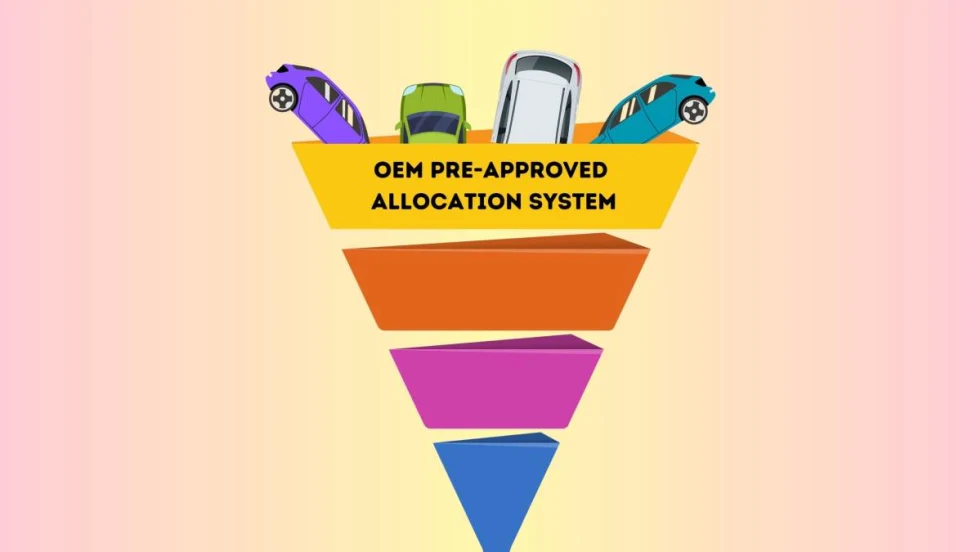
Scheduled Replacement Cycles Are Becoming a Distant Memory
The ongoing difficulty in sourcing replacement vehicles is forcing companies to extend the service lives of vehicles that are unable to be replaced, which, inevitably, increases unscheduled maintenance expenses.
Read More →
Fleet Simplification is the Antidote to Asset Variability
Fleet simplification identifies asset functions to uncover commonality among the equipment and assets. Simplification increases operational efficiency as end-users become accustomed to the controls, displays, and operation of less diverse units.
Read More →
The Dangers of Static Fleet Policies
A fleet policy is a living document, flexible enough to adapt to evolving business priorities, developing industry trends, and changing industry best practices and standards.
Read More →
Short-Term vs. Long-Term Cost Reductions
Corporate procurement staff are often driven by short-term, immediate cost reductions. However, a longer perspective to soft cost savings is critical because fixating on short-term results will hurt a company in the long run.
Read More →
Uptick in Unscheduled Maintenance Increasing Vehicle Downtime
Fleet data analysis can identify recurring downtime issues. It’s important to determine the root causes of downtime so procedures can be developed to minimize such problems.
Read More →
Eliminate Needless Curb Weight to Maximize ICE & EV Efficiencies
Vehicle weight relates directly to fuel economy. In today’s era of electrification, there is also a direct correlation between vehicle weight and battery range.
Read More →
Tech Dependence Risks Dumbing Down Fleet Manager Expertise
The line between creative thinking and problem solving and doing what the data indicates is thin. To lead in fleet management, you need to balance understanding the fundamentals and embracing what smart technology offers.
Read More →
Leverage the Synergy of Safe Driving to Achieve Sustainability and Cost Goals
Safe driving, emission reductions, and cost containment can all be achieved at the same time.
Read More →
The Playbook for Fleet Manager Success
There are many paths to success — most of them involve being flexible, open-minded, and willing to learn.
Read More →