




Governments Consider Cutbacks in 2002 Vehicle Replacement Budgets as Tax Revenues Decline
Tax revenues have declined for many states, counties, and cities, and some governments are pondering deferment of 2003 capital expenditures to cope with the deficits.
"One of the easiest budget cuts to make is 'delaying' capital investment, and vehicle replacement programs are traditionally attractive targets," said Chris Amos, commissioner of equipment services for the city of St. Louis. "There are big dollars involved, nobody gets hurt or loses a power base, and the impact is not immediate or easy to define." One reason for this concern is that state tax income fell 5 percent during the July-to-September quarter of 2001, the first such decline in a decade, according to a Dec. 18, 2001 report by the Nelson A. Rockefeller Institute of Government at the State University of New York in Albany. State governors blame the deficit on plunging tax collections, soaring health care outlays, and post-Sept. 11 homeland security costs. Unlike the federal government, every state, except Vermont, has a constitutional or statutory mandate to keep its budget in balance. As their revenues decline and reserves dwindle, states tend to defer capital expenditures, cut discretionary spending, institute hiring freezes, and restrict travel by employees. According to the National Conference of State Legislatures, 36 states have implemented or are considering budget cuts. The budgetary problems are not just restricted to states. Consider the impact on cities such as Lynchburg, VA. "The state of Virginia had a $928 million general fund shortfall in 2000, which has continued to cripple the state budgeting process in 2001. The effect on Virginian local governments such as Lynchburg is significant reductions in the stream of money flowing down to the cities," said John McCorkhill, fleet services director for the city of Lynchburg. "The city, which was organized in 1786, has tremendous infrastructure improvement needs relating to its sewers and streets and city schools, which need immediate attention. The bottom line is that I anticipate a diversion of funds to other capital programs in Lynchburg that have previously been allocated to the fleet department for vehicle replacement." Agreeing is Marvin Fletcher, director of fleet services for Hanover County, VA. "While nothing has been finalized, revenue support from the state in the next budget year is likely to be below expectations. The county will look to lessen the impact of this possibility, and requests for new and replacement vehicles will be closely scrutinized. At this point, indications are that replacement vehicle purchases are likely to be reduced by approximately 50 percent. No determination has been made for new-vehicle purchases, although a reduced number is a definite possibility." Some government entities have already cut their budgets in the current fiscal year. For instance, the Missouri Department of Conservation, which is funded primarily by a dedicated sales tax, has cut its vehicle replacement budget by about 11 percent for the current fiscal year, said Fleet Manager Jim Gerling. However, as Bill DeRousse, fleet manager for the city of Everett, WA, points out, each state and jurisdiction is different. "There are some cities and counties within our state that have a solid tax base and will continue to purchase equipment based on their replacement schedule. On the other hand, there are others that even the smallest decrease in current revenues will impact their ability to purchase the same amount of replacement equipment as in previous years," said DeRousse. "I belive municipalities are looking at equipment purchases a little more cautiously and we will see a small decrease in purchases in 2003." Some government fleets are buffered from revenue downturns since they are included in budgets funded from more stable sources such as dedicated property taxes or have the flexibility to use revenues from government-owned utilities, which can be transferred into the general fund. Nevertheless, many other government fleets are feeling the pinch of reduced tax revenues. "The irony is that while government bites the bullet and postpones capital purchases, the end result is the same — insufficient capital assets, added downtime, and increased maintenance expenses," said Amos. "Depreciation never takes a holiday!" Let me know what you think.
More Blog Posts

Fleets Want Trust Restored with Suppliers
During this period of ongoing supply constraints, the trust that fleet managers had with OEMs, upfitters, and dealers has been strained. Fleet managers say they have had too many experiences over the past three years coping with erroneous information, adjusting to multiple price increases, and feeling betrayed by inadequate transparency from suppliers.
Read More →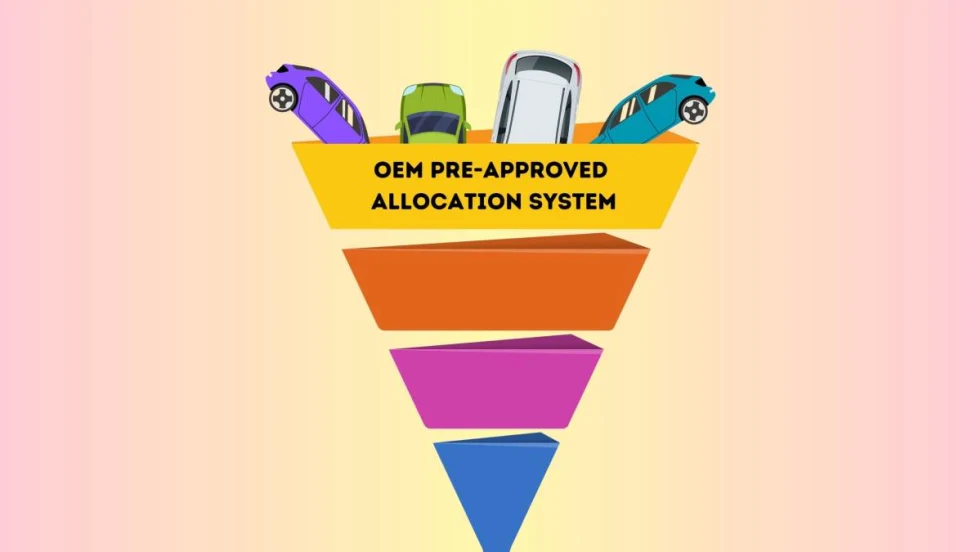
Scheduled Replacement Cycles Are Becoming a Distant Memory
The ongoing difficulty in sourcing replacement vehicles is forcing companies to extend the service lives of vehicles that are unable to be replaced, which, inevitably, increases unscheduled maintenance expenses.
Read More →
Fleet Simplification is the Antidote to Asset Variability
Fleet simplification identifies asset functions to uncover commonality among the equipment and assets. Simplification increases operational efficiency as end-users become accustomed to the controls, displays, and operation of less diverse units.
Read More →
The Dangers of Static Fleet Policies
A fleet policy is a living document, flexible enough to adapt to evolving business priorities, developing industry trends, and changing industry best practices and standards.
Read More →
Short-Term vs. Long-Term Cost Reductions
Corporate procurement staff are often driven by short-term, immediate cost reductions. However, a longer perspective to soft cost savings is critical because fixating on short-term results will hurt a company in the long run.
Read More →
Uptick in Unscheduled Maintenance Increasing Vehicle Downtime
Fleet data analysis can identify recurring downtime issues. It’s important to determine the root causes of downtime so procedures can be developed to minimize such problems.
Read More →
Eliminate Needless Curb Weight to Maximize ICE & EV Efficiencies
Vehicle weight relates directly to fuel economy. In today’s era of electrification, there is also a direct correlation between vehicle weight and battery range.
Read More →
Tech Dependence Risks Dumbing Down Fleet Manager Expertise
The line between creative thinking and problem solving and doing what the data indicates is thin. To lead in fleet management, you need to balance understanding the fundamentals and embracing what smart technology offers.
Read More →
Leverage the Synergy of Safe Driving to Achieve Sustainability and Cost Goals
Safe driving, emission reductions, and cost containment can all be achieved at the same time.
Read More →
The Playbook for Fleet Manager Success
There are many paths to success — most of them involve being flexible, open-minded, and willing to learn.
Read More →