




Fleets Feel Vindication as NJ Acknowledges Widespread Erroneous E-ZPass Violations
The owner of a bread delivery company operating in New Jersey told New York WABCTV news of receiving 60 erroneous E-ZPass violations totaling $1,500, even though in each instance the toll booth light flashed green acknowledging payment.
The owner of a bread delivery company operating in New Jersey told New York WABCTV news of receiving 60 erroneous E-ZPass violations totaling $1,500, even though in each instance the toll booth light flashed green acknowledging payment. Stan Leibowitz, fleet manager for Matsushita Electric Corp. in Secaucus, NJ, tells another story of one of his company drivers who, within minutes, received two E-ZPass violations at the same toll booth – one going northbound and the other going southbound. “That’s impossible, even with no traffic,” said Liebowitz. These stories are not isolated incidents, rather they are an all-too common phenomena reported by many fleet managers nationwide, whose drivers are E-ZPass subscribers in New Jersey. (See the Market Trends column in the April 2001 issue.) For readers who live in states that don’t use E-ZPass, it is an automated electronic toll collection system that allows motorists to drive through designated E-ZPass toll booth lanes without stopping to pay a cash toll. A signal sent by an in-vehicle transponder to a receiver at the toll booth automatically debits the E-ZPass subscriber’s account of the toll charge. Scofflaws are issued violations for driving through E-ZPass lanes without a transponder; however, the high volume of E-ZPass violations raised questions about the accuracy of the system. For instance, a survey performed by The Star Ledger/Eagleton-Rutgers Poll revealed that 43 percent of E-ZPass customers in New Jersey had received at least one violation and an additional 40 percent had received between two to 10 violation notices. Of those who received violation notices, 71 percent were the result of a malfunction of the E-ZPass system. Since E-ZPass violations are sent to the registered owner of a vehicle, they have become an administrative headache for fleet managers, lessors, and daily rental companies nationwide. For instance, the Truck Renting and Leasing Association (TRALA) has openly expressed concern about the multitude of E-ZPass violations its members are receiving and the administrative nightmare of routing them to the appropriate customers. Since July 2002, fleet managers have experienced relief from this problem because the new administration running the New Jersey Turnpike Authority has suspended automatically mailing E-ZPass violations as it painstakingly checks all citations manually to ensure that E-ZPass subscribers are not erroneously cited. Fleet managers say that they never received a notification of the suspension but have noticed that the number of E-ZPass violations mailed to them has dwindled to a trickle. A July 11, 2002 report issued to the New Jersey Department of Transportation stated: “E-ZPass violation processing is highly inaccurate and is a net drain…costing far more that is collected. It has cost the state (of New Jersey) approximately $33 million to collect $14 million in fines and $1.7 million in tolls since late 1999. Compounding this economic inefficiency is the added insult that the system doesn’t work, resulting in E-ZPass customers repeatedly receiving incorrect violation notices.” The report continued stating, “Regretfully, the previous administration’s self-funding finance scheme resulted in E-ZPass customers being viewed as cheats against whom all efforts must be directed to extract revenue.” The new administration for the New Jersey Turnpike Authority plans to change this. Now enforcement efforts are focused on repeat offenders, a core group of 15-20,000 drivers responsible for virtually all willful toll evasions. One of the first recommendations implemented by the state of New Jersey was to terminate the contract with WorldCom, the primary E-ZPass administrator, and to hire ACS State and Local Government Solutions as its replacement. According to the NJ DOT report, “In terminating the contract with WorldCom, the state has taken the first critical steps toward ending a steady stream of nuisance violation notices.” Currently, an extensive overhaul of the E-ZPass system software and hardware is underway to eliminate the root causes of the issuance of erroneous violations. In addition, the New Jersey Turnpike Authority has implemented a program to proactively identify faulty transponders and to alert subscribers when found. Hopefully, these changes will help eliminate the widespread issuance of erroneous E-ZPass violations. However, there still remains the unresolved problem of refunds for erroneous E-ZPass violations paid by fleet and fleet leasing companies. Let me know what you think.
More Blog Posts

Fleets Want Trust Restored with Suppliers
During this period of ongoing supply constraints, the trust that fleet managers had with OEMs, upfitters, and dealers has been strained. Fleet managers say they have had too many experiences over the past three years coping with erroneous information, adjusting to multiple price increases, and feeling betrayed by inadequate transparency from suppliers.
Read More →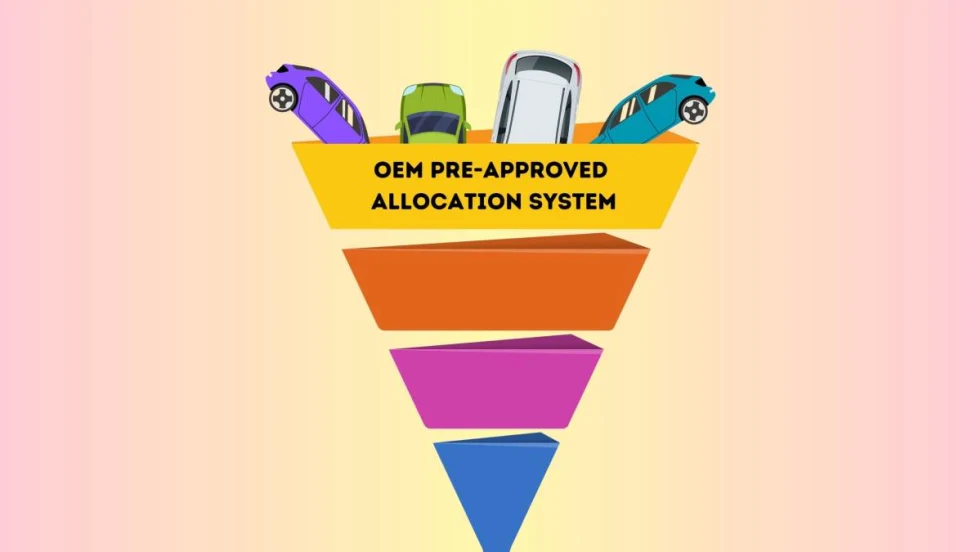
Scheduled Replacement Cycles Are Becoming a Distant Memory
The ongoing difficulty in sourcing replacement vehicles is forcing companies to extend the service lives of vehicles that are unable to be replaced, which, inevitably, increases unscheduled maintenance expenses.
Read More →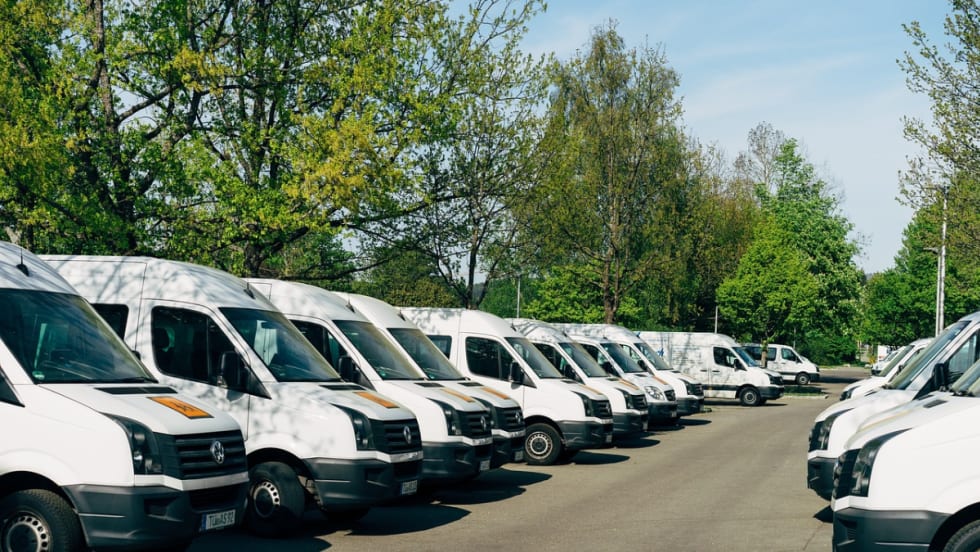
Fleet Simplification is the Antidote to Asset Variability
Fleet simplification identifies asset functions to uncover commonality among the equipment and assets. Simplification increases operational efficiency as end-users become accustomed to the controls, displays, and operation of less diverse units.
Read More →
The Dangers of Static Fleet Policies
A fleet policy is a living document, flexible enough to adapt to evolving business priorities, developing industry trends, and changing industry best practices and standards.
Read More →
Short-Term vs. Long-Term Cost Reductions
Corporate procurement staff are often driven by short-term, immediate cost reductions. However, a longer perspective to soft cost savings is critical because fixating on short-term results will hurt a company in the long run.
Read More →
Uptick in Unscheduled Maintenance Increasing Vehicle Downtime
Fleet data analysis can identify recurring downtime issues. It’s important to determine the root causes of downtime so procedures can be developed to minimize such problems.
Read More →
Eliminate Needless Curb Weight to Maximize ICE & EV Efficiencies
Vehicle weight relates directly to fuel economy. In today’s era of electrification, there is also a direct correlation between vehicle weight and battery range.
Read More →
Tech Dependence Risks Dumbing Down Fleet Manager Expertise
The line between creative thinking and problem solving and doing what the data indicates is thin. To lead in fleet management, you need to balance understanding the fundamentals and embracing what smart technology offers.
Read More →
Leverage the Synergy of Safe Driving to Achieve Sustainability and Cost Goals
Safe driving, emission reductions, and cost containment can all be achieved at the same time.
Read More →
The Playbook for Fleet Manager Success
There are many paths to success — most of them involve being flexible, open-minded, and willing to learn.
Read More →