




Fleet Review: 2026 Outback Is More SUV, Still an Outback
The redesigned Outback trades its station-wagon profile for a roomier, more conventional SUV shape while retaining the comfort and safety technology that give it fleet appeal.


I've wanted to shoot a car model in front of this mural near my neighborhood but resisted, until the Subaru Outback came along.
Chris Brown
I married into a Subaru Outback. A 2008-MY Outback, to be precise. Back then, there was no mistaking it for anything other than a station wagon, albeit one with all-wheel drive and a little extra ground clearance.
Those were the days. We took that Quartz Silver Metallic wagon out to restaurants on our early dates. We even towed a rather large pop-up camper with its naturally aspirated four-cylinder engine to Death Valley and the Sequoias. That Outback was not flashy or particularly powerful, but it never called attention to itself. It was simply useful.
Subaru launched its “Love” marketing theme for the 2008 model year around emotional bonds, pets, family safety, and outdoor life. I suppose my wife and I embodied all of those things back then and hopefully still do today.
Not quite two decades later, the Outback has become taller, a bit wider, and boxier. The redesigned 2026 model moves deeper into conventional SUV territory, almost Ford Explorer-like at first glance, though it remains a smaller, two-row vehicle.
Underneath that new look, however, the Outback’s character remains familiar. It is practical, comfortable, and capable without trying too hard to prove anything.
The 2026 model begins the Outback’s seventh generation. Subaru has not yet announced final 2027 specifications, but the 2027 model is expected to carry over with few substantive changes.
From Station Wagon to SUV
Fleet managers and drivers familiar with the previous-generation Outback may not realize how significantly it changed for 2026. The new design replaces the lower, wagon-like profile of the previous generation with a more upright roofline, broader stance and squared-off cargo area.
The Outback is only 0.6 inch longer than its predecessor and retains the same 108.1-inch wheelbase. But it is an inch wider and 1.4 inches taller, offering meaningful gains inside.
Passenger volume increases from 109 to 112.3 cubic feet. Cargo capacity grows from 32.6 to 34.6 cubic feet behind the rear seat and from 75.6 to 80.5 cubic feet with the seat folded. The cargo area is also 2 inches taller.
Front headroom increases by nearly an inch, while rear headroom grows by 1.4 inches. Front legroom rises slightly to 43 inches, and rear legroom remains a generous 39.5 inches.
The redesign creates more usable room for taller drivers and equipment without dramatically increasing the vehicle’s length or making it substantially more difficult to maneuver.
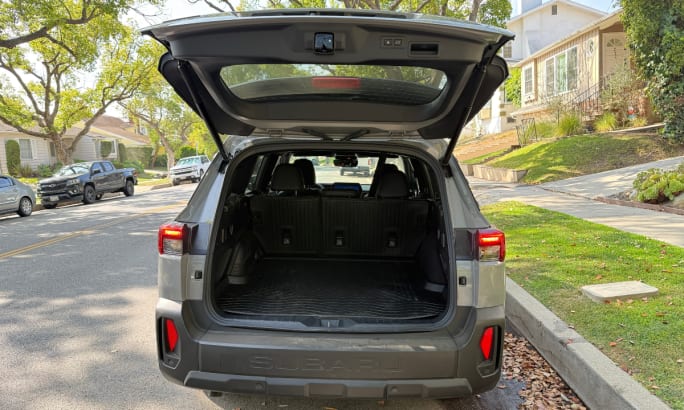
The redesigned 2026 Subaru Outback provides 34.6 cubic feet of cargo space behind the rear seats and 80.5 cubic feet with the 60/40-split rear seat folded, up from 32.6 and 75.6 cubic feet, respectively, in the 2025 model.
Chris Brown
Where the Outback Competes
The Outback now competes more directly with conventional crossovers and SUVs, including the Jeep Grand Cherokee, Hyundai Santa Fe, Chevrolet Blazer, Mazda CX-50 and Toyota RAV4.
The Chevrolet Equinox and GMC Terrain are smaller, but their pricing and prevalence in corporate fleets also make them relevant selector-list alternatives. The Volvo V60 Cross Country could enter the discussion as a premium upgrade, although its price moves it into another tier.
For fleets, the Outback’s capability story is not about off-roading but more about standard AWD for snow and rain, ground clearance for poorly maintained roads, and driver confidence in difficult climates.
Smooth Ride, Stronger Than Its Numbers Suggest
Our Premium test vehicle used Subaru’s naturally aspirated 2.5-liter Boxer four-cylinder engine, producing 180 hp and 178 lb.-ft. of torque. It is paired with Subaru’s Lineartronic continuously variable transmission and standard Symmetrical All-Wheel Drive.
The transmission can simulate eight fixed ratios in its manual mode, but it is not a conventional eight- or 10-speed automatic.
On paper, the engine’s output looks modest for a vehicle weighing more than 3,700 pounds. From the driver’s seat, however, the Outback felt more responsive.
We drove it from Los Angeles to Big Bear, giving the powertrain a good test on the steep climb into the San Bernardino Mountains. The Outback attacked the grade with confidence, without torque lag or noticeable gear switches. The CVT kept the engine in the useful part of its power band, and the vehicle never felt overwhelmed.
The larger impression was the ride quality. The Outback was exceptionally smooth and remained comfortable over a long day of driving, which should appeal to high-mileage fleet drivers.
Fleets seeking more power can move to the 2.4-liter turbocharged engine in the Limited XT, Touring XT or Wilderness. That engine produces 260 hp and 277 lb.-ft. of torque. It also increases maximum towing capacity from 2,700 to 3,500 pounds.
Interestingly, the standard 2026 Outback’s 2,700-pound rating is the same as that of our four-cylinder 2008 model. Our trailer’s dry weight was 2,000 lbs. The strain ultimately took a toll.
Competitive Fuel Economy, for a Gas Engine
The Outback Premium is EPA-rated at 25 mpg city, 31 highway and 27 combined. That is respectable for a vehicle of this size with standard AWD.
That fuel economy compares favorably with larger gas-powered competitors such as the Santa Fe and Grand Cherokee, but is less compelling against growing hybrid alternatives. The 2026 RAV4 is now hybrid-only (if you can put up with less space), while Mazda offers a CX-50 Hybrid and Subaru offers a Forester Hybrid.
The 18-gallon fuel tank reduces fuel stops for high-mileage drivers.
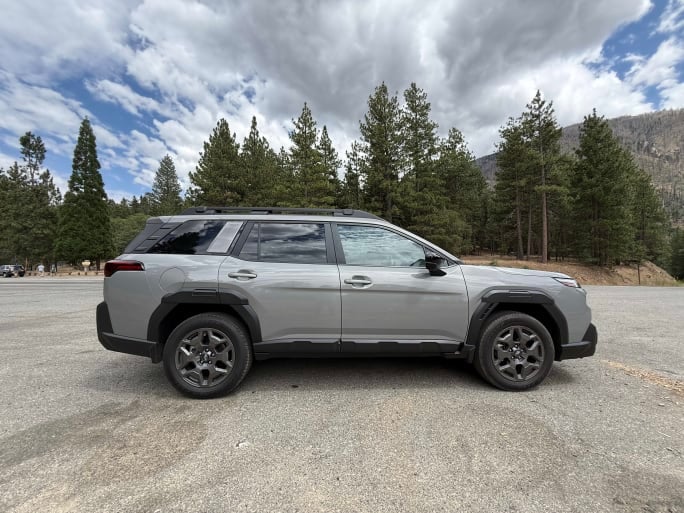
The 2027 Subaru Outback feels at home in the valet line or in the San Bernardino Mountains.
Chris Brown
An Understated and Functional Cabin
The Premium interior is minimalist, without bright trim or oversized design flourishes, save for the door light projecting Subaru branding on the ground.
The original Subaru owner in our family (my wife) appreciated that Subaru retained tactile controls for frequently used functions. My family’s immediate complaint in many other vehicles is how almost all functions — like opening a glove box — have moved to the touchscreen.
The 12.1-inch multimedia display is joined by a 12.3-inch digital instrument cluster, wireless Apple CarPlay and Android Auto, available navigation and a wireless charging pad.
The technology itself is functional but does not feel as contemporary as competitors’ systems. But we’ll take ease of use and reduced distraction over novelty.
When the Safety System Becomes a Backseat Driver
The Outback’s safety equipment includes Subaru’s DriverFocus Distraction Mitigation System, which uses a camera to monitor the driver’s eyes and head position. It can issue “Keep Eyes on Road” and “Take a Break” warnings when it detects possible distraction or drowsiness.
The intent is difficult to fault, particularly for fleets concerned about distracted driving and fatigue. I’d just call it a bit overprotective.
Good news; the 2026 Outback Premium does not require an option package to obtain its important collision-avoidance and driver-assistance systems.
Where the Outback Fits on a Fleet Selector
The Outback Premium starts at $34,995, or $36,445 with destination. That places it above a Forester Premium, Mazda CX-50, Chevrolet Equinox AWD and GMC Terrain AWD, but below comparably configured versions of the Santa Fe and Grand Cherokee.
Our River Rock Pearl tester carried a total sticker price of $41,238. Its options included a $2,270 package with navigation, wireless charging, a moonroof, heated steering wheel and rain-sensing wipers.
It also included a $751 mirror package and more than $1,300 in appearance and cargo-protection accessories.
The most difficult comparison may come from inside the Subaru showroom.
The Forester is less expensive, comes standard with AWD and uses the same 180-hp 2.5-liter engine. It is easier to maneuver and provides enough room and capability for many fleet assignments. A Forester Premium starts about $3,000 below the Outback Premium.
The Outback comes back with more passenger volume, more maximum cargo capacity, and a composed highway ride.
Of course, total cost of ownership should be accounted for. The previous-generation 2025 Outback Base won Vincentric’s Best Fleet Value in America award for midsize SUVs (the latest year of the award). It recorded the lowest depreciation and insurance costs in its class and won all lifecycle scenarios evaluated.
Outback Is Comfortable in its Place
Subaru continues to market the Outback around outdoor adventure, and the vehicle can support that image. Standard AWD, X-Mode, hill-descent control and 8.7 inches of ground clearance provide legitimate capability in snow, heavy rain, on unpaved roads and at lightly developed job sites.
While corporate fleets won’t ask drivers to tackle serious trails, Outback will deliver confidence in difficult climates and changing road conditions.
The Outback will never be confused as a “pick-me” vehicle. It knows its place, and that is its strength with buyers — in the mountains, carrying work gear, or pulling up to the valet at a nice restaurant.
The Outback may look more like an SUV now, but it has not abandoned the qualities that made that 2008 wagon so easy to live with. And I’m a lot wiser now to know the difference!
More Blog Posts
Why Should Fleets Choose the 2026 Mercedes-Benz GLC 300 SUV?
The GLC 300 offers corporate fleets attainable luxury, comfort, and practicality that transitions seamlessly to family duty.
Read More →
Fleet Review: Volvo EX90 & the Software-Defined Vehicle
Volvo’s new three-row electric SUV is designed for the corporate (and family) class.
Read More →
Fleet Review: Mercedes-Benz EQB 250+
With a reasonable entry point and the refinement of a Mercedes, The EQB 250+ defines “practical luxury” for fleets.
Read More →
Fleet Review: Volvo XC60 & XC90 PHEVs
Volvo’s XC60 and XC90 plug-in hybrid models are stylish, safe, sustainable — and surprisingly fast.
Read More →
Fleet Review: Volvo XC40 Recharge
The Volvo XC40 Recharge offers fleets the familiar premium Volvo experience, electrified.
Read More →
The 2023 Ford Mustang Mach-E Offers a Smooth Ride for New EV Drivers
A look at the bells and whistles on the car, plus how it drives, from the perspective of someone who’s never driven an EV.
Read More →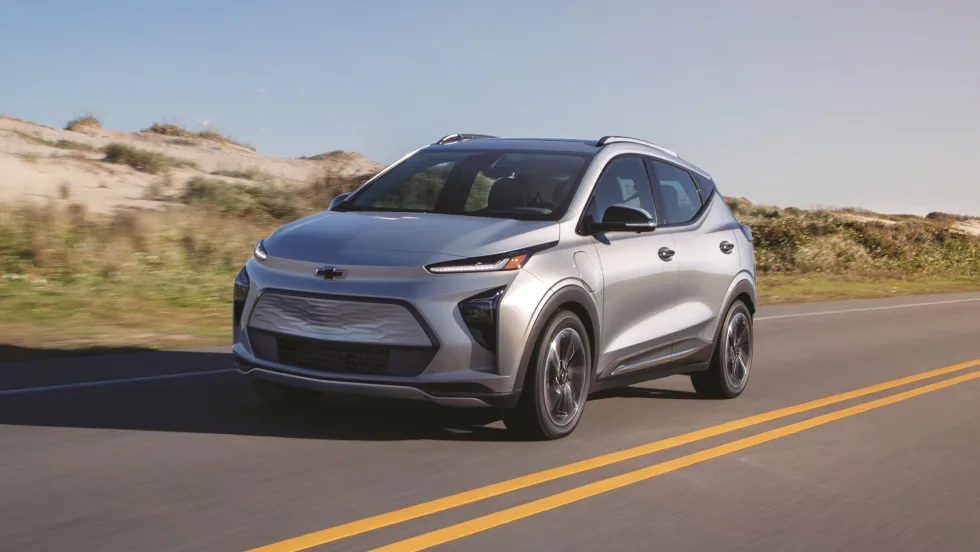
The 2022 Bolt EUV Lowers TCO While Meeting Sustainability Goals
The 2022 Bolt EUV expands Chevrolet’s EV lineup as a utility-type vehicle with a range of 250 miles on a full charge. It will be sold alongside the 2022 Bolt EV model. The Bolt EUV is approximately six inches longer than the Bolt EV.
Read More →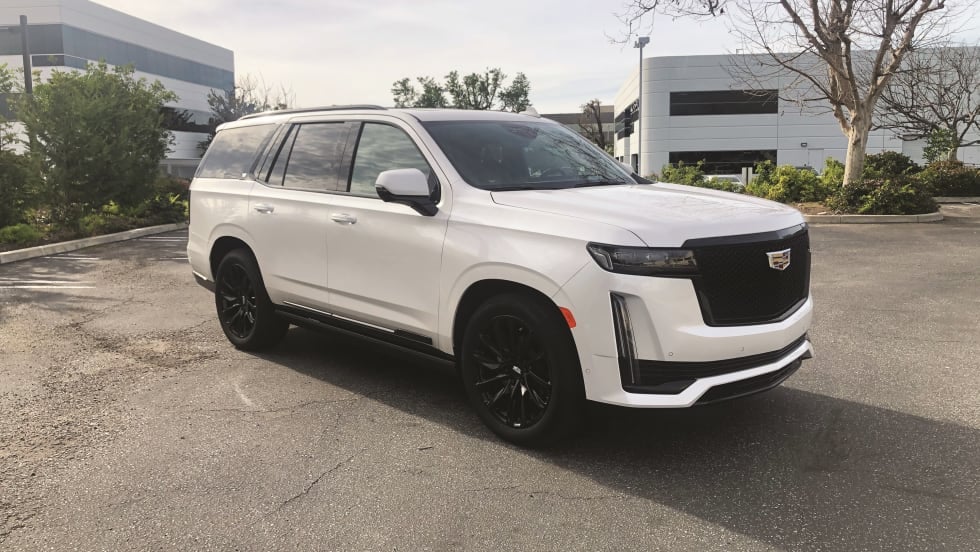
2021 Cadillac Escalade is C-Suite Material
The 2021 Cadillac Escalade 4WD Sport Platinum is the most expensive model sold by General Motors. But its brand cachet makes it the ideal pinnacle fleet vehicle to help retain high-value senior execs with a high-value luxury SUV.
Read More →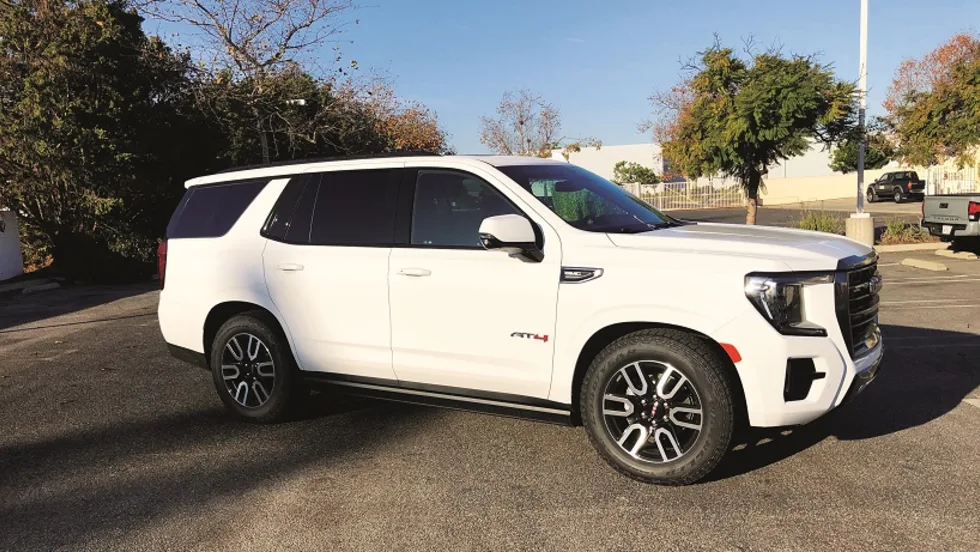
2021 GMC Yukon AT4 Excels as an Off-Road Crew Vehicle
Powered by a 5.3L V-8, generating 355 horsepower and 383 lb.-ft. of torque, the engine is paired to a10-speed automatic transmission. It is ideal for off-road work applications and can transport an eight-person work crew with tools and equipment.
Read More →
2020 Chevrolet Bolt EV Offers a Cure to Range Anxiety
The 2020 model-year Bolt EV increases its driving range on a full charge to an EPA-estimated 259 miles, which is up by 21 miles over the previous model. In addition, there is an impressive array of driver-assistance technologies.
Read More →