




Fleet Review: Volvo EX90 & the Software-Defined Vehicle
Volvo’s new three-row electric SUV is designed for the corporate (and family) class.
March 25, 2025


The EX90 is Volvo’s first model using new safety tech that understands driver awareness and reacts accordingly.
Photo: Chris Brown
7 min to read
Can we now call electric premium three-row SUVs a “mini segment?” Why not. What started with the Tesla Model X has grown into options like the Mercedes EQS, Cadillac Escalade IQL, Cadillac Vistiq (coming soon), Lucid Gravity, Rivian R1S, and Volvo EX90.
Electric premium three-row SUVs will never be the most prevalent category on a fleet selector, but they can still fit multiple fleet needs. "Premium executive transport” first comes to mind. Think executive and VIP transfers, a premium shuttle for clients and partners between offices, hotels, and airports, or part of a hospitality fleet for high-end hotels and resorts.
For the EX90, Volvo reports inquiries from rideshare and companies that are migrating from premium PHEVs to EVs near the same price point.
What makes the EX90 stand out in this new category?
The EX90 carries Volvo’s safety credentials and the brand’s Scandinavian design aesthetic of form following function. It’s executive class without trying too hard. And two new tech advancements benefit drivers beyond what you can see. (More later.)
Not all corporate fleet buyers are ready to pick the electric EX90 over a traditional gas-powered premium SUV. But it’s an easy switch from the Volvo XC90 for those who are ready and where it aligns with corporate values and ESG goals.

In the EX90, all climate control and media settings have migrated to the touchscreen.
Photo: Chris Brown
Pricing, Specs & Upgrades
The Volvo EX90, released as a 2025 model in the fourth quarter of 2024, uses twin motors and a 111-kWh battery for a top range of 300 to 310 miles, depending on wheel size. The EX90 comes in two trim levels: Twin Motor Electric Plus and Twin Motor Electric Ultra.
I drove the Plus, which produces 402 hp and 568 lb.-ft. of torque. No, the base Plus isn’t a speed demon like the Tesla Model Y or Rivian R1T, but it doesn’t need to be for fleets.
Retail drivers needing the extra oomph can upgrade either the Plus or Ultra trims to the Twin Motor Performance. An extra $5k gets you 510 hp and 671 lb.-ft. of torque but doesn’t compromise range — the car can decouple the rear motor when it’s not needed for power.
With a base MSRP of $79,995, the EX90’s price tag alone puts it in a rarefied fleet niche. That said, it’s still at the low end of the cost totem pole compared to its segment competitors. (I’ll look forward to reviewing the more mass-market 2025 Volvo EX30 when I can get behind that wheel.)
Built in Volvo's South Carolina plant, the EX90 is eligible for the federal $7,500 incentive, which was still available as of this post.
Options include upgraded audio, running boards, ventilated front seats, a sunshade, and second-row captain’s chairs. For an extra $5k you can upgrade to the Ultra package, which delivers better suspension, 21-inch wheels, seat upgrades, and ground lighting.
Fleets need not bother with any of the extras, except maybe the captain’s chairs for $500 more. The base model has all Volvo’s tech goodies, safety features, and interior refinement.
Passenger & Cargo Volume
The EX90 can be configured for seven occupants with a second-row bench seat or six occupants with the captain’s chairs. The latter offers easy access to the back row, though both the bench seats and captain’s chairs have a button that electronically folds the second row.
The third row has 31.9 inches of legroom, on par with its luxury three-row competitors but smaller than the full-size SUV segment that includes Chevrolet Tahoe and Ford Expedition. I’m 5’ 8” and fit back there reasonably well, though admittedly would prefer to avoid it in a business environment or a longer trip. (Those AYSO weekend soccer warriors? Good to go!)
For drivers moving from the XC90, the EX90 offers similar leg and headroom across all three rows. And EX90 provides equal (or slightly better) overall cargo capacity, as its dedicated EV platform allows a more seamless packaging of the battery.

The EX90’s interior dimensions rival its luxury competitors, and the standard panoramic glass roof gives it an open feel.
Photo: Chris Brown
Feel Behind the Wheel
Sliding behind the wheel, the EX90 exudes Volvo’s trademark understated sophistication. Drivers wanting to choose between five different entry sounds or lighting effects can go elsewhere.
The standard panoramic glass roof gives the vehicle an open feel. The standard upholstery is called Nordico, made from recycled plastics and pine oil. Forget leather seats.
Everything happens through the center console 14.5-in. digital touchscreen. If you prefer tactile control of in-cabin functions, the EX90 will take some getting used to. All climate control and media settings have migrated to the touchscreen, including opening the glovebox. In a nod to safety, a physical defroster button is all that remains.
Thankfully, the touchscreen has become more intuitive. It uses a new contextual operating system that automatically changes the screen view based on driving conditions, which would decrease the number of screen touches and scrolls to get to the function.
It’s really about training drivers to use Google Digital Assistant for in-cabin functions. Drivers can use voice commands to set a destination, play music, control the temperature, and send messages hands-free.
Around back, the touchless rear hatch is a nice feature, but for me, it often required a few leg sweeps to make it work. (A “kick” seemed to work better.)

Volvo's Scandinavian aesthetic of form following function is evident in how storage space is blended with vehicle operations.
Photo: Chris Brown
Digital Keys: Plan in Advance
There are three key options: the Volvo key tag, Volvo card, and digital key on your mobile device.
The digital key works in conjunction with the Volvo app, though there’s no need to open the app. The car will unlock when your phone is close to the vehicle, and when you’re inside, the vehicle is already on. The car shuts off and locks upon exiting.
The digital key can be transferred to another driver remotely and temporarily, which can come in handy in executive transport situations or any trip that requires two drivers.
The card is similar to the tap functionality of credit cards; you place it against the door handle to open the vehicle. It’s a good idea to keep the card in a wallet as a backup for a valet.
The key tag is the closest thing to a fob, but it’s not a fob. It’s a small block that connects via short-range wireless communication. It needs to be charged, which is possible via the wireless pad in the car.
Some fleet managers find digital keys problematic as they are prone to user errors, phone mishaps, and software glitches — more than annoyances in fleet usage. While Volvo has redundancies, fleet managers and drivers need to know their options and be prepared.
Speaking of the growing prevalence of phone apps for your car: Controlling vehicle functions remotely is becoming a key part of safety and efficiency and is quasi-essential for EV fleets.
In addition to the digital key, the Volvo app handles cabin preconditioning, monitors battery charge and charging progress, and facilitates charging payments. It also sends maintenance alerts and door lock status.
Human-Centric Safety
Now to those tech advancements not visible to the naked eye: Volvo used the EX90 to launch two new systems that demonstrate the evolution of vehicle safety and the software-defined vehicle. As I didn’t have direct (or discernable) experience behind the wheel with either, I engaged with a Volvo product specialist to learn more.
The first is the Driver Understanding System.
With any newer vehicle these days, do you get annoyed by all the lights and dings when you’re just trying to back out of the driveway? I worry that the notifications a) dull a driver’s situational awareness and b) would eventually just be ignored, negating their benefit.
Volvo is addressing this with tools to understand drivers’ awareness of their environments and intervene as necessary.
Volvo’s Driver Understanding System uses two cameras to monitor eye movements and facial expressions, analyzing eye closures and signs of distraction, drowsiness, or impairment.
If the system detects that the driver’s state isn’t optimal, it goes into alert mode, which starts with subtle signals that escalate to more pronounced warnings. If necessary, the system will then engage active safety controls that would slow the vehicle’s speed, activate hazard lights, and even bring the car to a stop.

A benefit over traditional refueling? The ability to initiate and pay for charging automatically with Volvo's Plug and Charge.
Photo: Chris Brown
What Can Core Computing Do for You?
The Volvo EX90 is one of the first vehicles to feature core computing, the second big tech enhancement. In this system, core computing replaces traditional distributed ECUs (electronic control units) with a centralized computing framework.
Instead of dozens of separate ECUs controlling different vehicle functions, such as infotainment, safety, and powertrains, the EX90 consolidates them into one consolidated, super-fast system. It’s powered by an Nvidia “system-on-a-chip” that is capable of performing over 250 trillion operations per second.
This reduces latency, facilitates speed to market for new features, and produces more seamless over-the-air (OTA) updates. Yeah, expect plenty of those during the vehicle's lifetime.
It’s not just a Volvo thing; this is a major development in automotive technology. My test EX90 didn’t have Apple CarPlay, but it was released later, on February 10.
Other cool EX90 features to come include bidirectional charging, ADAS features, and LiDAR, which will enable autonomous driving capabilities, are also planned.
The new core computing system is just another leap forward for the “software-defined vehicle.” For fleets, this update ability could help with resale value and driver satisfaction over a longer hold period.
Subscribe to Our Newsletter
More Blog Posts

Fleet Review: 2026 Outback Is More SUV, Still an Outback
The redesigned Outback trades its station-wagon profile for a roomier, more conventional SUV shape while retaining the comfort and safety technology that give it fleet appeal.
Read More →
Why Should Fleets Choose the 2026 Mercedes-Benz GLC 300 SUV?
The GLC 300 offers corporate fleets attainable luxury, comfort, and practicality that transitions seamlessly to family duty.
Read More →
Fleet Review: Mercedes-Benz EQB 250+
With a reasonable entry point and the refinement of a Mercedes, The EQB 250+ defines “practical luxury” for fleets.
Read More →
Fleet Review: Volvo XC60 & XC90 PHEVs
Volvo’s XC60 and XC90 plug-in hybrid models are stylish, safe, sustainable — and surprisingly fast.
Read More →
Fleet Review: Volvo XC40 Recharge
The Volvo XC40 Recharge offers fleets the familiar premium Volvo experience, electrified.
Read More →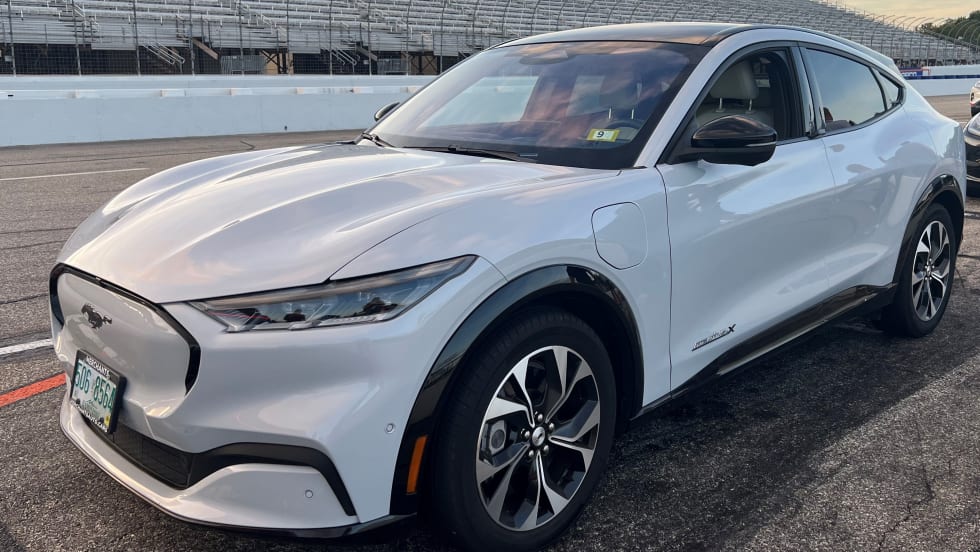
The 2023 Ford Mustang Mach-E Offers a Smooth Ride for New EV Drivers
A look at the bells and whistles on the car, plus how it drives, from the perspective of someone who’s never driven an EV.
Read More →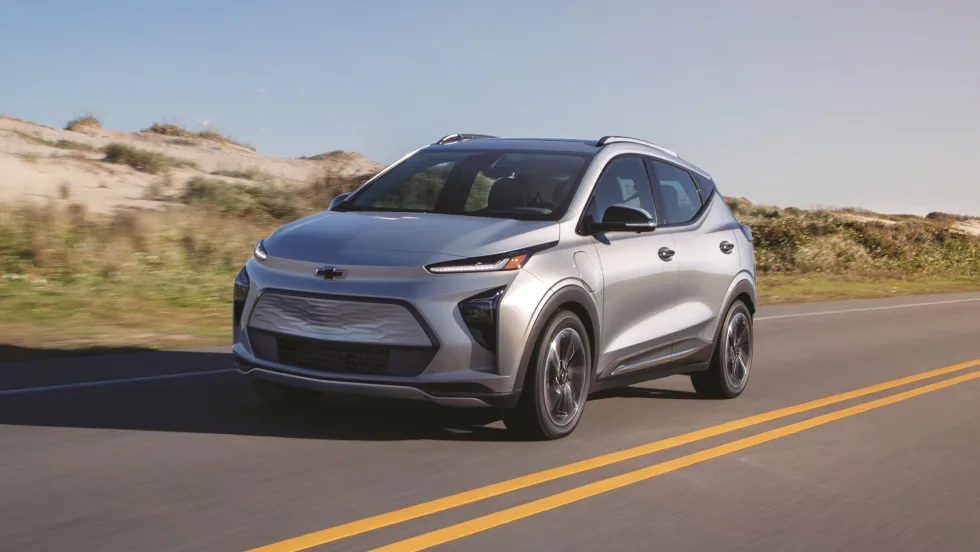
The 2022 Bolt EUV Lowers TCO While Meeting Sustainability Goals
The 2022 Bolt EUV expands Chevrolet’s EV lineup as a utility-type vehicle with a range of 250 miles on a full charge. It will be sold alongside the 2022 Bolt EV model. The Bolt EUV is approximately six inches longer than the Bolt EV.
Read More →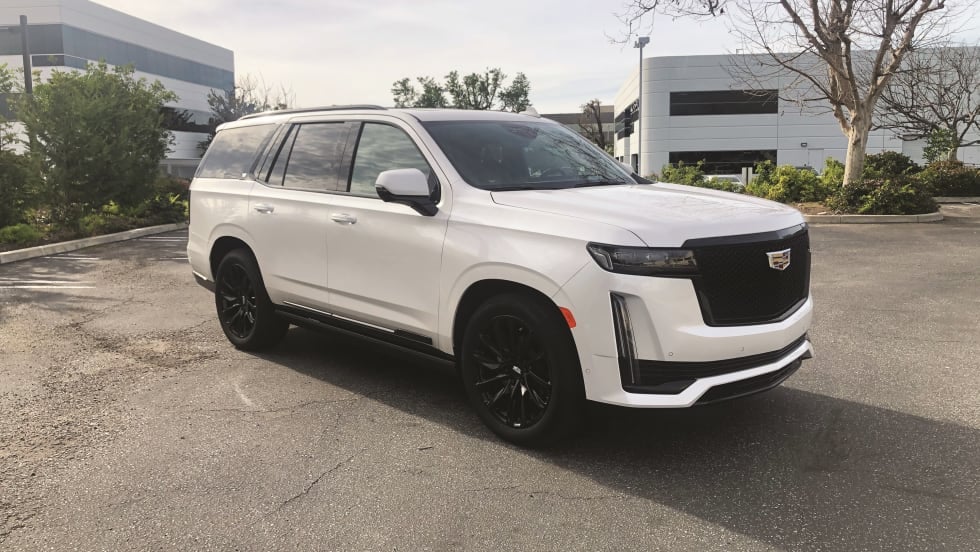
2021 Cadillac Escalade is C-Suite Material
The 2021 Cadillac Escalade 4WD Sport Platinum is the most expensive model sold by General Motors. But its brand cachet makes it the ideal pinnacle fleet vehicle to help retain high-value senior execs with a high-value luxury SUV.
Read More →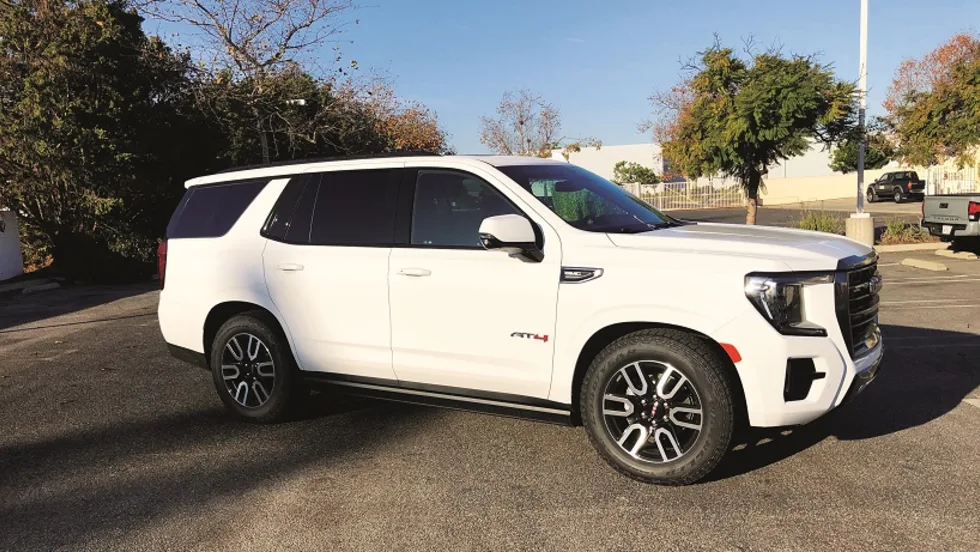
2021 GMC Yukon AT4 Excels as an Off-Road Crew Vehicle
Powered by a 5.3L V-8, generating 355 horsepower and 383 lb.-ft. of torque, the engine is paired to a10-speed automatic transmission. It is ideal for off-road work applications and can transport an eight-person work crew with tools and equipment.
Read More →
2020 Chevrolet Bolt EV Offers a Cure to Range Anxiety
The 2020 model-year Bolt EV increases its driving range on a full charge to an EPA-estimated 259 miles, which is up by 21 miles over the previous model. In addition, there is an impressive array of driver-assistance technologies.
Read More →