




Fleet Managers are Suffering from “E-Mail Stress”
More than a third of all employees – 34 percent – feel stressed by the volume of e-mails they receive and the perceived obligation to respond quickly. Fleet managers are no exception to “e-mail stress.”
More than a third of all employees – 34 percent – feel stressed by the volume of e-mails they receive and the perceived obligation to respond quickly, according to a recent study by a team of academics from Glasgow and Paisley universities in Scotland. Fleet managers are no exception to “e-mail stress.” Although a powerful tool, fleet managers nonetheless have mixed feelings about e-mail.
“I believe e-mail has more negatives than positives,” said Shelly Lofgren, fleet manager – North America for Honeywell. Among the negative aspects cited by Lofgren are junk mail/spam, over-communicating by adding recipients who do not need to be copied, and misinterpretation of the tone of the message. “A simple one sentence response, because we are in a hurry to get to the next e-mail, can be misinterpreted because the recipient reads more into the message than what was intended,” said Lofgren.
However, the universal complaint is the ever-increasing volume of e-mails. “I receive an average of 60 e-mails a day and I only have a 200-car fleet,” said Debbie Ricciardelli, associate director, sales operations for Esprit Pharma. Another fleet manager, wishing to remain anonymous, said: “At any given time, I have about 400 unanswered e-mails in my inbox waiting to be answered. This requires me to set a priority in both reading and answering e-mails. This is the way of life for most fleet managers. I do not see it changing any time soon.” Responding to e-mails now extends beyond normal work hours. “Vacations now include a laptop or BlackBerry to keep up with e-mail,” said Lofgren. “Otherwise, you have 1,000 e-mails to read upon your return.”
Tired, Frustrated, and Unproductive
More than 30 billion e-mails are sent worldwide each day. Increasingly, employees say they are swamped with the never-ending tide of e-mail messages. The Glasgow/Paisley study concluded that trying to keep up with a stream of incoming mail interrupts normal work and leaves employees tired, frustrated, and unproductive. “You would think with all the technology and paperless systems we have, our jobs would be getting easier, with less paperwork and more free time to work on making our jobs more efficient,” said Jay Drescher, corporate fleet manager for Texas Industries. “But it is going in the opposite direction.”
A concern is that high e-mail volume creates information over-load; however, some fleet managers welcome it. “I would rather have more information than not enough when it comes to fleet,” said Vinnie Fugaro, purchasing agent for Henkel of America.
Fleet managers also complain that e-mail makes drivers lazy. “I have built a fleet Web site that answers most fleet-related questions,” said Phil Schreiber, fleet manager, North America for Otis (Elevator) Co. “Instead of using it, drivers send e-mails asking for information that is available at their finger tips on the Web site. I receive about 100 e-mails a day, on top of 30-50 phone calls a day.” Agreeing is Sue Fensky, fleet manager for Travelers Insurance Companies, Inc. “E-mail makes it too easy to fire off a question rather than take the time to look up the answer in the company fleet policy.”
Decrease in Time-Consuming Phone Calls
However, even critics agree that e-mail has revolutionized how fleets are managed. “I love e-mail,” said Ed Potkay, fleet and capital development manager for Cumberland Farms. “It is one of the most productive tools in our arsenal. It helps improve efficiency and boost productivity. Now, with PDAs, we can leave our laptops at the office and still have access to one of the most powerful communications tools we’ve ever had in our business.”
Although everyone complains about the high volume of e-mails, there is the corresponding benefit of a decrease in phone calls. “Do I get too many e-mails? Yes. But it’s better than getting phone calls,” said Fensky. “I prefer e-mail over the phone. When drivers call, they tend to give more detail than is needed in order to answer the question. It is less time-consuming to respond to an e-mail.”
E-mail offers other advantages over phone communication. “With e-mail, you don’t have to play phone tag, listen to long drawn-out voicemail messages, or rely on your note-taking ability; that is, of course, if you actually manage to speak to someone on the first try,” said Chris Amos, commissioner of equipment services for the City of St. Louis, Mo. “E-mail gives you the opportunity to develop an intelligent reply without the pressure of remembering all the supporting facts on the spot during a live conversation.”
The YouTube & MySpace Generation of Drivers
There is a generational preference to e-mail. “For me, e-mail is still a ‘new’ technology, but many of my drivers don’t know life without it,” said Tom Krause, purchasing/fleet manager for West Bend Mutual Insurance Co. “It is no surprise that some of our younger drivers (and a growing number of older drivers) prefer to communicate almost exclusively via e-mail,” added Krause.
The impact of electronic communication promises to become more pronounced as new applications are integrated into traditional e-mail. If you think today’s environment is demanding, just wait until drivers start sending you video e-mails in the not-too-distant future. The YouTube generation of drivers is now upon us.
Let me know what you think.
More Blog Posts

Fleets Want Trust Restored with Suppliers
During this period of ongoing supply constraints, the trust that fleet managers had with OEMs, upfitters, and dealers has been strained. Fleet managers say they have had too many experiences over the past three years coping with erroneous information, adjusting to multiple price increases, and feeling betrayed by inadequate transparency from suppliers.
Read More →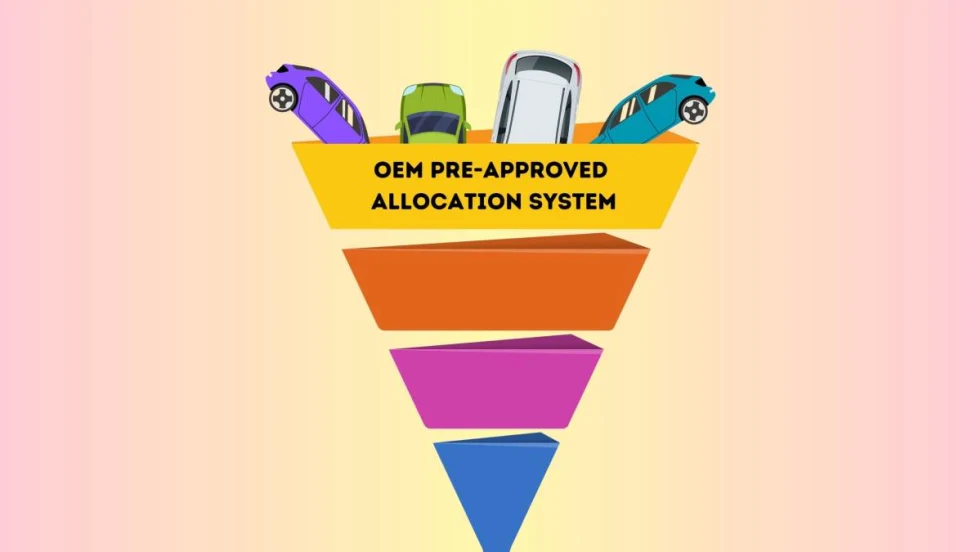
Scheduled Replacement Cycles Are Becoming a Distant Memory
The ongoing difficulty in sourcing replacement vehicles is forcing companies to extend the service lives of vehicles that are unable to be replaced, which, inevitably, increases unscheduled maintenance expenses.
Read More →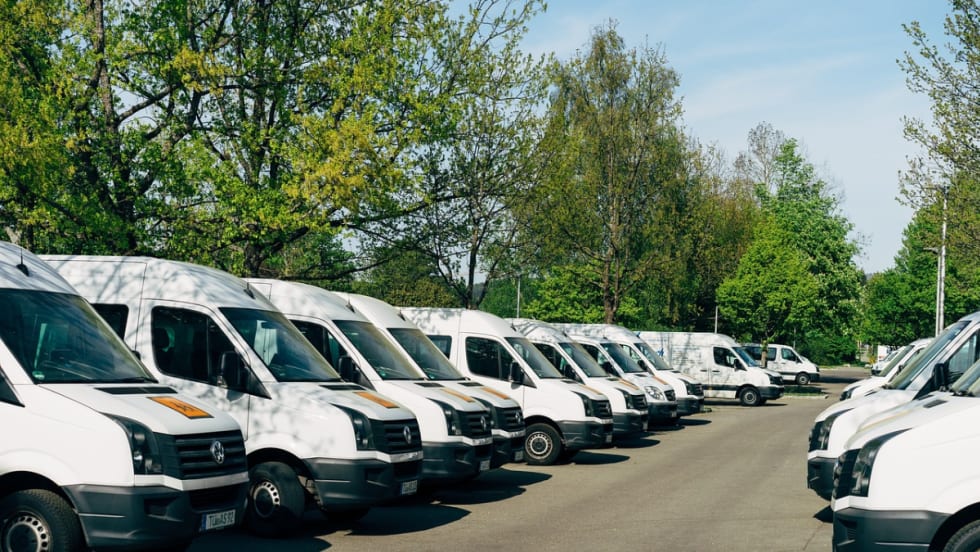
Fleet Simplification is the Antidote to Asset Variability
Fleet simplification identifies asset functions to uncover commonality among the equipment and assets. Simplification increases operational efficiency as end-users become accustomed to the controls, displays, and operation of less diverse units.
Read More →
The Dangers of Static Fleet Policies
A fleet policy is a living document, flexible enough to adapt to evolving business priorities, developing industry trends, and changing industry best practices and standards.
Read More →
Short-Term vs. Long-Term Cost Reductions
Corporate procurement staff are often driven by short-term, immediate cost reductions. However, a longer perspective to soft cost savings is critical because fixating on short-term results will hurt a company in the long run.
Read More →
Uptick in Unscheduled Maintenance Increasing Vehicle Downtime
Fleet data analysis can identify recurring downtime issues. It’s important to determine the root causes of downtime so procedures can be developed to minimize such problems.
Read More →
Eliminate Needless Curb Weight to Maximize ICE & EV Efficiencies
Vehicle weight relates directly to fuel economy. In today’s era of electrification, there is also a direct correlation between vehicle weight and battery range.
Read More →
Tech Dependence Risks Dumbing Down Fleet Manager Expertise
The line between creative thinking and problem solving and doing what the data indicates is thin. To lead in fleet management, you need to balance understanding the fundamentals and embracing what smart technology offers.
Read More →
Leverage the Synergy of Safe Driving to Achieve Sustainability and Cost Goals
Safe driving, emission reductions, and cost containment can all be achieved at the same time.
Read More →
The Playbook for Fleet Manager Success
There are many paths to success — most of them involve being flexible, open-minded, and willing to learn.
Read More →