




Extended Cycling Increases Truck Fleet TCO
A truck’s total cost of ownership (TCO) covers a specific range of expense variables, regardless of the make or model. The four lifecycle categories that influence TCO are fixed costs, operating expenses, incidental costs, and depreciation/resale value. A key factor that drives these lifecycle categories is a vehicle’s service life.

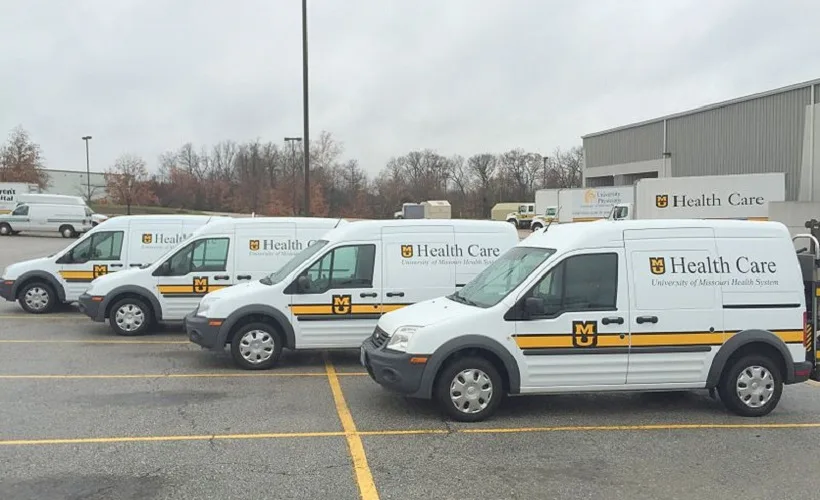
To keep the fleet within a manageable age, a consistent replacement budget must be maintained. This is especially true for vocational fleets that require reliable vehicles to complete revenue-generating jobs.
Photo courtesy of MobiusDaXter via Wikimedia Commons.
Recently, I conducted a survey of several hundred fleet managers to identify emerging industry trends. One recurrent theme expressed by fleet managers was their concern that the total cost of ownership (TCO) is starting to experience upward pricing pressures. A truck’s TCO covers a specific range of expense variables, regardless of the make or model. The four lifecycle categories that influence TCO are fixed costs, operating expenses, incidental costs, and depreciation/resale value. A key factor that drives these lifecycle categories is a vehicle’s service life.
Impact on Fixed Costs
Depreciation is a fleet’s No. 1 expense. Typically, the more expensive the asset, the longer it will be kept in service, especially units upfitted with expensive auxiliary equipment. For example, service and utility fleets often have the highest capitalized costs, primarily due to upfitting, and tend to be those companies that keep their vehicles in service the longest.
To keep the fleet within a manageable age, a consistent replacement budget must be maintained. This is especially true for vocational fleets that require reliable vehicles to complete revenue-generating jobs. When downtime occurs it results in the lost productivity of a revenue generator. Companies that rely on trucks to operate their businesses will tell you it runs thousands of dollars per hour for a single truck being down for unexpected reasons. When unexpected downtime occurs there are direct costs, such as lost revenue, towing charges, temporary rentals, and overtime, along with indirect costs such as reduced employee productivity and morale.
Impact on Operating Costs
Longer service lives result in higher fuel consumption, which increases operating costs. As a truck ages, the performance of the vehicle deteriorates, degrading fuel economy. Industry research suggests older trucks can lower fuel economy by 1% or more per year.
In addition, long-in-the-tooth trucks typically need repairs that require longer turnaround times, resulting in longer driver downtime, and are more expensive to return to service. Opinions vary as to the degree of financial impact of extended cycling, but there is one certainty, which no one disputes — maintenance expenses will go up. If they didn’t, the OEMs would not limit new-vehicle warranties by years and miles.
Other negative factors resulting from extended replacement cycling include:
Company Image. The condition of a company’s vehicle is often the first impression a customer or prospect may get of your company, which will be negatively influenced if the vehicle has body damage, rust, or peeling decals. If a company markets itself as a high-quality repair business and the service van shows up with body damage and rust, the customer may relate the presentation of the vehicle to an implied lower quality of repair.
Decreased Employee Morale: A good rule of thumb is that the older vehicle, the more the problems. Breakdowns on the road occur with greater frequency with older vehicles. Not only is the service of the truck affected, but it also affects the operator. If employees aren’t feeling good about the equipment they’re using, or if the vehicle is unreliable, that is going to start to have a negative effect on productivity and morale, which may mean drivers will let their guard down in caring for their vehicles. This, in turn, creates a snowball effect, which can drive up repair costs. As the frequency of repairs increases, many employees perceive the vehicle as a nuisance and do not care for the vehicle’s internal and external condition the same as they would a newer model. The direct result is a diminished resale value due to below-average vehicle condition.
Meeting Tomorrow’s Needs. When truck assets are kept in service for a decade or longer, these assets may grow obsolescent and not optimal for tomorrow’s business. A regular replacement schedule allows you to continuously fine-tune fleet strategy so assets conform to corporate goals, keep pace with industry trends, and are capable of taking advantage of future business opportunities.
Impact of Extended Cycling
As study after study shows, extended replacement cycles have the unintended consequence of greater long-term expenses, degradation in worker productivity, reduced resale values, and higher operating costs — all four of which contribute to a higher TCO.
Let me know what you think.
More Blog Posts

Fleets Want Trust Restored with Suppliers
During this period of ongoing supply constraints, the trust that fleet managers had with OEMs, upfitters, and dealers has been strained. Fleet managers say they have had too many experiences over the past three years coping with erroneous information, adjusting to multiple price increases, and feeling betrayed by inadequate transparency from suppliers.
Read More →
Scheduled Replacement Cycles Are Becoming a Distant Memory
The ongoing difficulty in sourcing replacement vehicles is forcing companies to extend the service lives of vehicles that are unable to be replaced, which, inevitably, increases unscheduled maintenance expenses.
Read More →
Fleet Simplification is the Antidote to Asset Variability
Fleet simplification identifies asset functions to uncover commonality among the equipment and assets. Simplification increases operational efficiency as end-users become accustomed to the controls, displays, and operation of less diverse units.
Read More →
The Dangers of Static Fleet Policies
A fleet policy is a living document, flexible enough to adapt to evolving business priorities, developing industry trends, and changing industry best practices and standards.
Read More →
Short-Term vs. Long-Term Cost Reductions
Corporate procurement staff are often driven by short-term, immediate cost reductions. However, a longer perspective to soft cost savings is critical because fixating on short-term results will hurt a company in the long run.
Read More →
Uptick in Unscheduled Maintenance Increasing Vehicle Downtime
Fleet data analysis can identify recurring downtime issues. It’s important to determine the root causes of downtime so procedures can be developed to minimize such problems.
Read More →
Eliminate Needless Curb Weight to Maximize ICE & EV Efficiencies
Vehicle weight relates directly to fuel economy. In today’s era of electrification, there is also a direct correlation between vehicle weight and battery range.
Read More →
Tech Dependence Risks Dumbing Down Fleet Manager Expertise
The line between creative thinking and problem solving and doing what the data indicates is thin. To lead in fleet management, you need to balance understanding the fundamentals and embracing what smart technology offers.
Read More →
Leverage the Synergy of Safe Driving to Achieve Sustainability and Cost Goals
Safe driving, emission reductions, and cost containment can all be achieved at the same time.
Read More →
The Playbook for Fleet Manager Success
There are many paths to success — most of them involve being flexible, open-minded, and willing to learn.
Read More →