




Are We Losing Control Over Fleet Management?
Ask yourself, how much control do you really have over the following market conditions?
Ask yourself, how much control do you really have over the following market conditions?
Deteriorating resale values for fleet vehicles.
Skyrocketing fule prices (that just as rapidly decrease in price.) The answer,unfortunately, is that our control is limited. The best we can do is mitigate the impact of the adverse market conditions. Although restrained by lower interest rates and acquisition costs, vehicle lifecycle costs threaten to increase since depreciation represents approximately 65 percent of fixed fleet costs and fuel represents about 60 percent of operating costs. As the below chart illustrates, we need to readjust our lifecycle forecasting models to incorporate real-world resale values.
Compounding this, there continues to be extreme pressure placed upon fleet managers by senior management to control (read, lower) fleet costs. Fleet managers are increasingly being asked to measure, report, and justify their fleet costs. Even when budgets are fine-tuned, the wild swings in fuel prices can make it difficult to not only stay within a current budget,but also to project future budgets. Some fleets are reorganizing due to budget constraints, which includes outsourcing more processes and updating policies to incorporate new cost controls.
Responsibilities Are Becoming Too Diverse
The challenge for today's fleet managers is to continue to find ways to add value to their company and the bottom line. Fleet managers are being asked to come up with ways to save money without negatively impacting company drivers. What makes this difficult nowadays is that fleet managers are handling a greater degree of responsibilities than in the past. The day of the fleet manager only handling fleet is becoming more of a rarity. Fleet managers who are excelling at their corporations have taken on diverse management responsibilities, but the downside is that the total amount of time they can devote to fleet has been reduced. Fleet managers say that there are not enough hours in the day to keep track of everything in our industry as was done before. Also, with the massive amounts of front-end incentives that automakers are offering to retail customers, fleet managers find themselves distracted by consuming precious time monitoring their own competitive assistance or rifle-shot incentives to ensure their programs remain competitive. In some cases, time constraints have caused a fleet manager's daily activity to de-evolve into "crisis management." One example is the daily administrative challenges of enforcing compliance to corporate fleet policies among drivers. Even today, the challenge for some is developing effective communication with their drivers. It may be surprising that in this day and age not all drivers have access to e-mail, even at some of the nation's largest corporations. On the opposite extreme are 'e-savvy' drivers who only want information provided electronically or on an Intranet Web site and do not want information in a paper format. However, these same drivers often don't bother to red the e-mails sent by the fleet department, which fleet managers find frustrating and an ongoing challenge.Hitting a Moving Target
The unpredictability ofthe fluctuating market conditions facing today's fleet managers was well summarized in an e-mail sent to me by Jim Anselmi, director of fleet operations and travel for Lorillard Tobacco in Greensboro, NC. Here's what Jim wrote when I asked him about the market forces he foresaw influencing the commercial fleet market in the near future. "We experience fuel prices rising, and then falling. Interest rates hit an all-time low, but they will eventually go up. But when? Vehicle manufacturers' incentives get better and better, but for how long? Residuals are down, no, maybe they're up; no, they're down. We're directed to reduce expenses. Then, we're told by management to do it again and again, while at the same time to do more with less and less until we just don't do it anymore! It's like trying to hit a moving target. It is exciting, so hang on. We haven't reached 'redline' yet," wrote Anselmi. Let me know what you think. mike.antich@bobit.com
More Blog Posts
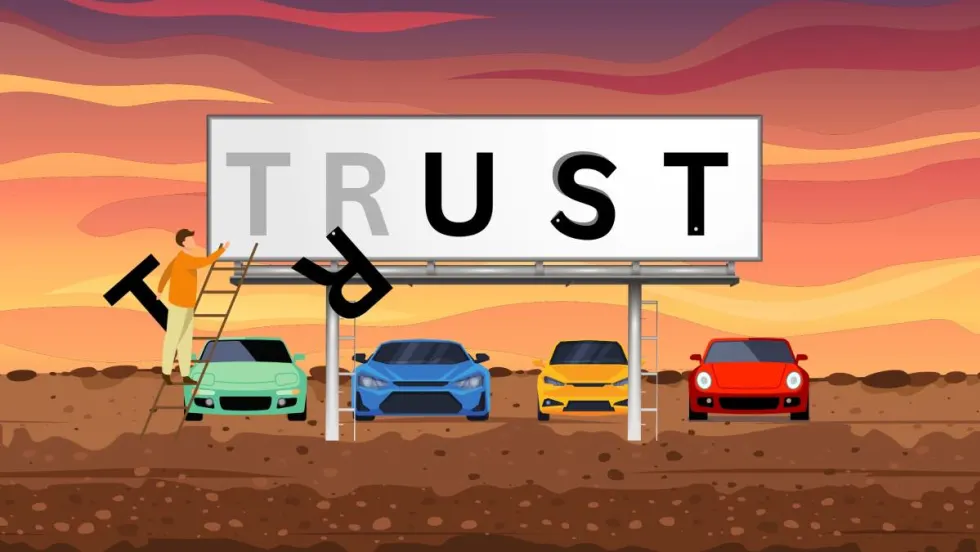
Fleets Want Trust Restored with Suppliers
During this period of ongoing supply constraints, the trust that fleet managers had with OEMs, upfitters, and dealers has been strained. Fleet managers say they have had too many experiences over the past three years coping with erroneous information, adjusting to multiple price increases, and feeling betrayed by inadequate transparency from suppliers.
Read More →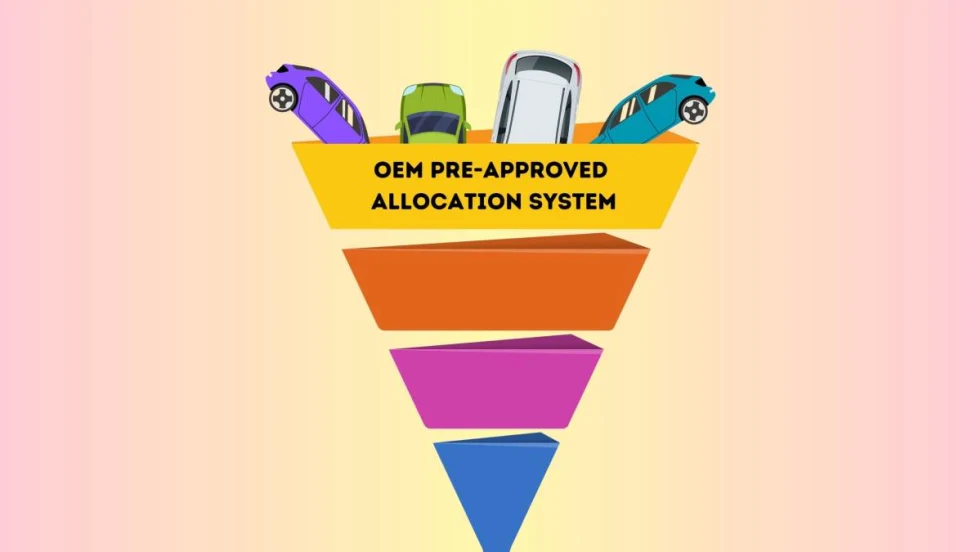
Scheduled Replacement Cycles Are Becoming a Distant Memory
The ongoing difficulty in sourcing replacement vehicles is forcing companies to extend the service lives of vehicles that are unable to be replaced, which, inevitably, increases unscheduled maintenance expenses.
Read More →
Fleet Simplification is the Antidote to Asset Variability
Fleet simplification identifies asset functions to uncover commonality among the equipment and assets. Simplification increases operational efficiency as end-users become accustomed to the controls, displays, and operation of less diverse units.
Read More →
The Dangers of Static Fleet Policies
A fleet policy is a living document, flexible enough to adapt to evolving business priorities, developing industry trends, and changing industry best practices and standards.
Read More →
Short-Term vs. Long-Term Cost Reductions
Corporate procurement staff are often driven by short-term, immediate cost reductions. However, a longer perspective to soft cost savings is critical because fixating on short-term results will hurt a company in the long run.
Read More →
Uptick in Unscheduled Maintenance Increasing Vehicle Downtime
Fleet data analysis can identify recurring downtime issues. It’s important to determine the root causes of downtime so procedures can be developed to minimize such problems.
Read More →
Eliminate Needless Curb Weight to Maximize ICE & EV Efficiencies
Vehicle weight relates directly to fuel economy. In today’s era of electrification, there is also a direct correlation between vehicle weight and battery range.
Read More →
Tech Dependence Risks Dumbing Down Fleet Manager Expertise
The line between creative thinking and problem solving and doing what the data indicates is thin. To lead in fleet management, you need to balance understanding the fundamentals and embracing what smart technology offers.
Read More →
Leverage the Synergy of Safe Driving to Achieve Sustainability and Cost Goals
Safe driving, emission reductions, and cost containment can all be achieved at the same time.
Read More →
The Playbook for Fleet Manager Success
There are many paths to success — most of them involve being flexible, open-minded, and willing to learn.
Read More →