




ADAS Complexity Will Create New Maintenance Costs and Vulnerabilities for Fleets
While technology is making vehicles safer, last longer, and be more environmentally friendly, it is also making them increasingly complex. As vehicles become more complex, so do all aspects of vehicle repairs.

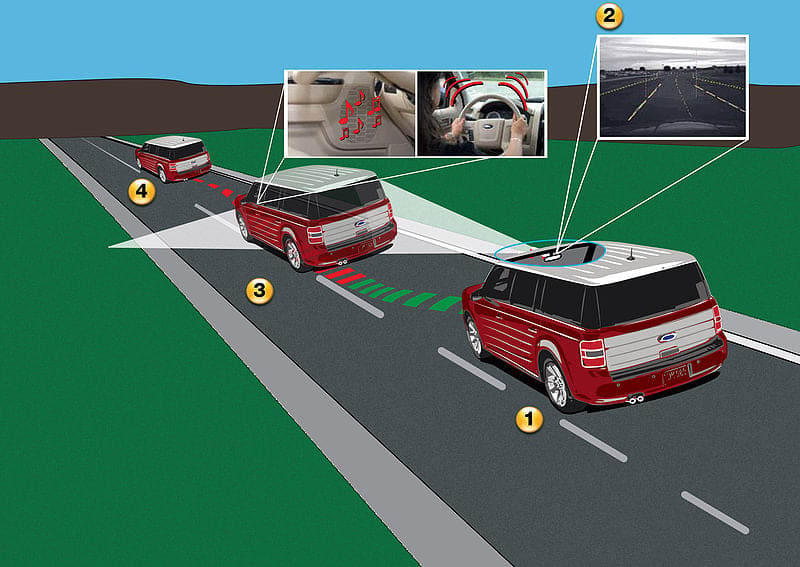
ADAS technologies have made today’s vehicles the safest in history.
Photo courtesy of Ford Motor Co.
An increasing number of vehicles are equipped with advanced driver-assistance systems (ADAS), such as collision avoidance, surround view, lane departure warning, adaptive cruise control, pedestrian protection, and blind spot monitoring, to name a few.
These technologies have made today’s vehicles the safest in history. Similarly, advancements in engine technology make current model-year vehicles the most fuel efficient ever and with each succeeding model-year, fleets are taking delivery of better-built vehicles. Contributing to this increased reliability are engine and transmission component engineering, onboard diagnostics providing early warning of impending malfunctions, and longer-lasting synthetic motor oils. While ADAS benefits outweigh any negatives, they do, nonetheless, come with trade-offs, such as a higher acquisition cost and new variables in maintenance management.
Need to Recalibrate ADAS Systems
There are many types of ADAS available with some built into vehicles and others available as part of an option package. ADAS relies on inputs from multiple data sources, including automotive imaging, LIDAR, radar, image processing, computer vision, and in-car networking. The trend toward more ADAS will continue as both the U.S. and the European Union are mandating that all vehicles be equipped with autonomous emergency-braking systems and forward-collision warning systems by 2020.
When ADAS systems need to be serviced, it requires special equipment operated by a specially trained technician. Many previously simple repairs now require a calibration of the ADAS system, consisting of cameras, sensors, and controllers, which requires specialized and expensive tooling and equipment. ADAS cameras built into windshields and rearview mirrors are adding complexity and cost to windshield replacements. The replacement cost of a windshield in an ADAS-equipped vehicle is typically higher than that of a non-ADAS unit. In addition to the increased cost of the windshield itself, the vehicle also often requires a recalibration of the entire system, an additional cost.
While technology is making vehicles safer, last longer, and be more environmentally friendly, it is also making them increasingly complex. As vehicles become more complex, so do all aspects of vehicle repairs. ADAS adds new components and software to vehicles, such as cameras, proximity sensors, and so on, all of which are potential maintenance expenses. While ADAS is very reliable, these onboard technologies create new expenses for fleets because repairs will require a diagnostic review to detect, potentially adding hundreds of dollars to the repair. The failure rates for ADAS components are relatively low, but when malfunctions occur repair costs can be high. In addition to the initial diagnostic charges to locate the malfunction, an ADAS repair often requires swapping out an entire module instead of replacing an individual part, which necessitates recalibrating the vehicle.
Another area impacted by ADAS is accident repair. As an example, a collision that previously only replaced a bumper cover may now involve the bumper cover and radar replacement, along with pre- and post-system scans and ADAS recalibration.
Higher Labor Costs Due to ADAS
The vehicle repair industry is experiencing a skilled labor shortage as technicians in the baby boomer demographic retire in greater numbers than those replacing them.
With more technology embedded in vehicles, independent shops are being required to make significant diagnostic equipment investments to enable them to diagnose and repair the malfunction using the data from in-vehicle technology. In addition, increased vehicle complexity is requiring the hiring of technicians with a higher technical skillset, who typically command higher salaries. Vehicle complexity has increased labor hours, labor rates for more specialized repair technicians, diagnostic times, and parts prices.
As ADAS technology becomes increasingly prevalent, it will begin to stretch the skillset of some technicians at independent service providers. There is intense competition for skilled technicians between dealerships, independent service providers, and fleets that operate in-house maintenance facilities. The demand for these technicians exceeds the labor supply. This is increasing pressure on independent shops to boost wages to attract new talent.
As vehicles become more complex, some work will be beyond the expertise of the average national account repair shop. The increased use of electronics and modular units is driving some repairs away from national account vendors to franchised dealers. As a result, more vehicles will go to dealerships, which traditionally have higher labor rates, to service electronics, GPS systems, collision avoidance systems, hybrid powertrains, and so on.
Vehicle Complexity to Continue to Increase
Increased vehicle complexity introduces not only new costs, but also vulnerabilities that never before existed. For instance, vehicles equipped with wireless technologies are vulnerable to hacking or privacy intrusions. As ADAS-equipped vehicles continue to become more integrated with wireless technologies, there are more avenues through which a hacker can introduce malicious code, and more avenues through which a driver’s privacy can be compromised via wireless entry points (WEPs) or via the tire pressure monitoring systems (TPMS) to access the OBD II port.
Vehicles will continue to become even more complex with the next-generation ADAS increasingly leveraging wireless network connectivity to offer vehicle-to-vehicle (V2V) communication and exchange vehicle-to-infrastructure (V2X) data. As vehicles grow in complexity, so too will the complexity of vehicle maintenance.
Let me know what you think.
More Blog Posts

Fleets Want Trust Restored with Suppliers
During this period of ongoing supply constraints, the trust that fleet managers had with OEMs, upfitters, and dealers has been strained. Fleet managers say they have had too many experiences over the past three years coping with erroneous information, adjusting to multiple price increases, and feeling betrayed by inadequate transparency from suppliers.
Read More →
Scheduled Replacement Cycles Are Becoming a Distant Memory
The ongoing difficulty in sourcing replacement vehicles is forcing companies to extend the service lives of vehicles that are unable to be replaced, which, inevitably, increases unscheduled maintenance expenses.
Read More →
Fleet Simplification is the Antidote to Asset Variability
Fleet simplification identifies asset functions to uncover commonality among the equipment and assets. Simplification increases operational efficiency as end-users become accustomed to the controls, displays, and operation of less diverse units.
Read More →
The Dangers of Static Fleet Policies
A fleet policy is a living document, flexible enough to adapt to evolving business priorities, developing industry trends, and changing industry best practices and standards.
Read More →
Short-Term vs. Long-Term Cost Reductions
Corporate procurement staff are often driven by short-term, immediate cost reductions. However, a longer perspective to soft cost savings is critical because fixating on short-term results will hurt a company in the long run.
Read More →
Uptick in Unscheduled Maintenance Increasing Vehicle Downtime
Fleet data analysis can identify recurring downtime issues. It’s important to determine the root causes of downtime so procedures can be developed to minimize such problems.
Read More →
Eliminate Needless Curb Weight to Maximize ICE & EV Efficiencies
Vehicle weight relates directly to fuel economy. In today’s era of electrification, there is also a direct correlation between vehicle weight and battery range.
Read More →
Tech Dependence Risks Dumbing Down Fleet Manager Expertise
The line between creative thinking and problem solving and doing what the data indicates is thin. To lead in fleet management, you need to balance understanding the fundamentals and embracing what smart technology offers.
Read More →
Leverage the Synergy of Safe Driving to Achieve Sustainability and Cost Goals
Safe driving, emission reductions, and cost containment can all be achieved at the same time.
Read More →
The Playbook for Fleet Manager Success
There are many paths to success — most of them involve being flexible, open-minded, and willing to learn.
Read More →