




Acquiescence to Employer Monitoring May Be a Future Condition to Getting a Company Vehicle
There are several very interesting trends that are emerging in different industries, which, when you plot out their trajectories, point to the fleet management industry as one of the areas of convergence. To explain, let me set the stage with several examples.
An interesting trend is emerging from the consumer auto insurance industry. Progressive Insurance Co. became the first company to issue a "usage-based" auto insurance policy, whereby the insured agrees to have a GPS system installed in his or her vehicle. Progressive successfully tested the program in Houston with several hundered policy holders from August 1998 to July 2001. The test determined that it was technologically feasible to calculate auto insurance based on usage-based variables. Every six minutes, the equipment recorded how often a vehicle was driven, where and when it was driven, and the duration of each trip. This data was automatically transmitted to the insurance company's computers via cellular phone, where it was used to identify an individual's driving habits to enable Progressive to calculate the monthly insurance premium, which varied based on actual usage, along with other underwriting variables. Does this have a fleet application? Sure. There are many possible applications. One fleet application would be a way to deal with the high-risk driver, who also happens to be the "star salesperson." How many of us have encountered the refrain, "But he's one of our best salesmen," when attempting to discipline an accident- or ticket-prone driver? To avoid negligent entrustment and retention lawsuits, you can't afford to ignore these high-risk drivers. What if an interim disciplinary action would require high-risk drivers to have their "actual use" driving monitored via a GPS system prior to more severe disciplinary action such as the forfeiture of the company vehicle or even termination? Using such a system, if an employee's reckless driving behavior continues, you now have the documentation necessary to deal with the problem instead of waiting for a catastrophic event to occur. What will make "actual use" monitoring relatively easy to perform in the future is the new generation of vehicles the auto manufacturers are developing, which will incorporate telematic tracking devices. A corollary trend involves American Car Rental, d.b.a. Acme Rent-A-Car in New Haven, CT, which electronically monitors the road speed of the vehicles it rents to consumers through the use of AirIQ's GPS-based vehicle tracking system. Whenever customers exceed 79 miles per hour for more than two continuous minutes, Acme automatically debits $150 from a customer's bank account or credit card for each speeding occurrence. According to Acme, the purpose of the speeding penalty is not to generate additional revenue, but to prevent accidents in order to keep its insurance costs down. Since implementing the program, Acme says its accident rate has dropped more than 50 percent. However, following complaints from consumers, the Connecticut Department of Consumer Protection filed a complaint against American Car Rental, accusing its Acme Rent-A-Car operation of unlawfully charging speeding fines to its customers. American Car Rental said it will challenge this complaint and has refused to discontinue the practice, arguing that the terms are clearly stated in the rental agreement and that customers are required to acknowlege in writing their understanding that the rental vehicle will be electronically monitored and that they are willing to comply to the speed restriction. One fleet manager with non-union drivers, who wished to remain anonymous, has wondered out loud whether employee drivers in the future could likewise be penalized with automatic payroll deductions for driving faster than specified speeds in their company vehicle. Symptoms of a Larger Trend What is interesting about these two examples is that they are manifestations of a much larger trend of employee monitoring by their employers. According to a recent Privacy Foundation study, employers are monitoring one of every three workers online, which most likely includes many of us who are currently reading this column. Thirty percent of the U.S. work force is online. Of that number, 14 million are subject to a fast-growing corporate trend that is being referred to as "continuous surveillance." What is motivating employers to engage in continuous surveillance is the threat of legal liability, according to more than two-thirds of the respondents to a recent American Management Association survey. The question is whether the corporate umbrella of continuous surveillance, in the future, will extend beyond employee computer usage and into fleet management, especially as telematically-enabled fleet vehicles become more commonplace. Will acquiescence to continuous surveillance become a future requirement for employees prior to being assigned a company vehicle? At the moment, these issues are strictly academic. But most likely sooner, rather than later, they will become real-world issues and we will all be forced to balance the conflicting goals of using continuous employee surveillance to minimize liability exposure and enhance productivity while, at the sme time, not violating employee privacy. Let me know what you think.
More Blog Posts

Fleets Want Trust Restored with Suppliers
During this period of ongoing supply constraints, the trust that fleet managers had with OEMs, upfitters, and dealers has been strained. Fleet managers say they have had too many experiences over the past three years coping with erroneous information, adjusting to multiple price increases, and feeling betrayed by inadequate transparency from suppliers.
Read More →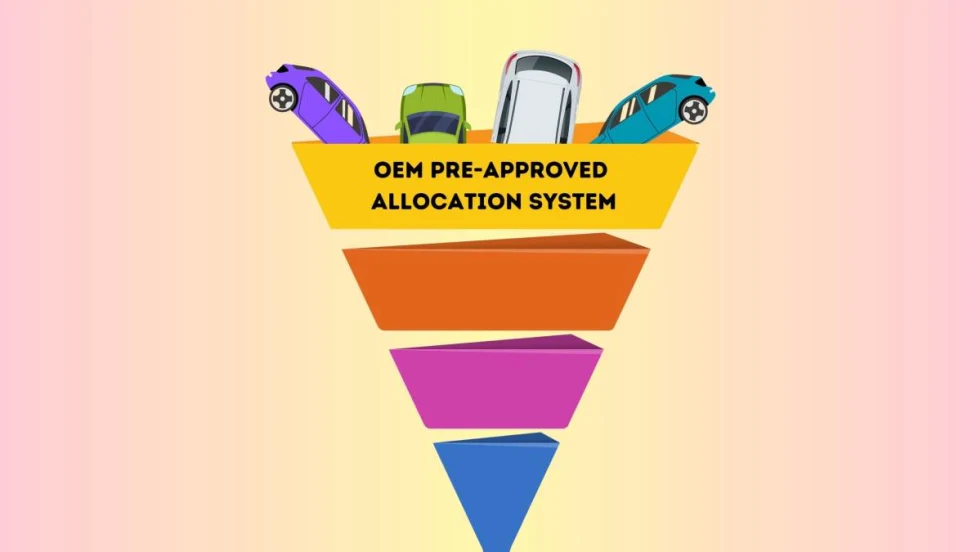
Scheduled Replacement Cycles Are Becoming a Distant Memory
The ongoing difficulty in sourcing replacement vehicles is forcing companies to extend the service lives of vehicles that are unable to be replaced, which, inevitably, increases unscheduled maintenance expenses.
Read More →
Fleet Simplification is the Antidote to Asset Variability
Fleet simplification identifies asset functions to uncover commonality among the equipment and assets. Simplification increases operational efficiency as end-users become accustomed to the controls, displays, and operation of less diverse units.
Read More →
The Dangers of Static Fleet Policies
A fleet policy is a living document, flexible enough to adapt to evolving business priorities, developing industry trends, and changing industry best practices and standards.
Read More →
Short-Term vs. Long-Term Cost Reductions
Corporate procurement staff are often driven by short-term, immediate cost reductions. However, a longer perspective to soft cost savings is critical because fixating on short-term results will hurt a company in the long run.
Read More →
Uptick in Unscheduled Maintenance Increasing Vehicle Downtime
Fleet data analysis can identify recurring downtime issues. It’s important to determine the root causes of downtime so procedures can be developed to minimize such problems.
Read More →
Eliminate Needless Curb Weight to Maximize ICE & EV Efficiencies
Vehicle weight relates directly to fuel economy. In today’s era of electrification, there is also a direct correlation between vehicle weight and battery range.
Read More →
Tech Dependence Risks Dumbing Down Fleet Manager Expertise
The line between creative thinking and problem solving and doing what the data indicates is thin. To lead in fleet management, you need to balance understanding the fundamentals and embracing what smart technology offers.
Read More →
Leverage the Synergy of Safe Driving to Achieve Sustainability and Cost Goals
Safe driving, emission reductions, and cost containment can all be achieved at the same time.
Read More →
The Playbook for Fleet Manager Success
There are many paths to success — most of them involve being flexible, open-minded, and willing to learn.
Read More →