




Accident Management Costs Hold Steady
The average fleet claim severity for 2006 was $1,869.87, an increase of $48.81 over 2004. Also experiencing a slight increase in 2006 was the percent of accidents deemed preventable.
Accident management costs have seen only a slight increase over the past three years. In 2006, the average severity of a fleet claim was $1,869.87, an increase of less than 3 percent over 2004. (The accident management term “severity” is defined as the total dollars a company spends on the repair of a vehicle, including the cost of labor and parts, excluding the cost of a replacement vehicle.)
Factors influencing severity costs in 2006 include:
Increased cost in paint and materials.
Electronics usage in vehicles.
New technology.
Safety systems such as airbags and seat belt retractors.
The high cost of fuel.
“From our experience, it appears that accident management costs increased in 2006, not only due to the complexity of the vehicles on the road, but also the need to review the associated damages,” said Tom Lipcsik, claims manager, Fleet Response. “These items also require additional equipment and training to determine the direct damage and any potential related indirect damage to the vehicle.”
Source: CEI ClaimsLinkSource: Fleet ResponseTechnology: A Blessing or a Curse?
One factor driving the rise in costs is the dramatic increase in electronics, according to Pam Walinski, vice president, PHH Vehicle Accident Services. “Navigation systems, audio and DVD systems in mid- to high-end cars, these must be purchased new and cannot be sourced through recyclers or the aftermarket suppliers. This can significantly drive up the cost of a repair,” Walinski said.As a result of greater vehicle complexity, additional time and equipment are necessary to evaluate damage. “Vehicles need to be torn down more often to review the potential of hidden and indirect damage,” said Lipcsik. “Both physical and electronic review is needed to evaluate for damage or for required placement of electrical/ electronic devices. These are in addition to review and repair of engineered fail-safe items currently on the vehicles.”
As vehicles are built for greater safety, collision repair costs will rise. According to Walinski, “Rear bumpers that include a back-up sensor cost near double the cost for a single bumper repair.”
Vehicles have been improved to increase occupant safety, thus minimizing potential of injury, according to Lipcsik. “These improvements come at a cost, because vehicles now have components that are nonserviceable (i.e. airbag modules and sensors and seat belt retractors). Additionally, components such as structural glass and crumple zones require increased repair procedures to correct.”
Body shops in California are now forced to use waterborne paint systems, a new technology, according to Walinski. “In the short-term, new paint and mixing systems need to be purchased and in place by Jan. 1, 2008. Also, paint booths must be upfitted with additional equipment, which is another expense that will be passed on to the end customer. As a result of EPA issues, paint and chemical costs continue to escalate.”
Safety features such as back-up sensors and cameras, curb sensors, and lane shift sensors can be effective in reducing accidents, but if the vehicle is involved in a collision, the repair costs will be higher than average.
However, according to Walinski, “PHH clients who have installed onboard telematics in their vehicles are starting to achieve a reduction in the number and severity of the collisions in their fleets. One reason for this is drivers are more careful not to speed.”
Source: CEI ClaimsLinkHybrids Increase in Numbers and Increase Costs
According to John Wolford, senior manager, provider network services for CEI, the use of hybrid vehicles is gaining acceptance in commercial fleets.“This was considered a novelty just a couple of years ago and is becoming more commonplace as the ‘green’ movement continues to gain momentum,” he said.
In addition, increased fuel costs are driving the need for more efficient vehicles that deliver higher miles per gallon. Hybrids, however, impact accident costs.
“We’ve found with hybrid vehicles, if they are hit in the left front — where the electric motor is — we’re experiencing larger supplements even after the tear-down,” said Greg Neuman, quality control supervisor and senior staff appraiser, CEI.
Another issue Neuman noted is that body shops don’t typically directly work on hybrids; they sublet them to the dealer. “This, of course, adds to cost, downtime, and sometimes supplements from the dealer for additional labor or parts,” he said.
Recently, CEI handled a hybrid repair where it was actually in everyone’s best interest to let the manufacturer repair some specific hybrid-related technology. “It will take nondealer-affiliated shop industry has used plastics in lieu of metals on an increasing basis over the past few years,” said Wolford. “Plastics, of course, require petroleum, hence higher parts prices. Also, the cost of transportation related to delivering parts has increased with the fuel cost increases.”
Source: CEI ClaimsLinkSource: CEI ClaimsLinkProof of Damage a Hot Topic
A hot topic in subrogation over the past year has been the ability to prove damages, according to Chris Villella, senior manager loss recovery and insurance services, CEI.“In 2007, there’s been an increased need to prove our damages to the thirdparty insurance carriers,” Villella said. “As the insurance industry continues to experience a soft market, they are looking at all areas to increase revenues and cut expenses.”
This trend has a direct impact on subrogation efforts as insurance companies continue to require more evidence in subrogation demands.
“In recent months, the estimate, final bill, and proof of payment is often not enough proof, especially when a claim involves high-tech equipment,” said Villella.
Because many technologies used in vehicles currently are still in their developmental infancy, issues with the reparability of these systems can impact recovery efforts. In striving for improved cycle time and recovery percentages for CEI customers, the introduction of new subrogation recovery software continues to gain importance.
Diminished values remains an issue in subrogation efforts. “Subrogation recovery has not expanded to include recovery of a vehicle’s ‘diminished value.’ In fact, insurers reject these claims, and some states have even ruled that this is not an insurable portion of claims under policies offered,” said Wayne Smolda, CEO and founder of CEI. “This does not necessarily mean a third-party claimant can’t sue to recover this portion of a loss.”
Source: Fleet ResponseSource: CEI ClaimsLinkTrends in Proactive Fleet Management
Accident avoidance is a new goal for most U.S. fleets. “More and more fleet managers are putting their focus on accident avoidance,” said Walinski. “We’ve found that the critical element to successfully implementing new safety and risk strategies is gaining buy-in from senior level management in the organization and development of a ‘culture of safety’ — embedding an awareness and commitment to safety within an organization’s culture.”Process improvement can also play a role in reducing collision costs. “At PHH, we’re helping our clients reduce repair costs through key process improvements that decrease the overall cycle time to repair vehicles,” said Walinski. “It’s important to focus not just on the bent-metal costs, but on total accident-related costs. Over the past year, we have been successful in identifying key process improvements that reduce total rental and appraisal costs.”
Fleet Response serves clients with business units, divisions, and special teams that maintain a close watch over drivers. “As a result of an increased awareness and the utilization of a fleet program and policy content to manage the drivers, much-improved hiring, assignment, training, follow-up, and counseling of drivers is now generating a reduction in the frequency of motorvehicle accidents,” said Dave Vance, director of safety services, Fleet Response. “This process can be monitored for success, weakness, and driver improvements.”
In addition to MVR checks, fleet managers have begun focusing on driver attitude and behavior — not solely on driving history.
“With the increased use of onboard telematics in fleet vehicles, monitoring speed and other behaviors, fleet managers now get real-time insight on how vehicles are being driven,” said Walinski.
This trend toward a more comprehensive approach includes proactive identification of high-risk drivers, including newly developed predictive monitoring capabilities, supported by effective countermeasures.
“By assisting the driver through focused action plans, fleets can reduce the number of claims thus reducing the overall cost associated with repairs for the entire fleet,” added Vance.
Source: Fleet ResponseSource: CEI ClaimsLinkAdditional Factors
Additional factors influencing accident management and costs include:Advanced front or third-generation airbags are being phased into newmodel vehicles.
Increased labor rates to ensure highest level of qualified technicians in turn increase repair costs.
Decisions not to repair “cosmetic-only” damages are being made to control accident management costs.
More safety systems on medium- and heavy-duty trucks are increasing.
Increased total losses among self-insured fleets continue to affect fleets, “bottom line.”
Trend of more paintless dent-repair (PDR) performed due to growing expansion of competitors and more body shops adding this service.
Heightened awareness of drivers with multiple accidents by fleet management.
Source: CEI ClaimsLink
More Blog Posts

Fleets Want Trust Restored with Suppliers
During this period of ongoing supply constraints, the trust that fleet managers had with OEMs, upfitters, and dealers has been strained. Fleet managers say they have had too many experiences over the past three years coping with erroneous information, adjusting to multiple price increases, and feeling betrayed by inadequate transparency from suppliers.
Read More →
Scheduled Replacement Cycles Are Becoming a Distant Memory
The ongoing difficulty in sourcing replacement vehicles is forcing companies to extend the service lives of vehicles that are unable to be replaced, which, inevitably, increases unscheduled maintenance expenses.
Read More →
Fleet Simplification is the Antidote to Asset Variability
Fleet simplification identifies asset functions to uncover commonality among the equipment and assets. Simplification increases operational efficiency as end-users become accustomed to the controls, displays, and operation of less diverse units.
Read More →
The Dangers of Static Fleet Policies
A fleet policy is a living document, flexible enough to adapt to evolving business priorities, developing industry trends, and changing industry best practices and standards.
Read More →
Short-Term vs. Long-Term Cost Reductions
Corporate procurement staff are often driven by short-term, immediate cost reductions. However, a longer perspective to soft cost savings is critical because fixating on short-term results will hurt a company in the long run.
Read More →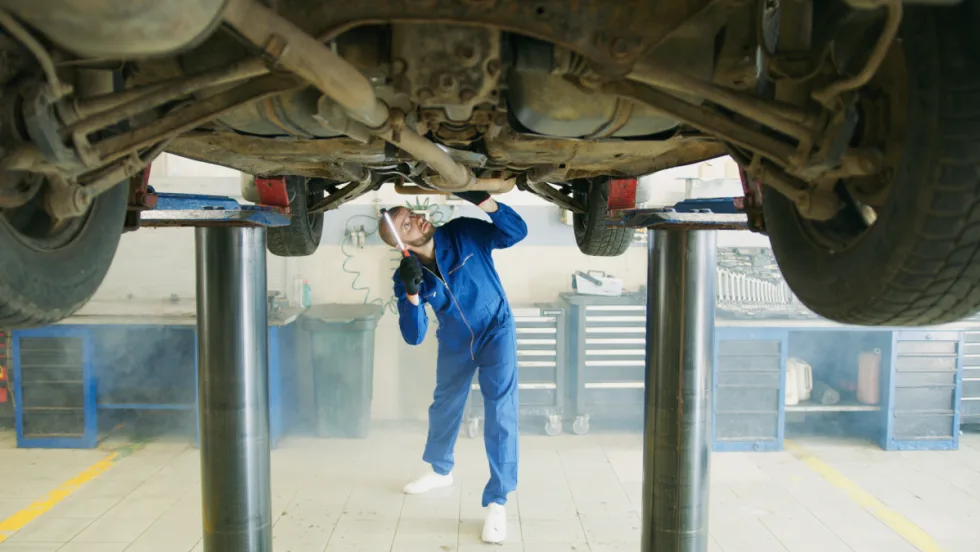
Uptick in Unscheduled Maintenance Increasing Vehicle Downtime
Fleet data analysis can identify recurring downtime issues. It’s important to determine the root causes of downtime so procedures can be developed to minimize such problems.
Read More →
Eliminate Needless Curb Weight to Maximize ICE & EV Efficiencies
Vehicle weight relates directly to fuel economy. In today’s era of electrification, there is also a direct correlation between vehicle weight and battery range.
Read More →
Tech Dependence Risks Dumbing Down Fleet Manager Expertise
The line between creative thinking and problem solving and doing what the data indicates is thin. To lead in fleet management, you need to balance understanding the fundamentals and embracing what smart technology offers.
Read More →
Leverage the Synergy of Safe Driving to Achieve Sustainability and Cost Goals
Safe driving, emission reductions, and cost containment can all be achieved at the same time.
Read More →
The Playbook for Fleet Manager Success
There are many paths to success — most of them involve being flexible, open-minded, and willing to learn.
Read More →